Weight Benches
I Tried Seven Benches With Leg Extensions. Most of the Attachments Ended Up Against the Wall.
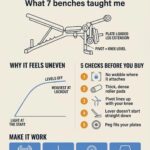
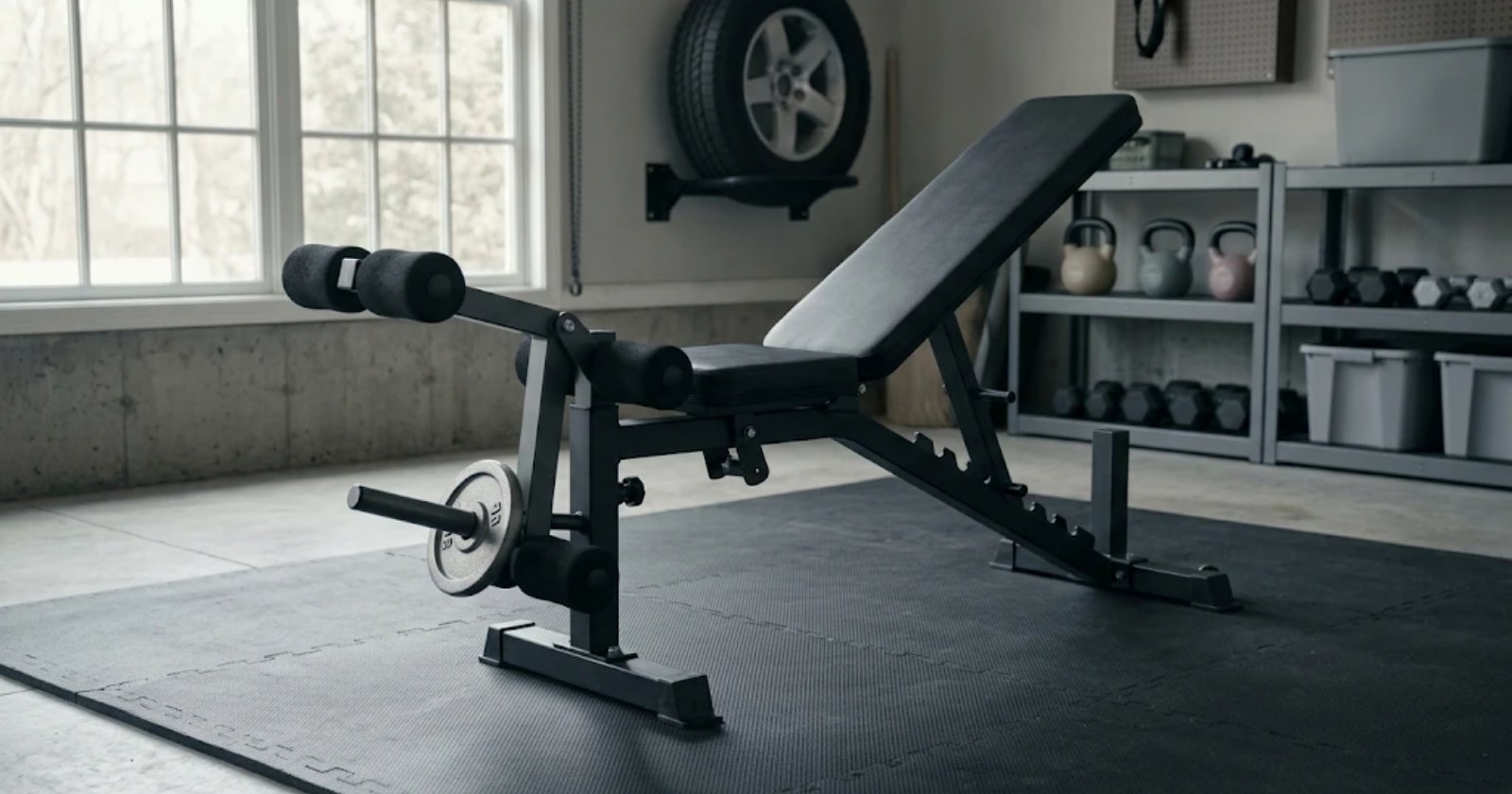
Illustration. On paper, one bench that also does leg extensions and leg curls. In practice, the attachment decides whether you ever use it.
A weight bench with a leg extension attachment looks like an easy way to add machine-style leg work to a home gym. Instead of buying a separate leg extension and leg curl machine, you fit a padded lever to the front of the bench, load it with plates, and train your quads and hamstrings from the station you already press on.
On paper it’s efficient. After trying seven benches with leg developers, I found most of the attachments were less useful than they looked. Some had awkward resistance curves. Others moved the bench across the floor, put the roller pads in the wrong place, or took so long to set up that I stopped bothering.
A few were genuinely productive, and none felt exactly like a commercial selectorized machine. I tried attachments from Ironmaster, Force USA, Body-Solid and Marcy, plus three budget adjustable benches sold with leg developers, for leg extensions, seated leg curls where possible, and lying leg curls where the design allowed.
The leg extension is one of the gym machines the free Machine Swap Playbook replaces at home, so I wanted to know whether an attachment beats the free-weight and band swaps.
The short version: the Ironmaster Leg Attachment PRO on the Super Bench PRO V2 was the only leg extension attachment I kept wanting to use. Body-Solid’s leg developer was the sturdiest alternative and Force USA’s MyBench the best all-in-one value. Most budget attachments weren’t worth choosing a bench for.