I Tried Seven Benches With Leg Extensions. Most of the Attachments Ended Up Against the Wall.
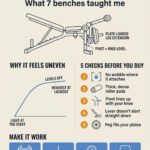
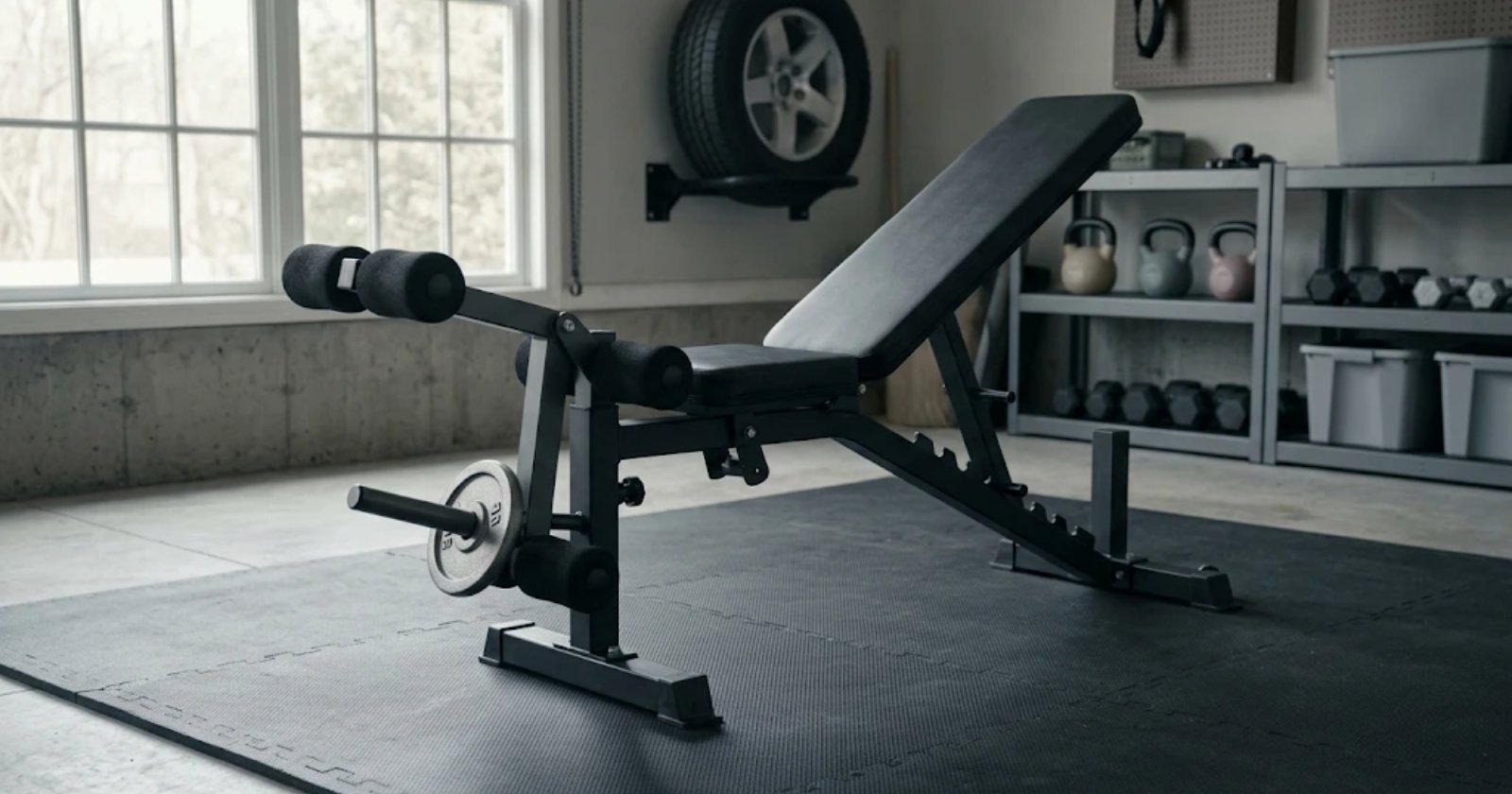
Illustration. On paper, one bench that also does leg extensions and leg curls. In practice, the attachment decides whether you ever use it.
A weight bench with a leg extension attachment looks like an easy way to add machine-style leg work to a home gym. Instead of buying a separate leg extension and leg curl machine, you fit a padded lever to the front of the bench, load it with plates, and train your quads and hamstrings from the station you already press on.
On paper it’s efficient. After trying seven benches with leg developers, I found most of the attachments were less useful than they looked. Some had awkward resistance curves. Others moved the bench across the floor, put the roller pads in the wrong place, or took so long to set up that I stopped bothering.
A few were genuinely productive, and none felt exactly like a commercial selectorized machine. I tried attachments from Ironmaster, Force USA, Body-Solid and Marcy, plus three budget adjustable benches sold with leg developers, for leg extensions, seated leg curls where possible, and lying leg curls where the design allowed.
The leg extension is one of the gym machines the free Machine Swap Playbook replaces at home, so I wanted to know whether an attachment beats the free-weight and band swaps.
The short version: the Ironmaster Leg Attachment PRO on the Super Bench PRO V2 was the only leg extension attachment I kept wanting to use. Body-Solid’s leg developer was the sturdiest alternative and Force USA’s MyBench the best all-in-one value. Most budget attachments weren’t worth choosing a bench for.
Why I Wanted a Leg Extension Attachment
My garage gym already had a rack, a barbell, adjustable dumbbells and resistance bands. That covered squats, lunges, Romanian deadlifts, split squats, step-ups, goblet squats and hip thrusts. What I couldn’t easily replicate was plain knee extension.
Leg extensions let the quads work without the hips contributing as much as they do in a squat. They’re useful at the end of a workout, in lighter training phases, and for adding quad volume without loading the spine. A bench attachment seemed like a cheap way to get that without giving floor space to another machine.
The catch was that nearly every attachment changed the exercise. The pivot position, roller height, loading peg, bench angle and starting position all decided whether the movement felt smooth or awkward.
The Seven Leg Extension Attachments I Tried
I tried seven bench-and-attachment setups:
- Ironmaster Super Bench PRO V2 with the Leg Attachment PRO
- Force USA MyBench with its leg developer
- A Body-Solid bench with its plate-loaded leg developer
- A Marcy Olympic bench with its leg developer
- Three budget adjustable benches sold with leg developers, one of them bundled with a preacher-curl pad
I cared less about advertised capacity than about how each one felt rep to rep. For every setup I checked installation time, attachment play, pivot smoothness, roller position, range of motion, resistance at the start and near lockout, plate clearance, bench stability, roller comfort, fit for different body sizes, storage, and whether I wanted to use it again.
That last one turned out to matter most. An attachment can technically work, but if it takes too long to fit or feels awkward every time, it ends up in storage.
Why a Plate-Loaded Leg Extension Feels Different
A commercial leg extension machine usually runs a weight stack through a cam or pulley. The cam changes the effective resistance as your lower leg moves, so a well-designed machine keeps the tension fairly even through the rep.
Most bench attachments are simpler. The plates sit on a peg fixed to the lever arm, so the resistance you feel depends on how far the plates sit horizontally from the pivot. At the start, with your shins hanging down, the lever is close to vertical and the plates sit almost directly below the pivot, so there’s very little leverage against you. As your legs rise, that horizontal distance grows, and the rep gets harder toward the top.
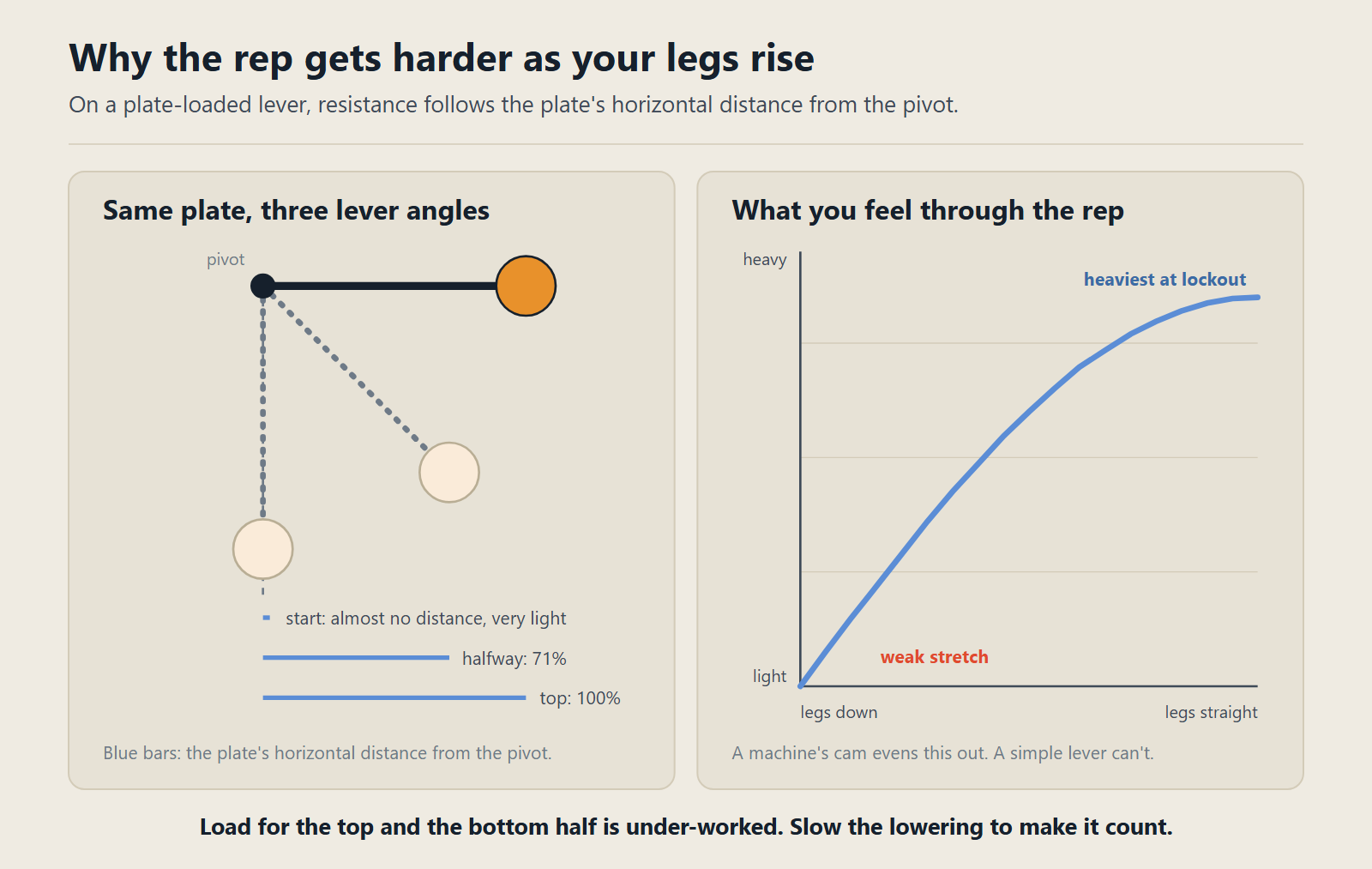
Figure 1. The plates only resist as much as their horizontal distance from the pivot. That’s why the bottom feels light and lockout feels heavy.
The result is a curve that feels weak in the stretched position and much heavier near lockout. That doesn’t make the exercise useless. It means that if you load for the hardest point, much of the rep is under-challenged.
Pivot Alignment Matters More Than Anything on the Spec Sheet
For a leg extension to feel natural, the attachment’s pivot should sit close to your knee joint. It doesn’t need to be exact, but big misalignment causes sliding, pressure and an awkward path.
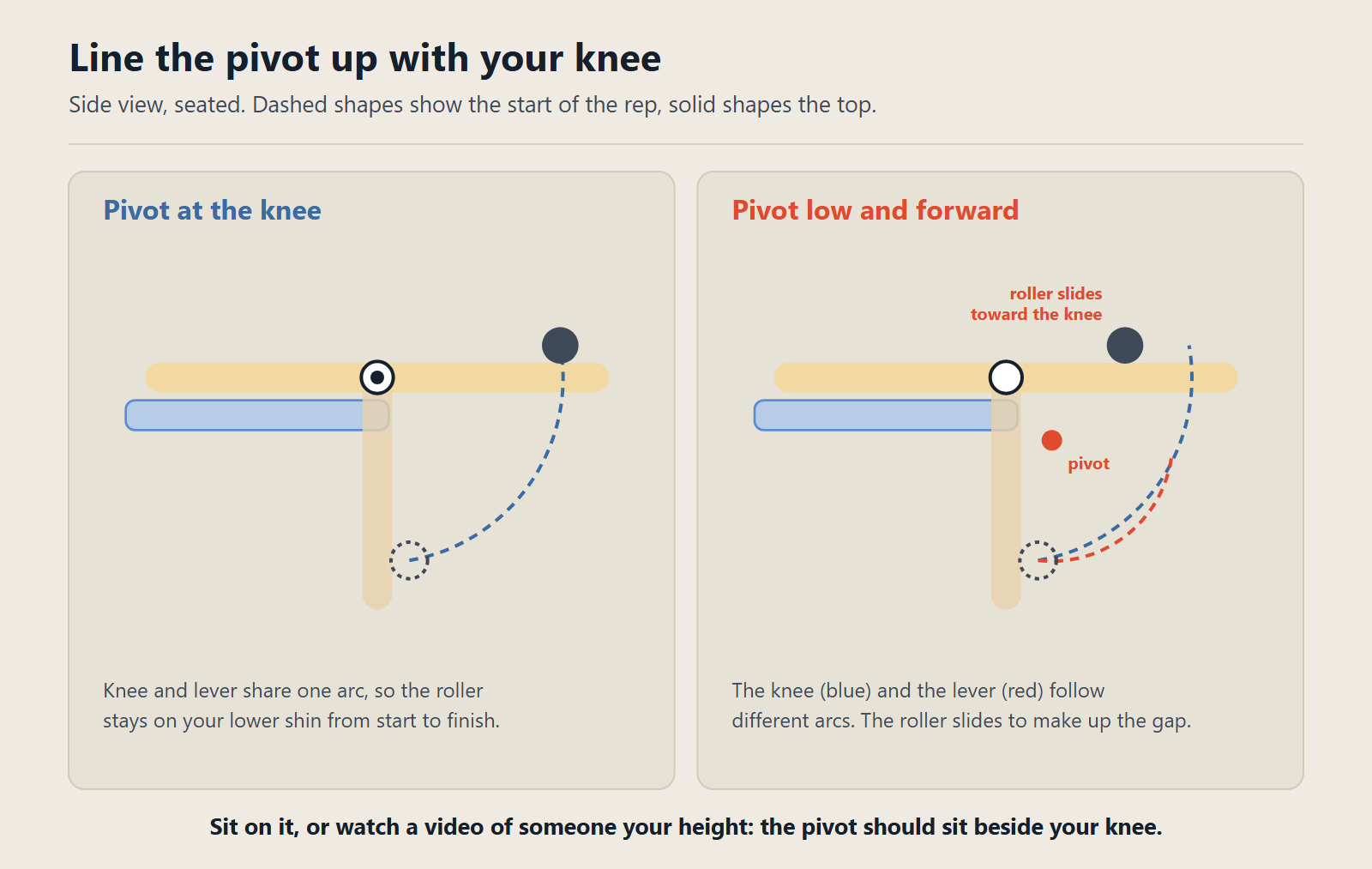
Figure 2. When the pivot and the knee follow different arcs, the roller has to slide along your shin to make up the difference.
On several budget benches the pivot sat too low or too far forward. My knees moved through one arc while the lever followed another, so the seat pulled against my thighs and the rollers rode up my shins. It got worse as the weight went up. Instead of a clean quad contraction, I felt like I was fighting the bench.
The better attachments lined up more closely or had useful adjustment. The cheaper ones assumed one body size would fit everyone.
Best Overall Leg Extension Attachment: Ironmaster
The Ironmaster attachment was the best of the seven. It fitted firmly to the Super Bench PRO V2 and felt like a deliberate accessory rather than a feature added to sell the bench. Ironmaster sells the Leg Attachment PRO for $189 and the Super Bench PRO V2 for $449 (October 2026). The attachment fits only the PRO V2, takes standard plates or Olympic plates through an included sleeve adapter, is rated to 200 lb of plates, and has 4 x 7 inch foam rollers with two height positions.
Installation wasn’t instant, but it was straightforward: reposition the seat, slide the attachment into the receiver, secure it and check the roller position. Once fitted it had very little play, which matters because a loose attachment makes every rep feel less controlled.
Leg extensions felt the most natural of the seven. The pivot suited my build, the roller stayed on my lower shin rather than drifting toward my ankles or knees, and I could start from a useful bent-knee position and extend fully without the frame getting in the way. The resistance still rose toward the top, as it does on any simple plate-loaded lever, but the movement was smoother than on the budget attachments.
Leg curls worked too, though setup was less convenient than on a dedicated machine. Lying curls worked better than forcing a seated curl, the bench stayed stable, and the rollers didn’t feel too narrow.
The drawbacks: it adds real cost to an already premium bench, it needs somewhere to live when it’s off, and swapping between pressing and leg work interrupts a session. Even so, it was the only attachment I consistently wanted to use again.
Sturdiest Alternative: Body-Solid Leg Developer
The Body-Solid setup felt more substantial than the budget combination benches. The frame, pivot and roller assembly handled moderate plate loads without much flex. Body-Solid’s GLDA3 leg developer lists at $210 and fits only its GFID71 and GFID100 benches, so check the model before you buy.
Stability was its strength. The bench stayed planted during leg extensions, especially on rubber flooring, with less lifting at the front than on the budget models. That matters because the attachment hangs weight out beyond the bench’s front support. If the frame is too light or short, the rear can shift while the front is pulled down.
Range of motion was acceptable, if not perfect. I could lower my legs far enough for a real stretch in the quads, and the lever moved smoothly toward the top, with the same rising resistance as the Ironmaster.
The rollers were dense enough that I never felt the metal shaft, and they stayed in place better than the loose foam on cheaper benches.
The limitation is size. The full setup is big, harder to move than a compact adjustable bench, and only makes sense if you like the rest of the system too.
Best All-in-One Value: Force USA MyBench
The Force USA MyBench was a useful middle ground. Its leg developer felt more stable than the budget models and was easier to fit into a multipurpose home gym than the bigger Body-Solid setup. Force USA sells the MyBench for $499 with both the leg developer and a preacher-curl attachment included.
Leg extensions were reasonably controlled. The roller adjusted enough for different lower-leg lengths, though very short or very tall lifters may still struggle to line up the pivot. It took standard plates, so I could load it with what I already owned.
Setup was quicker than the Ironmaster, but the attachment still had to come off for some pressing positions and for storage. I ended up planning leg extensions for the end of the workout so I wasn’t fitting and removing it repeatedly.
The main fault was a little play at the connection. It never felt dangerous, but I could feel it at the start of each rep. Tightening the hardware reduced it, and it never felt as solid as a dedicated machine.
Get the whole system, not just leg day
A leg extension attachment covers one machine. The Machine Swap Playbook maps every common gym station to its movement pattern, gives three ranked swaps for each, and shows which ones a bench and a few plates unlock, with the load rules on a single printable page.
Eighteen swaps. Forty pages. Free, no upsell.
The Marcy Leg Developer Worked but Felt Limited
The Marcy Olympic bench’s front leg developer, with foam rollers and a plate peg, was one of the most familiar-looking designs. It was also one of the most limited.
Leg extensions were fine with light to moderate weight. As the load went up, the frame shifted slightly and the attachment flexed more than the premium options. The rollers were less adjustable, too. It felt acceptable with slow reps and higher rep ranges, and unconvincing when I tried to treat it like a heavy commercial machine.
Leg curls were awkward. The pad and bench geometry didn’t put my body in a natural position, and I spent more time adjusting myself than training my hamstrings.
On Amazon the leg developer is sold as an option alongside the bench rather than built in, so check what’s in the box. It adds variety, not enough quality to buy the bench just for leg training. It’s a bonus feature, not a machine replacement.
Budget Leg Extension Attachments Shared the Same Problems
The three budget benches differed in branding, upholstery and frame shape, but their leg attachments behaved alike. The same faults came up again and again: loose attachment receivers, thin foam rollers, short loading pegs, poor knee-to-pivot alignment, a limited starting range, a bench that moved, flexing lever arms, awkward storage and a low practical capacity. They all produced some kind of leg extension. That doesn’t mean they produced a good one.
Thin roller pads became painful
A roller should spread the force across your lower shin. Several budget attachments used small-diameter foam that compressed almost completely under load, and once it did, I could feel the hard shaft inside. More weight made it worse, so the discomfort stopped the set before my quads were properly worked. Thicker isn’t automatically better. The foam needs enough density and surface area to spread the pressure, and the Ironmaster and Body-Solid rollers did this best.
Bench stability mattered more than capacity
Budget benches often advertise high total capacities, and those numbers say nothing about how the bench behaves with weight hanging off the front. The load creates a turning force around the bench’s contact points, so as the attachment moves, the frame can shift, lift or slide. On one lightweight bench the rear foot moved during harder reps with the plates well below the advertised maximum. Rubber flooring helped but couldn’t fix poor weight distribution. A wide rear stabilizer and a substantial frame made more difference than any printed capacity.
The starting position was often too easy
Most attachments felt weakest at the bottom. That’s partly the plate-loaded design, but some models made it worse by starting with the lever almost vertical, where the plates pull nearly straight down through the pivot and create almost no resistance. The first part of the rep was nearly free, then the load climbed sharply as my shins moved forward. It felt like two different exercises. A better starting angle helped a little, but none matched the consistency of a good commercial machine.
Small plates worked better than large ones
Big plates could touch the floor or the bench frame before the attachment finished its range, and they were more awkward to load. Several 10 lb plates instead of one 45 lb plate cleared better and made changes easier. In practice the loading limit was set by peg length and plate size more often than by the frame’s rating.
Weight changes got annoying
Loading an attachment isn’t hard, but in a full workout it adds up: fit the attachment, set the rollers, find small plates, load and secure them, adjust the bench, then take it all off afterwards. That was fine when leg extensions came last, and annoying when I alternated pressing and leg work. A selectorized machine is faster because the pin does the work. A plate-loaded attachment saves money and space in exchange for more handling.
Leg Curls Were Usually Worse Than Extensions
Nearly every leg extension attachment also advertised leg curls, and the extension was almost always the better half. For a lying curl, the bench pad, roller height and pivot all have to line up with your knees while you stay stable on the bench. Most setups missed at least one of those.
The common problems were hips lifting off the pad, the roller sliding toward the calves, knee pressure, limited knee bend, weak resistance at the start, and the frame blocking the movement. The Ironmaster gave the best curl, and even that felt less natural than a dedicated prone leg curl machine.
For hamstrings I preferred Romanian deadlifts, sliding curls, Nordic curl variations and band curls. I covered how to program those in leg curl alternatives.
Preacher Curl Pads Were Even Less Useful
Several benches paired the leg developer with a removable preacher-curl pad. It looked good in product photos. In practice the pad was usually too narrow, too short, poorly angled, hard to adjust and unstable under heavier curls, and the receiver added its own play. It was fine for light curls and not worth storing another bulky part. The best multifunction benches were the ones where every accessory felt designed on purpose. Most budget benches added attachments to lengthen the feature list.
How I Made the Attachments More Useful
A few changes improved every setup:
- Moderate weight. The attachments worked better for controlled sets of 10 to 20 reps than for heavy, low-rep work. Moderate loads cut frame movement and roller discomfort.
- Slower reps. A slower lowering phase made the weak bottom range more productive and stopped the swinging.
- Smaller plates. Better clearance and easier loading.
- Rubber flooring. Less sliding, and lighter frames stayed put.
- Bands, carefully. On some attachments a band added tension where the plates felt weak. Only do this where the frame offers a secure, maker-approved anchor point, never looped around random bench parts.
- Extensions as finishers. They were most useful after squats, lunges or split squats, adding quad fatigue without needing heavy plates. The compound side of that is in leg press alternatives.
How the Seven Leg Extension Attachments Compared
| Setup | Leg extension | Leg curl | Stability | Overall |
|---|---|---|---|---|
| Ironmaster Super Bench PRO V2 + Leg Attachment PRO | Very good | Good | Excellent | Best overall |
| Body-Solid bench + leg developer | Very good | Fair to good | Very good | Strong |
| Force USA MyBench | Good | Fair | Good | Good value |
| Marcy Olympic bench + leg developer | Fair | Limited | Fair | Occasional use |
| Three budget benches with leg developers | Fair to limited | Poor | Fair to limited | Mostly not worth it |
None matched a dedicated commercial machine. The better ones were still useful enough to earn a place in a compact home gym.
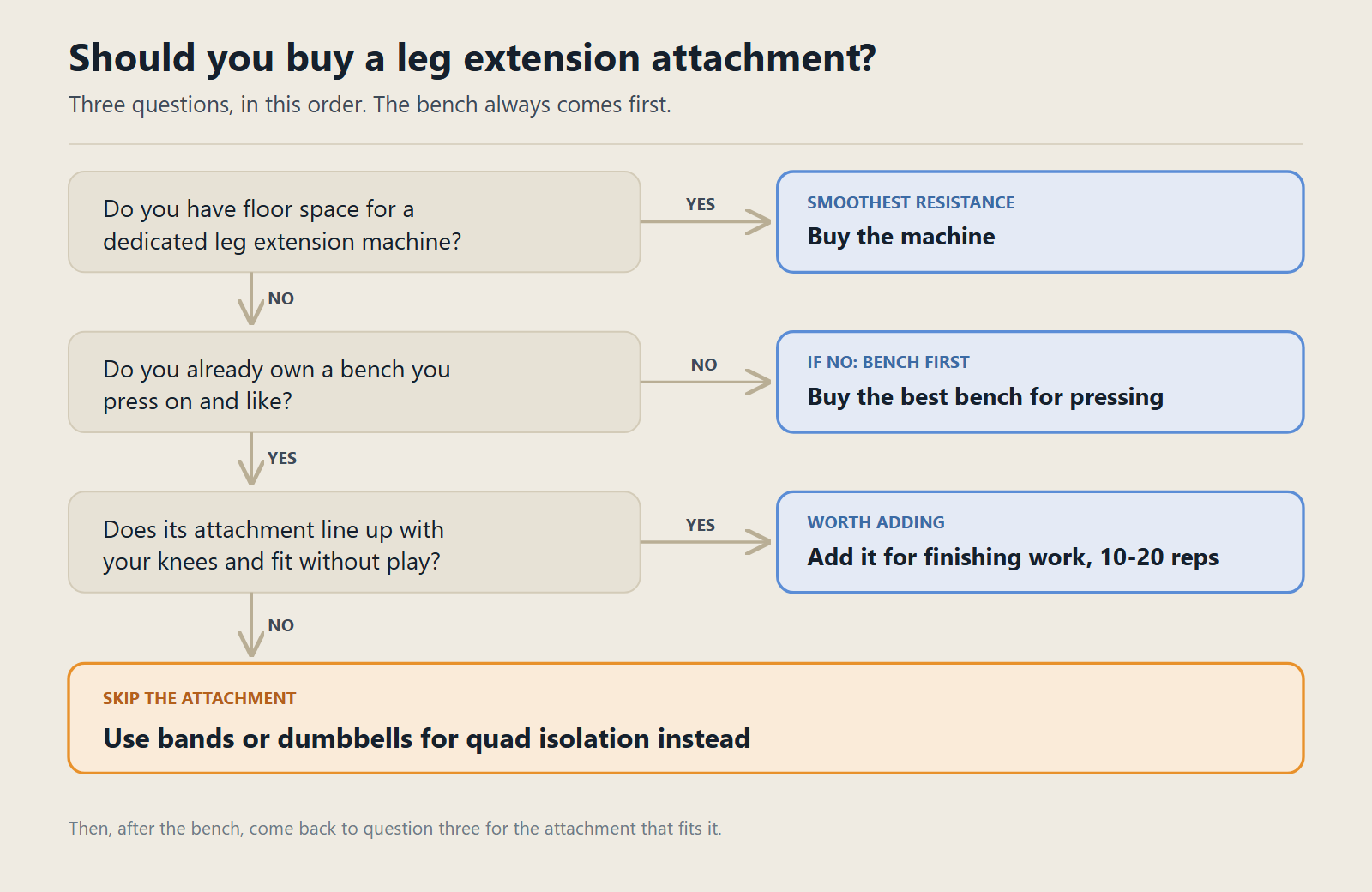
Figure 3. The bench comes first. The attachment is only worth adding if it fits your knees and your bench.
A good attachment makes sense if you have very little space, already own the compatible bench, want extra quad isolation, train with moderate loads, don’t mind plate changes, train alone, and value variety over machine-level performance. It works best as an accessory rather than the centre of a leg program.
Skip it if you want heavy leg extensions, need smooth and consistent resistance, get knee discomfort from a misaligned pivot, change exercises quickly, hate storing loose accessories, expect strong leg curls, have room for a dedicated machine, or already do enough effective quad work.
A bench should be judged as a bench first. A weak bench with several accessories is still a weak bench.
What You Need to Buy
Start with a bench you’ll press on every session, then decide whether its leg extension attachment is worth adding. All prices are as of October 2026.
Best overall: Ironmaster Super Bench PRO V2 + Leg Attachment PRO
The only attachment I kept reaching for. Ironmaster sells both direct: the Super Bench PRO V2 at $449 and the Leg Attachment PRO at $189. The attachment doesn’t fit the original Super Bench.
Bench first: Body-Solid GFID225
If you’d rather not build around an attachment at all, start with a solid bench. The Body-Solid GFID225 is a flat, incline and decline bench with a 7-position ladder. It does not take a leg developer, so pair it with bands or dumbbells for quad work. For the Body-Solid leg developer setup, you need a GFID71 or GFID100 bench with the GLDA3.
Check the Body-Solid GFID225 on Amazon
Budget with a leg developer: Marcy Olympic Bench
For light-to-moderate leg extensions on a budget, the Marcy Olympic Weight Bench offers a leg developer. On Amazon it’s a separate option on the same listing, so pick that option if you want leg extensions.
Check the Marcy Olympic Bench on Amazon
All-in-one value: Force USA MyBench
The Force USA MyBench at $499 includes the leg developer and a preacher-curl attachment.
Five Things to Check Before You Buy a Leg Extension Attachment
Product photos rarely show poor pivot alignment. Check these first.
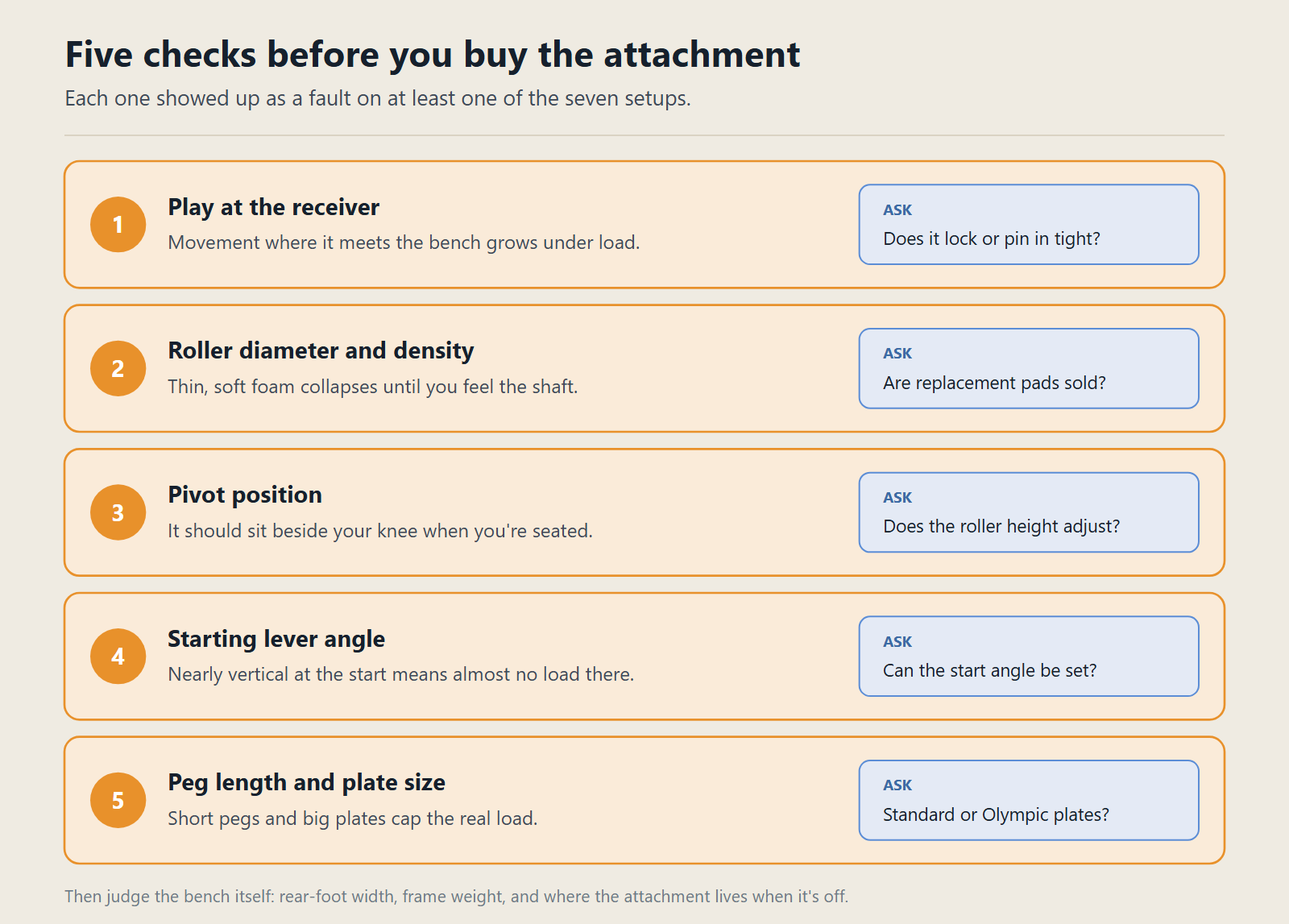
Figure 4. Five checks you can make from the spec sheet, a video and a tape measure.
- Play at the receiver. Any visible movement where the attachment meets the bench grows under load and shows up at the start of every rep.
- Roller diameter and density. Small, soft rollers collapse until you feel the shaft. Look for dense foam with a decent diameter, and check that replacement pads are sold.
- Pivot position. The pivot should sit near your knee when you’re seated. Find a video of someone your height using it, and check the roller height adjusts.
- Starting lever angle. A lever that starts almost vertical gives you almost no resistance at the bottom.
- Peg length and plate size. Short pegs and big plates limit the real load more than the frame rating does. Check whether it takes standard or Olympic plates, and the largest diameter that clears the floor.
Check the bench too: rear-foot width, total frame weight, and where the attachment lives when it’s off.
Free Tools for Training Legs Without Machines
- Machine Swap Finder: type any gym machine, including the leg extension, and get three ranked swaps, with a gear line showing which ones need a bench.
- Load Converter: turn a machine weight into a starting load for the free-weight or band version.
- Loadable Weight Rounder: see what your plate jumps mean in practice, and which load to use when your target falls between two.
Questions People Ask About Leg Extension Attachments
Are bench leg extension attachments worth it?
Some are. A secure attachment that lines up with your knees adds useful quad isolation to a small gym. Most budget versions are too unstable, poorly aligned or limited in range to choose a bench for. Buy the bench for pressing first and add the attachment only if it fits.
What is the best leg extension attachment for a bench?
In my testing, the Ironmaster Leg Attachment PRO on the Super Bench PRO V2. It fitted with little play, lined up reasonably with my knees, kept the rollers on my lower shins and supported both extensions and curls without making the bench unstable.
Why does the leg extension feel easy at the bottom and hard at the top?
On a plate-loaded lever, resistance depends on how far the plates sit horizontally from the pivot. With your shins hanging down the plates are almost directly below the pivot, so there’s little leverage. As your legs rise, that distance grows and the rep gets harder.
Can a bench attachment replace a leg extension machine?
Not fully. A commercial machine uses a cam to keep tension even and changes weight with a pin. A bench attachment has a rising resistance curve and slower plate changes. It works best as finishing work after squats, lunges or split squats.
Do bench leg curl attachments work?
Usually worse than the extensions. Hips lift off the pad, the roller slides toward the calves and the pivot rarely lines up with your knees. Romanian deadlifts, sliding curls, Nordic curls and band curls train the hamstrings better at home.
How much weight can a bench leg attachment hold?
It varies by model. The Ironmaster Leg Attachment PRO is rated to 200 lb of plates. In practice peg length, plate diameter and bench stability limit you well before most ratings do, so moderate loads for 10 to 20 reps work best.
Why does my bench move during leg extensions?
The attachment hangs the load out beyond the bench’s front support, which creates a turning force that can lift or slide the frame. A heavier bench, a wide rear stabilizer and rubber flooring help. If it still moves, reduce the load.
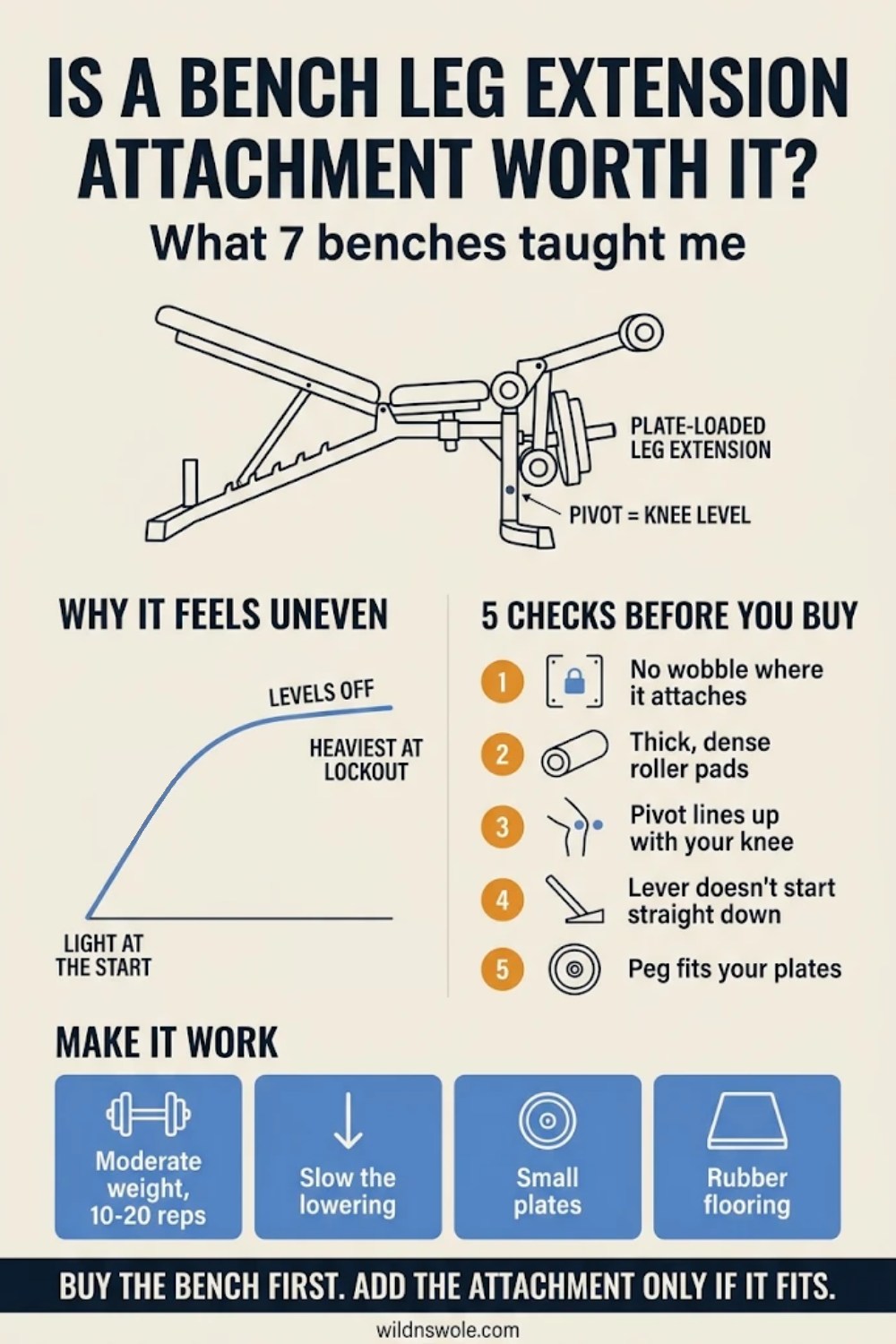
The whole article on one page. Save it for the next time you’re comparing benches.
The Verdict on Leg Extension Attachments
Most of the leg extension attachments I tried weren’t completely useless. They created resistance, fatigued the quads and added a movement to a small home gym. The problem was that many did those things poorly: budget models had loose connections, weak rollers, unstable frames and awkward pivots, and their leg curls were especially disappointing.
The Ironmaster attachment was the best overall because it felt secure, lined up reasonably well and handled both extensions and curls without making the bench unstable. Body-Solid was the sturdiest alternative and the Force USA MyBench the best middle-ground value. The cheaper attachments only worked once I accepted lighter weights, slower reps and imperfect movement paths.
I wouldn’t choose a weight bench mainly for its leg developer. Buy the most stable, comfortable, correctly sized bench for pressing, then add an attachment only if it connects securely, lines up with your knees and fits how you actually train. A good bench gets used almost every workout. A bad leg attachment usually ends up leaning against the garage wall.
Leg extensions are one machine. The Machine Swap Playbook covers eighteen swaps across the six patterns the gym’s queues form around, with a one-page cheat sheet you can screenshot and use mid-workout.
→ Send me the playbook — it’s free
Affiliate disclosure: WildnSwole earns a commission when you click a link to a partner and make a purchase. As an Amazon Associate, I earn from qualifying purchases. Commissions do not change what the content recommends and they do not add to what you pay.
The content in this article is for general information only and does not constitute medical or personal training advice. Always consult a qualified professional before making changes to your training.
Leave a Reply