I Compared Three 100 lb Adjustable Dumbbells. One Asked for Far Fewer Compromises.
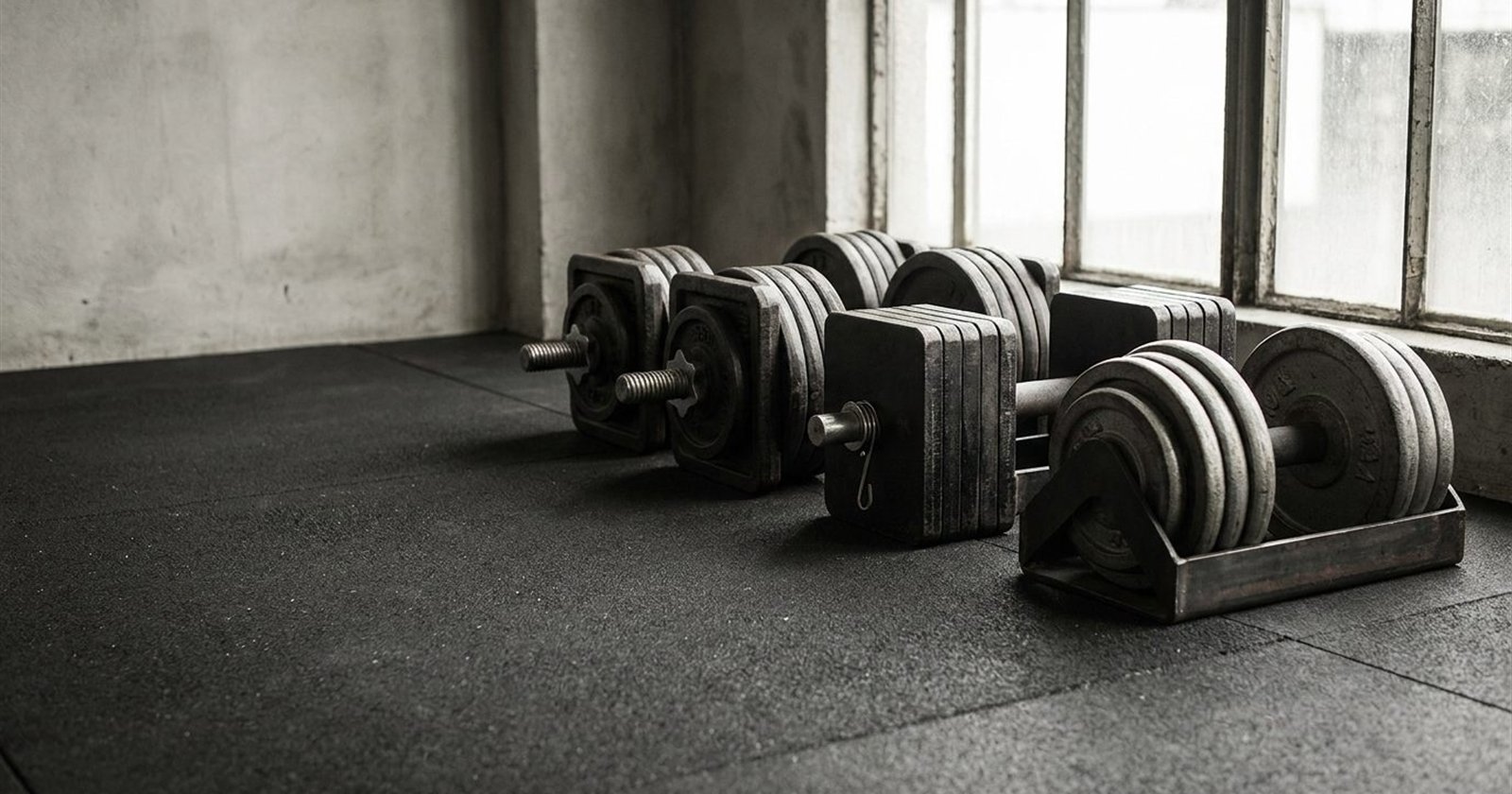
Illustration. Three ways to solve the same problem, and the shape of each one tells you what it gave up.
At 25 pounds, an adjustable dumbbell only has to be convenient. At 100 pounds it has to be trusted, and that changes which design decisions matter. Most 100 lb adjustable dumbbells reach the number on the box. Far fewer stay secure, comfortable and quick to change once you are actually rowing, pressing and deadlifting with them.
A selector with a little play is unremarkable at light weight and unnerving at 100. A thick rubber handle is fine for curls and finishes your rows before your back does. An adjustment that takes 40 seconds is a rounding error between straight sets and ruins a superset. The weight class does not just scale the numbers, it reorders the priorities.
I trained with three heavy systems side by side: the REP x PÉPIN FAST Series, the Ironmaster Quick-Lock with its 120 lb add-on kit, and the PowerBlock Pro 100 EXP. Heavy dumbbells are also what make home training replace a commercial gym, which is the whole idea behind the free Machine Swap Playbook.
The short version: the REP x PÉPIN FAST Series is the one I would buy, Ironmaster is the one I would trust longest, and the PowerBlock Pro 100 EXP is the one to choose if you want to buy in stages and keep the floor clear.
Why 100 lb Adjustable Dumbbells Are a Different Category
The jump to triple digits changes four things at once.
Grip becomes the limiter. Below about 60 pounds, handle quality is a comfort question. At 90 to 100 it decides whether you finish the set, because a slick or overly thick handle fails before the target muscle does. This is why metal knurling stops being a preference at this weight.
Length becomes a real constraint. Many designs get longer as they get heavier. A dumbbell can hit 100 pounds and still be unpleasant, because a long weight is awkward to curl, hard to position for pressing, and prone to catching your legs.
Failure consequences change. A misbehaving selector at 20 pounds is annoying. The same fault holding 100 pounds above your chest is a different conversation, which is why an inspectable mechanism matters more here than in any lighter class.
Replacement support becomes part of the purchase. A cheap heavy adjustable dumbbell turns expensive the moment one small part breaks and cannot be replaced, because a broken selector makes the entire pair scrap.
How I Tested the Three Systems
I used each pair for the lifts that expose a heavy dumbbell’s weaknesses: one-arm rows, floor presses, shoulder presses, Romanian deadlifts, split squats, shrugs, curls, lunges and heavy carries. I changed weight the way a real session does, up for rows, down for presses, down again for curls, and I paid attention to what each system demanded from me between sets.
I scored them on plate security, selector reliability, handle comfort, weight-change speed, loaded length, balance, plate movement, noise, how easy the mechanism was to inspect, and how repairable it looked. I did not throw them from shoulder height. No adjustable dumbbell should be treated like a solid commercial weight, and I wanted to know which ones survive realistic home-gym handling, not abuse.
The 100 lb Adjustable Dumbbells at a Glance
Prices are the makers’ own list prices for a pair, checked in October 2026. They move often, so treat them as a guide.
| REP x PÉPIN FAST | Ironmaster Quick-Lock | PowerBlock Pro 100 EXP | |
|---|---|---|---|
| Mechanism | Magnetic pop-pin plus microplates | Threaded locking screws | Selector pin through a nested stack |
| Shape | Pro-style round | Square plates | Rectangular, hand enclosed |
| Handle | 34 mm knurled steel | 1.25 in knurled chrome | Knurled or rubber (TPR) option |
| Maximum | 125 lb (pairs of 65, 85, 105 or 125 lb) | 120 lb with the add-on kit | 100 lb |
| Increments | 10 lb with the pin, 2.5 lb with microplates | 2.5 lb | 2.5 or 5 lb |
| Length | About 18.3 in at 125 lb | 14.5 in at 75 lb, longer at 120 | About 19.2 in |
| Expandable | Add-on weight up to 125 lb | 120 lb kit, $399 | Stage kits, $219 each |
| Price (pair) | $1,299.99 for 105 lb, $1,499.99 for 125 lb | $699 for 75 lb, $1,098 with the 120 lb kit | $539 for 40 lb, $1,196 for 100 lb |
Sources for the specs: REP x PÉPIN FAST Series, Ironmaster Quick-Lock 75 lb set and PowerBlock Pro 100 EXP.
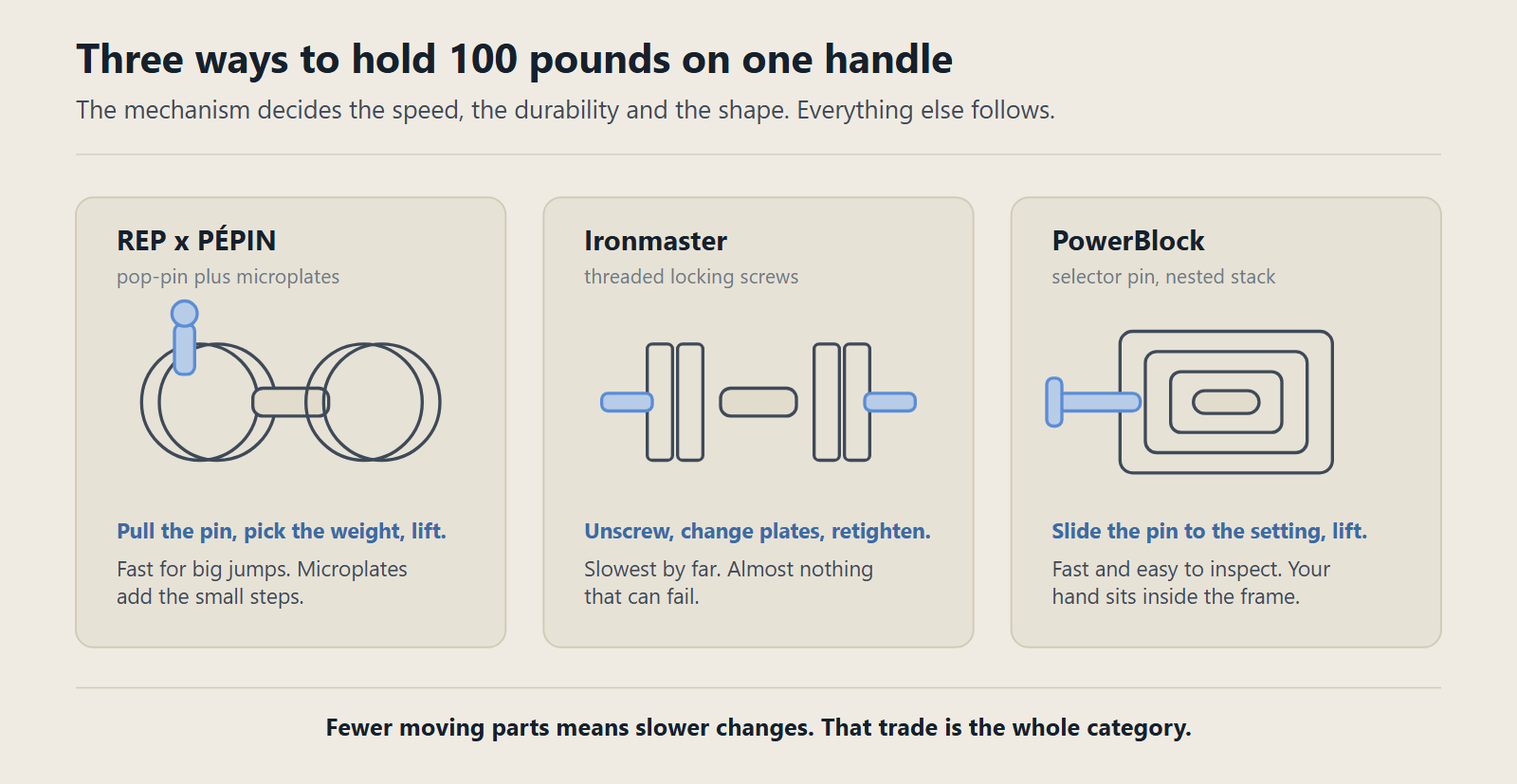
Figure 1. Fewer moving parts means slower changes. That trade is the whole category.
That table is also the argument. All three reach the weight. They differ on how quickly you can change it, how much there is to go wrong, and how they fit the room.
Best Overall: REP x PÉPIN FAST Series
This was the most complete system, and it won by having the fewest bad compromises rather than by leading any single category.
The pop-pin handles large changes quickly, so moving from heavy rows to moderate presses to lighter curls does not interrupt the session. The microplates are slower to fit, but they buy you 2.5 lb steps, which matters more than it sounds when a full 10 lb jump on both dumbbells is too much for shoulder work.
The knurled handle is the part I would not give up. At 90 to 100 pounds it felt secure without being aggressive, and the dumbbell stayed balanced rather than hanging away from my hand. REP builds the FAST Series from steel, cradles included, and quotes about 18.3 inches at its 125 lb maximum. That compactness made it noticeably easier to control than longer designs at the same weight.
Its faults are real but minor. Occasionally a plate did not settle properly into the cradle and the selector needed resetting before the dumbbell would lift cleanly. There is some plate movement during faster repetitions. And the cradle wants a stable, level surface, since uneven storage contributes to sticking and poor alignment.
None of that stopped a workout. Once the dumbbell left the cradle correctly, the selected plates felt secure, which is the only thing that is non-negotiable at this weight.
Most Durable: Ironmaster Quick-Lock
Ironmaster is the one I trusted most, for a reason you can see by looking at it.
Metal plates slide onto the handle and threaded screws clamp them down. There is no dial, no cradle-based selection, and nothing hidden inside a housing. Tightened properly, the plates compress against each other and the dumbbell feels closer to a fixed weight than anything else here, with markedly less rattle than selector-based systems. The square plates also stop it rolling away.
I worried less about a slightly rough set-down with these than with any dial system, because there is less that one ordinary mistake can ruin.
The cost is speed, and it is not small. Every significant change means removing the screws, adding or removing plates at both ends, realigning the stack, reinserting, tightening, and then doing all of it again on the second dumbbell. Straight sets absorb this inside a normal rest period. Supersets, circuits and drop sets do not. I timed every change in my Ironmaster dumbbell review, if you want the seconds.
One habit comes with it. The screws stayed dependable, but occasionally one would accept a small extra turn after a set. None ever released, and a one-second check before each heavy set is what keeps that true. The design is strong and it still relies on you tightening it.
Note the ceiling. The standard set stops at 75 lb. Reaching 120 lb takes the add-on kit, which adds two 22.5 lb plates per dumbbell and longer screws, so budget for both if heavy is the point.
Best for Small Rooms: PowerBlock Pro 100 EXP
PowerBlock solves a different problem: getting to 100 pounds without a rack, and without paying for all of it on day one.
The nested rectangular stack keeps the weight grouped around your hand and lets a pair sit in a small square of floor. By length it is the longest of the three at about 19.2 inches, so its advantage is footprint and storage rather than a short dumbbell. The selector pin moves quickly, large changes are far faster than Ironmaster, and you can see the pin passing through the stack, which makes the mechanism easy to verify. Expansion happens in stages, 40, 60, 80 and then 100 lb, so you can start small and add a kit when you outgrow it.
The shape is the deciding factor and it divides people. For rows, presses, split squats and curls the compact balance felt controlled. But the rails around the handle change how some movements feel, and they eat the space available to large hands or wrist wraps. The knurled handle improves the grip, and it still does not feel like a conventional round dumbbell.
Its faults are alignment faults. The pin is reliable when fully inserted, so the risk is forgetting to confirm that it is. Nested plates occasionally resist separating cleanly when the stack is sitting unevenly. Neither is serious, and both reward a glance before you lift. I logged the longer-term wear in my six-month PowerBlock test.
Speed Versus Durability at 100 lb
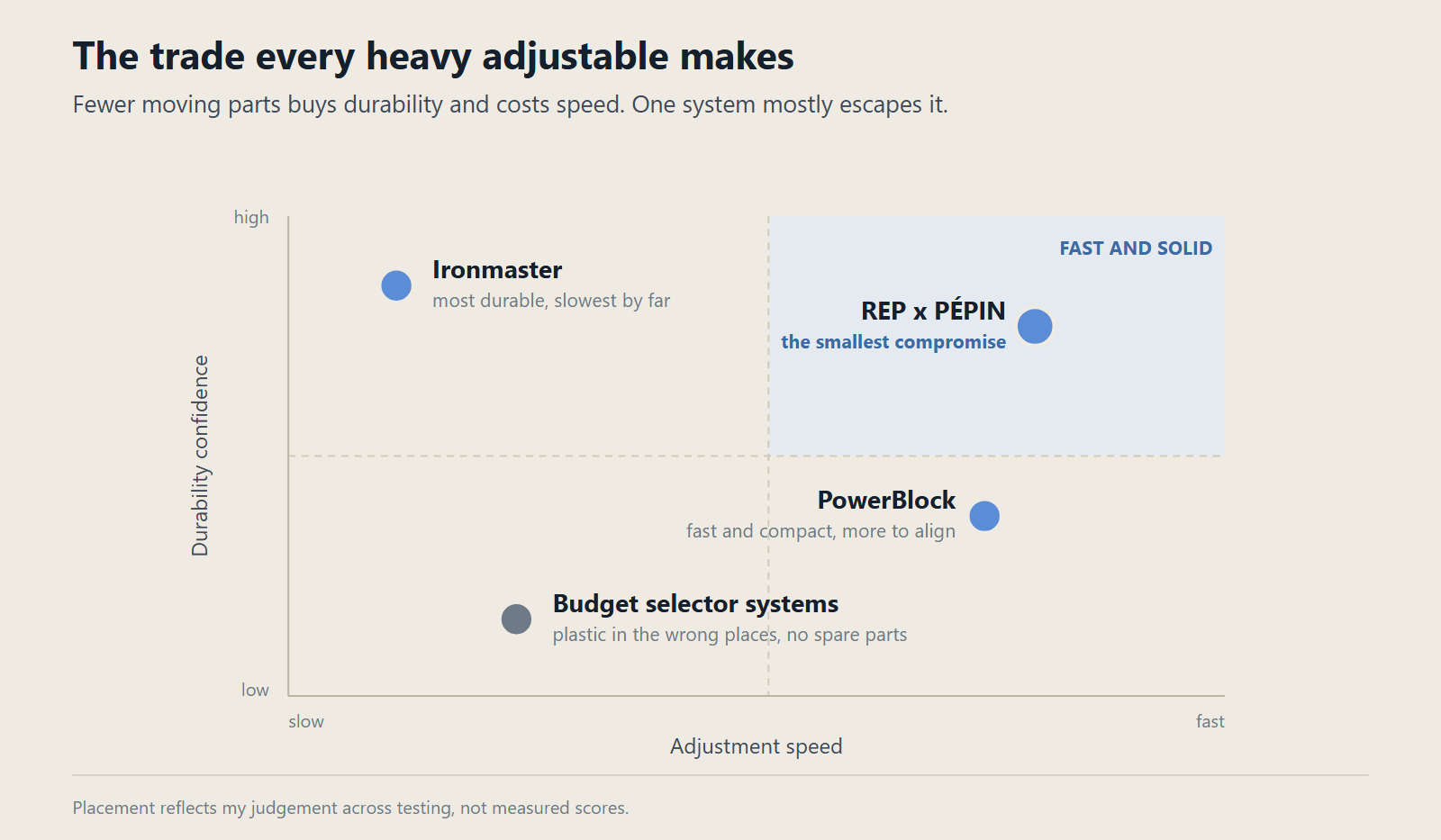
Figure 2. Ironmaster and PowerBlock sit at opposite ends of the trade. REP mostly escapes it.
Every heavy adjustable dumbbell trades adjustment speed against durability. Ironmaster gives up nearly all of its speed to have almost nothing that can fail. PowerBlock is fast and asks you to keep the stack aligned. The REP x PÉPIN gets closest to having both, which is why it wins overall even though it does not lead either category outright.
If you drop your dumbbells after a hard set, none of these is the answer. Fixed dumbbells are. I covered which parts give out first in what breaks first on adjustable dumbbells.
Get the whole system, not just the dumbbells
A heavy pair of adjustables replaces more of the gym than most people expect. The Machine Swap Playbook maps every common gym station to its movement pattern, gives three ranked swaps for each, and shows which ones a pair of dumbbells unlocks, with the load rules on a single printable page.
Eighteen swaps. Forty pages. Free, no upsell.
What I Did Not Test
I compared these three properly. I also tried several less-established heavy adjustable systems using rotating dials, sliding selectors and plate-loaded handles, and they are the basis for the five checks below.
I am not going to present that as a complete survey of the category, because it is not one. New entrants arrive at this weight every few months, and a fair verdict on a product needs more than a brief trial. Treat the three named systems as tested and the rest as context.
Which of the 100 lb Adjustable Dumbbells to Buy
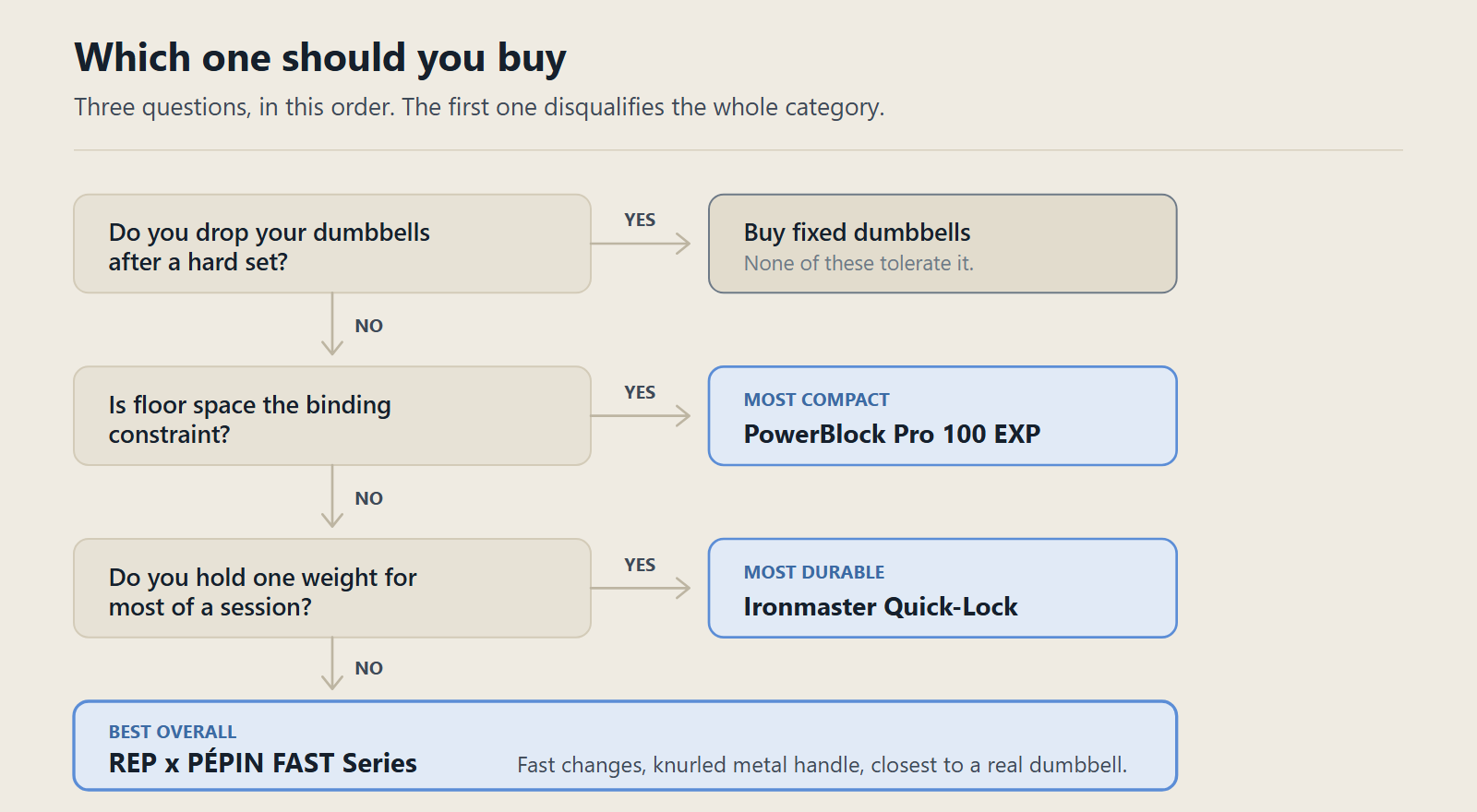
Figure 3. Three questions, in this order. The first one rules out the whole category.
Buy the REP x PÉPIN if you want one system to handle nearly all your dumbbell training, you change weight often, and you want something that feels like a proper heavy dumbbell rather than a gadget. It is the pair I kept reaching for.
Buy Ironmaster if you train heavy from a plan with long rest periods, you value equipment you can understand and repair, and slow weight changes do not bother you. It is also the one I would trust most after an accidental knock, which is not the same as saying you should drop it.
Buy PowerBlock if floor space is the binding constraint, you want to expand in stages rather than all at once, and the rectangular shape does not bother you. Try the hand clearance first if you have large hands or train in wraps.
Skip the cheaper alternatives. At lighter weights a budget adjustable is a reasonable gamble. At 100 pounds, selector quality, plate security and replacement support matter too much to guess at.
What You Need to Buy
One heavy pair and somewhere level to keep it. Each of these systems wants a flat, stable surface for its cradle or stack, so plan for a stand or a clear patch of rubber flooring.
Best overall: REP x PÉPIN FAST Series
The pair I would buy. REP sells the FAST Series direct, in 65, 85, 105 and 125 lb pairs, and the smaller pairs can be expanded later with add-on weight.
See the REP x PÉPIN FAST Series at REP
Only need 60 lb or less? REP’s QuickDraw Adjustable Dumbbells use steel plates and a knurled handle in pairs that top out at 60 lb a hand. They are not a 100 lb option, but they are the cheaper way into REP’s design if you will never need that much.
Best for small rooms: PowerBlock Pro 100 EXP
The PowerBlock Pro 100 EXP on Amazon is the Stage 1 starting point, 5 to 40 lb. Stage 2, 3 and 4 kits take it to 60, 80 and 100 lb.
Check the PowerBlock Pro 100 EXP on Amazon
Most durable: Ironmaster Quick-Lock
Ironmaster sells direct. Buy the Quick-Lock 75 lb set and add the add-on kit to 120 lb if you want past 75.
Five Things to Check Before You Buy 100 lb Adjustable Dumbbells
The weaker systems I tried failed in predictable places. Check these before buying anything in this weight class.
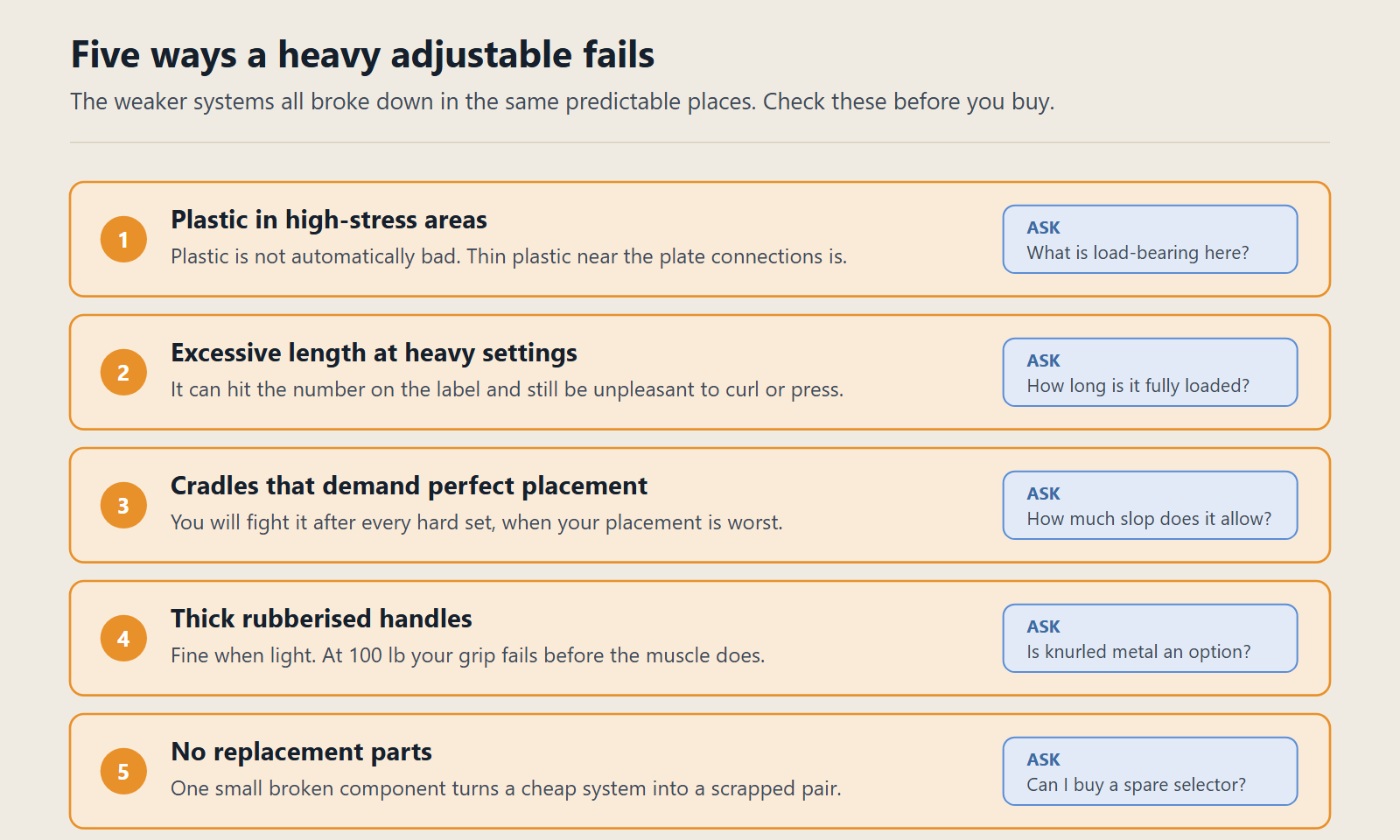
Figure 4. The five checks, each with the question worth asking before you pay.
- Plastic in high-stress areas. Plastic is not automatically bad. Thin plastic near the plate connections or the adjustment mechanism, holding 100 pounds, is.
- Excessive length at heavy settings. A dumbbell can reach the number on the label and still be unpleasant to actually use. Ask for the loaded length, not just the weight.
- Cradles that demand perfect placement. If the selector will not move unless the dumbbell is returned exactly right, you will fight it after every hard set, when your placement is worst.
- Thick rubberised handles. Acceptable at light weights, tiring during heavy rows and deadlifts. At 100 pounds, metal knurling is worth paying for.
- No replacement parts. Confirm that selectors, plates, cradles and handles can be bought separately. A cheap system becomes expensive the first time one small component fails.
Free Tools for Choosing Heavy Adjustable Dumbbells
- Adjustable Dumbbell Picker: answer a few questions about your room, budget and training, and it tells you which type of adjustable dumbbell suits you, or whether to buy something else first.
- Loadable Weight Rounder: see what a set’s weight jumps mean in practice, and which setting to use when your target falls between two.
Questions People Ask About 100 lb Adjustable Dumbbells
What are the best 100 lb adjustable dumbbells?
The REP x PÉPIN FAST Series, on balance. It changes weight quickly, has a knurled metal handle that holds up at heavy loads, stays compact, and feels closest to a conventional dumbbell. Ironmaster is more durable and PowerBlock is easier to buy in stages, but REP asks for the fewest compromises overall.
Are 100 lb adjustable dumbbells safe?
The three I compared were secure throughout controlled training, with no complete failures. Safety at this weight depends on the mechanism being fully engaged before you lift, so confirm the pin, screw or selector every time. That habit matters far more here than at light weights.
Can you drop 100 lb adjustable dumbbells?
No. Ironmaster tolerates an accidental knock best because it has the fewest delicate parts, but none of these are drop-safe. If your training involves releasing heavy dumbbells, buy fixed weights.
Which heavy adjustable dumbbell is most durable?
Ironmaster. Metal plates and threaded screws with no hidden selection mechanism means less to go wrong and more that can be repaired or replaced.
How much do 100 lb adjustable dumbbells cost?
Expect roughly $1,100 to $1,500 a pair at list price. In October 2026 a 105 lb REP x PÉPIN pair was $1,299.99, a 100 lb PowerBlock Pro 100 EXP pair was $1,196, and Ironmaster to 120 lb was $1,098 for the 75 lb set plus the add-on kit.
Do I need a knurled handle at 100 lb?
I would insist on it. Above roughly 60 pounds the handle stops being a comfort feature and starts limiting your rows and deadlifts before the target muscles are challenged. Thick rubberised grips are the most common weak point in this weight class.
Are heavy adjustable dumbbells worth it over fixed?
In a compact room, yes, because the fixed alternative at this range is a large rack you probably cannot fit. In a garage with space, fixed dumbbells are simpler, cheaper per pound and take any abuse you give them.
The Verdict on 100 lb Adjustable Dumbbells
There is no perfect heavy adjustable dumbbell. Every one of these trades something away: speed, simplicity, traditional feel, footprint or price.
The REP x PÉPIN FAST Series makes the smallest trade. It is fast without feeling fragile, compact without trapping your hand, and heavy without becoming unwieldy. Ironmaster gives up speed and buys the most durability and repairability in this category. PowerBlock gives up the conventional shape and buys a small footprint and the gentlest upgrade path.
Pick based on which compromise you can live with, not on which spec sheet reads best. Among 100 lb adjustable dumbbells, the pair you keep reaching for matters more than any individual number.
Heavy dumbbells are one piece of the setup. The Machine Swap Playbook covers eighteen swaps across the six patterns the gym’s queues form around, with a one-page cheat sheet you can screenshot and use mid-workout.
→ Send me the playbook — it’s free
Affiliate disclosure: WildnSwole earns a commission when you click a link to a partner and make a purchase. As an Amazon Associate, I earn from qualifying purchases. Commissions do not change what the content recommends and they do not add to what you pay.
The content in this article is for general information only and does not constitute medical or personal training advice. Always consult a qualified professional before making changes to your training.
Leave a Reply