What Wears Out First on Adjustable Dumbbells (and What Is Just Cosmetic)
How long do adjustable dumbbells last? Nothing on mine broke in a full year. That is the short version.
What did happen was slower and easier to miss. The selector stopped feeling as precise. The plates got noisier. The plastic parts collected scratches, and the storage tray started showing every weight change it had taken. None of it mattered in the first month. By the twelfth, all of it did.
This is a wear report on a pair of Bowflex SelectTech 552s, used as my main dumbbells for a full year. Here is what wore out first, what is only cosmetic, and what can turn into a real safety concern.
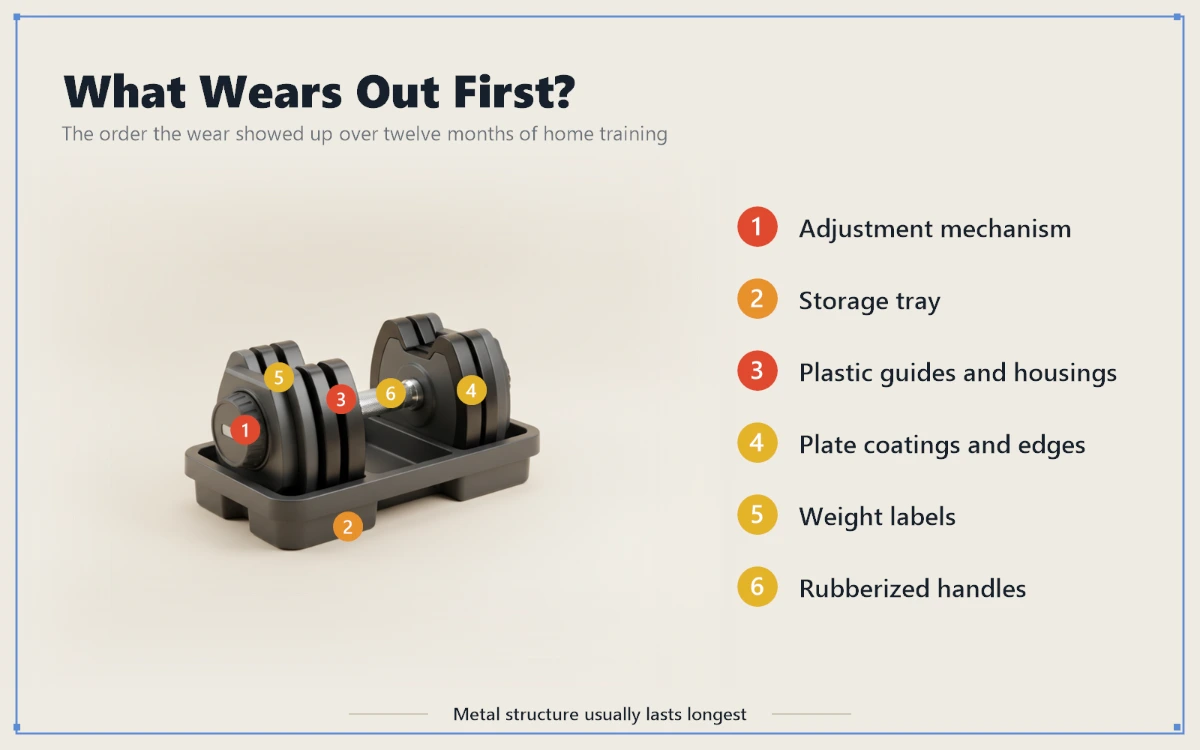
The order the wear actually showed up over twelve months. The steel was never the problem.
The First Thing to Wear Out: The Adjustment Mechanism
On the SelectTech 552, the adjustment mechanism is the pair of dials, one at each end of the handle. They were the first part to show their age.
For the first few months, both dials turned cleanly, clicked firmly into place and picked up the right plates every time. A weight change took a few seconds.
After hundreds of adjustments, they felt different. The dials became less smooth, sometimes needed more force to turn, and no longer gave the same crisp click. They never stopped working. They just stopped feeling precise.
The dials depend on several small parts moving together inside the handle, and dirt, sweat, dust and repeated pressure all affect how those parts move. None of this means the dials will fail after a year, but it is where the aging showed up first.
Warning Signs to Watch For
Stop and inspect the dumbbell when:
- The dial will not turn easily
- The selector does not line up with the weight marking
- A plate remains attached when it should be released
- The handle lifts unevenly from the tray
- The dumbbell changes weight without fully locking
- You hear grinding instead of a normal click
Do not force the adjustment mechanism. If the dial feels stuck, forcing it can damage the internal selector parts.
Change the weight only with the dumbbell sitting fully in its base. Trying to adjust it while it is tilted, partially lifted, or resting on an uneven surface can place extra stress on the mechanism.
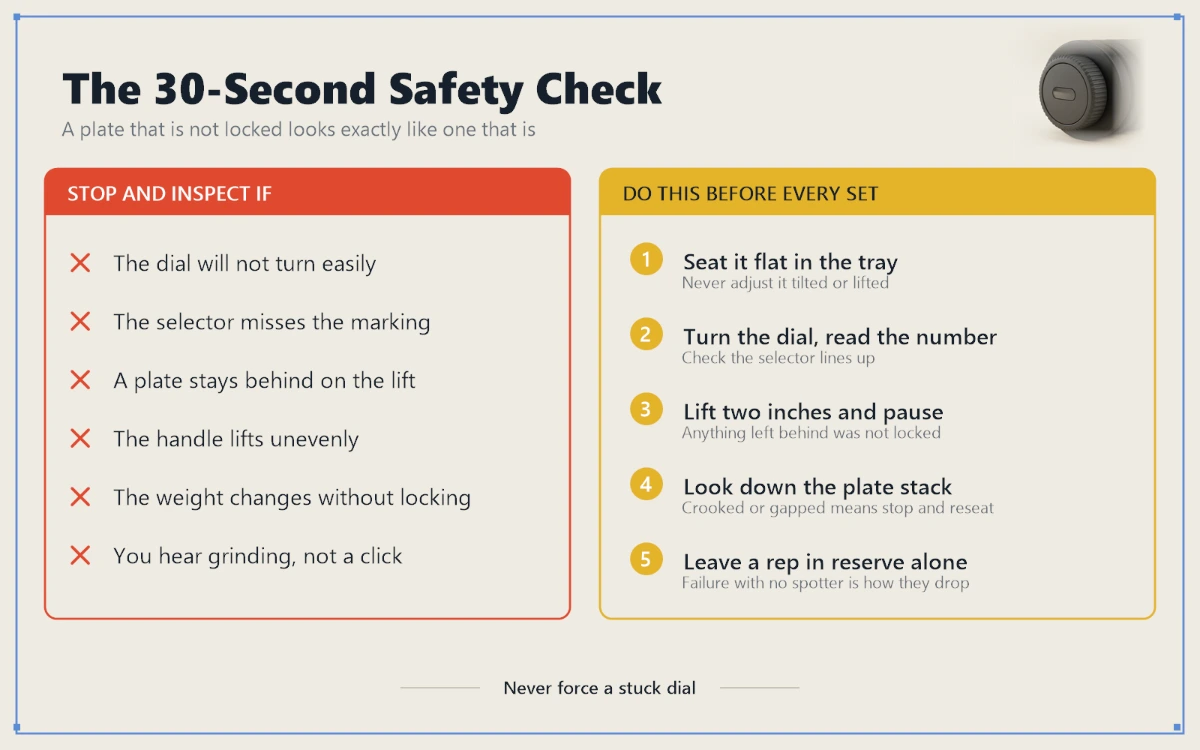
Lift it two inches and pause. A plate that stays behind was never locked.
The Weight Plates Start Rattling
The next issue I noticed was plate movement.
Some play between the plates is normal on the 552. The plates need clearance to slide in and out of the locking system.
Rattling does not always mean the dumbbell is broken. In many cases, it is simply the result of normal wear around the plate slots, locking grooves, or plastic guides.
Still, there is a difference between harmless movement and a plate that is not properly secured.
Before every set, I developed the habit of lifting the dumbbell two inches out of the tray and pausing to check whether all selected plates were locked into place.
A little noise was acceptable. A plate that looked crooked or felt loose was not.
Plastic Parts Show Damage Early
The 552 has more plastic than it looks: the dials, the plate guides and the base are all plastic.
Plastic helps keep the dumbbells lighter and makes complex adjustment systems possible. It also tends to show wear faster than steel.
After a year, the most obvious damage was cosmetic. The plastic had scratches, small dents, and areas where the finish had become dull.
The more concerning damage appeared around parts that regularly touched the storage tray. Repeatedly setting the dumbbells down caused small marks around the plate edges and selector housing.
Dropping an adjustable dumbbell can be much more damaging than dropping a standard iron dumbbell. A fixed dumbbell is a solid piece of equipment. An adjustable dumbbell is a mechanical system containing moving parts.
Even a short drop can crack a plastic guide, misalign the plates, or damage the selector.
That does not mean adjustable dumbbells are fragile enough to avoid using them seriously. It means they need to be treated more like exercise equipment and less like solid chunks of metal.
The Storage Tray Takes More Abuse Than Expected
The base may be the most overlooked part of the SelectTech. It holds the unused plates in position so the dials can pick the right ones, and the 552 cannot change weight without it.
The tray is repeatedly hit by a heavy dumbbell, especially when you are tired at the end of a set.
At first, I carefully lowered each dumbbell into place. After a hard workout, it became tempting to set it down quickly. That is when the tray absorbs the impact.
If the tray becomes damaged, the plates may no longer sit in the correct position. That can make the selector harder to turn or prevent the handle from locking properly.
Placing the tray on a stable stand helped considerably. Keeping it on the floor made weight changes more awkward and increased the chance of lowering the dumbbell at an angle.
Weight Labels Begin to Fade
This is not a serious problem, but it is one of the first visible signs of regular use.
On the 552, the weight numbers sit on the dials themselves, so your fingers pass over them at every weight change. By the end of the year, they were harder to read at a glance. Sweat and repeated contact with your hands make the problem worse.
The actual adjustment system may still work normally, but faded markings slow down weight changes because you have to look more carefully before each set.
Engraved or molded weight labels generally last longer than printed markings.
This issue is mostly cosmetic, but it shows how often the adjustment controls are handled. During a full-body workout, you may change the weight ten or twenty times. Over a year, that adds up to thousands of adjustments.
The Handles Become Uncomfortable Before They Break
The handles themselves were durable, but comfort changed over time.
The handle is unlikely to be the first major mechanical failure point, but it can become less pleasant to use.
Sweat is the main problem. If the handle is not wiped after workouts, moisture and skin oils build up around the grip and adjustment mechanism.
I found that a simple dry cloth after each workout prevented most of the buildup. Occasionally using a slightly damp cloth helped remove residue, but I avoided spraying cleaning products directly onto the dumbbell.
Liquid entering the selector mechanism is not worth the risk.
Plate Coatings Chip Around the Edges
Adjustable dumbbell plates are repeatedly moved in and out of the tray. Because of this, the edges experience more contact than the surface of a traditional dumbbell.
On my 552s, the chips showed up first around the locking slots and corners, where the plates make the most contact.
Minor surface damage is normally cosmetic. However, exposed metal can eventually develop rust in humid environments.
That is more likely in a garage, a basement, or anywhere humid.
Keeping the dumbbells dry is more important than making them look perfect. If sweat drips onto the plates, wipe them before returning them to storage.
The Dumbbells May Stop Sitting Perfectly in the Base
After several months, I noticed that returning the dumbbells to their trays required slightly more attention.
When new, the handle dropped cleanly between the stored plates. Later, I sometimes had to reposition the dumbbell so that everything lined up correctly.
This can happen because the plates shift slightly in the base, the tray becomes worn, or the dumbbell is lowered at an angle.
It becomes more common when you switch weights quickly between sets.
The solution is simple: slow down.
Before turning the dials, make sure the dumbbell is sitting completely flat. All plates should be aligned, and the handle should be fully seated in the tray.
Forcing the selector while the plates are misaligned is one of the easiest ways to damage the adjustment system.
What Did Not Break After a Year
Despite the wear, several important parts remained reliable.
The main metal structure of the dumbbells held up well. The handles did not bend. The selected weight stayed secure when the mechanism was properly engaged. The dumbbells continued to provide enough resistance for most home workouts.
I used them for:
- Biceps curls
- Hammer curls
- Shoulder presses
- Lateral raises
- Floor presses
- One-arm rows
- Goblet squats
- Romanian deadlifts
- Lunges
- Triceps extensions
For controlled strength training, they performed well throughout the year.
The problems were mostly related to convenience and wear rather than total failure.
That said, I avoided exercises where dropping the weights was likely. I would not use most adjustable dumbbells for aggressive dumbbell snatches, high-repetition cleans, or workouts where the weights are regularly thrown to the floor.
The Exercises That Cause the Most Wear
Not every exercise places the same stress on adjustable dumbbells.
Slow curls and controlled presses are relatively gentle. Exercises that involve rapid direction changes, contact with the body, or rough landings are harder on the equipment.
The movements that seemed most likely to cause wear included:
Dumbbell Thrusters
Thrusters combine a squat and overhead press. The movement is fast, and the dumbbells may collide with your shoulders or each other.
Renegade Rows
The dumbbells support part of your body weight while resting on the floor. Models with rounded plates can also feel unstable.
Dumbbell Cleans
Cleans involve fast acceleration and impact against the shoulders. The plates experience more movement than they do during traditional curls.
Heavy Floor Presses
The exercise itself is fine, but ending the set can be awkward. Tired users may drop the dumbbells or set them down unevenly.
Walking Lunges
The dumbbells may bump against your legs, especially when their design is long or bulky.
Adjustable dumbbells are best suited to controlled resistance training. They can handle hard workouts, but they are not always ideal for explosive training.
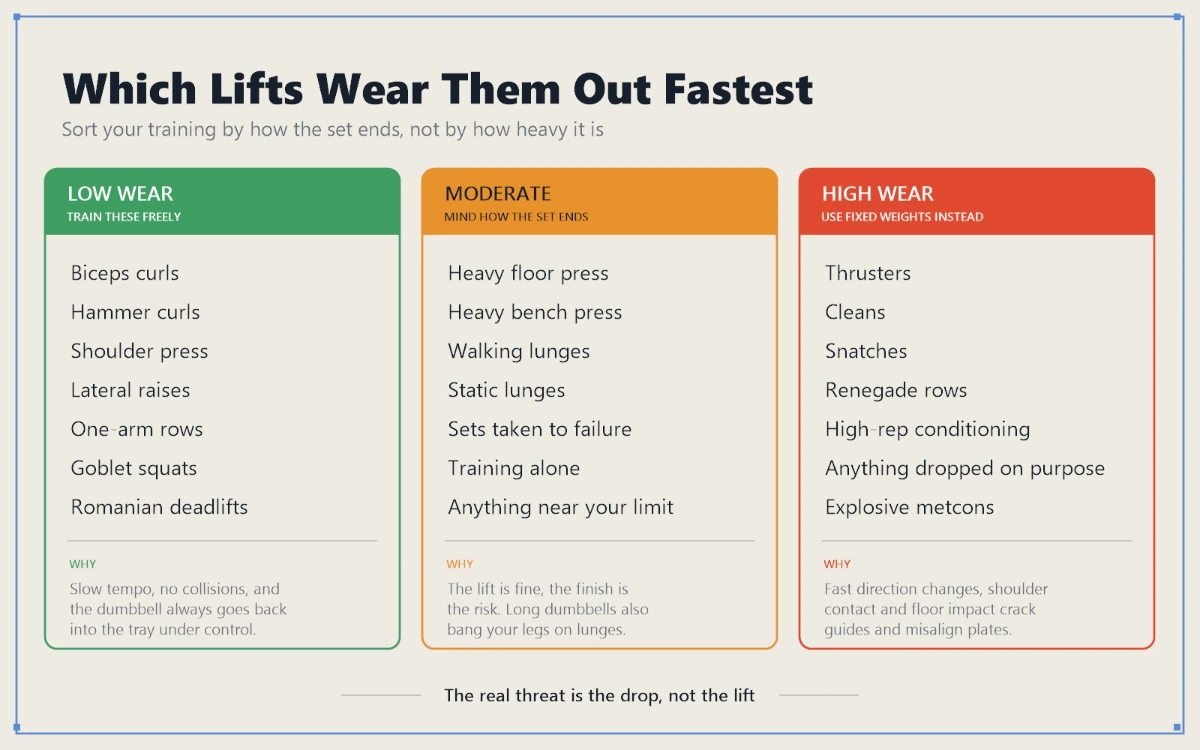
Sort your training by how the set ends, not by how heavy it is.
The Most Common User Mistake
The biggest threat to adjustable dumbbells is not normal exercise. It is dropping them.
Traditional gym dumbbells are designed to survive repeated impact. Adjustable dumbbells usually are not.
A single drop can damage:
- Internal locking tabs
- Plastic plate guides
- Selector dials
- Weight plates
- The storage tray
- The handle alignment
Even when no damage is visible, the mechanism may become slightly misaligned.
I learned to finish sets with one or two repetitions still in reserve when training alone. That reduced the chance of reaching complete failure and being forced to release the dumbbells.
A padded exercise mat also helped protect both the floor and the equipment. However, a mat does not make adjustable dumbbells drop-proof.
How I Maintained Them
Adjustable dumbbells do not need complicated maintenance, but a few habits make a noticeable difference.
I Wiped Them After Workouts
Sweat can enter small gaps, damage coatings, and make grips feel unpleasant. A quick wipe with a dry microfiber cloth was usually enough.
I Kept the Tray Clean
Dust, hair, and small debris collect inside the storage base. Removing the plates and cleaning the tray occasionally helped the dumbbells sit properly.
I Avoided Lubricating the Mechanism
Unless the manufacturer specifically recommends a lubricant, adding oil or spray can attract dirt or damage plastic components.
I Changed Weights Only in the Tray
Trying to adjust the dumbbells outside the base can place pressure on the selector system.
I Never Forced a Stuck Dial
When the adjustment felt stuck, I reseated the dumbbell and checked the plate alignment.
I Inspected the Plates Regularly
I looked for cracks, bent slots, damaged tabs, and plates that did not sit evenly.
These habits took only a few minutes but probably prevented more serious problems.
Are Adjustable Dumbbells Still Worth Buying?
After a year, I still think adjustable dumbbells are worth it for the right person.
They are ideal for someone who:
- Works out at home
- Has limited space
- Uses controlled movements
- Needs multiple weight options
- Does not want to buy a full dumbbell rack
- Is willing to handle equipment carefully
They may not be the best option for someone who:
- Frequently drops weights
- Trains with explosive movements
- Wants commercial-gym durability
- Needs extremely heavy dumbbells
- Dislikes mechanical equipment
- Shares equipment with careless users
The space savings are significant. A single pair can replace ten or more pairs of fixed dumbbells. That is hard to beat in an apartment, bedroom, office, or small garage gym.
The tradeoff is durability. Adjustable dumbbells have more parts, more movement, and more opportunities for something to wear out.
If you fit the first list above, the pair in this report is the Bowflex SelectTech 552, which adjusts from 5 to 52.5 pounds per dumbbell. Check today’s price on Amazon (affiliate link)
What I Would Look for Before Buying Another Pair
After using adjustable dumbbells for a year, I would pay more attention to construction than appearance.
My priorities would be:
A Simple Adjustment System
The fewer complicated parts, the fewer potential failure points. A smooth mechanism is more important than having the fastest possible weight change.
Minimal Plastic in High-Stress Areas
Plastic is not automatically bad, but I would avoid models that use thin plastic around the locking system or plate edges.
Replaceable Parts
Some manufacturers sell replacement trays, handles, plates, or selector components. That can extend the life of the dumbbells considerably.
A Strong Warranty
A longer warranty is especially valuable because adjustment problems may not appear immediately.
Comfortable Dimensions
Some adjustable dumbbells remain the same length regardless of the selected weight. This can make light exercises feel awkward. Compact models are easier to use for curls, presses, and lunges.
Clear Weight Markings
Engraved or molded markings are less likely to fade than stickers or printed labels.
Reliable Customer Support
A complicated product is only as good as the company supporting it. Replacement parts and responsive service matter more than expected.
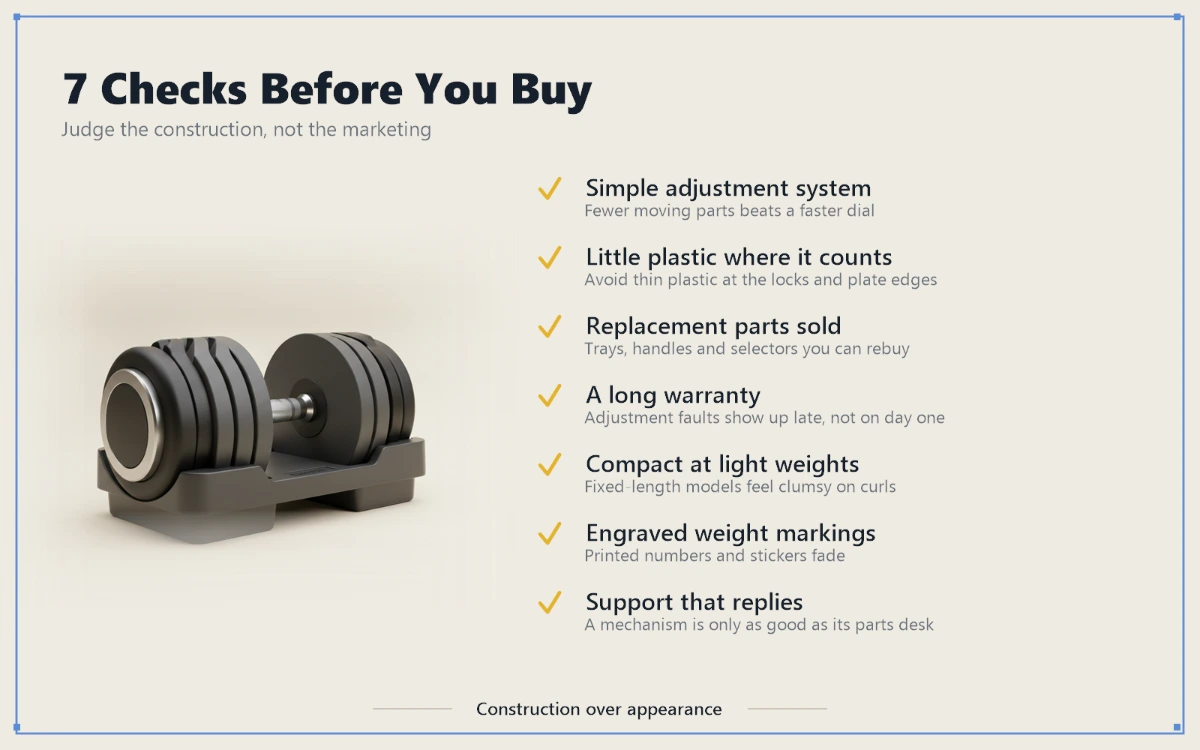
Judge the construction, not the marketing.
Free guide
Buying your first adjustable dumbbells? Start with the swap list.
The free Machine Swap Playbook maps every common gym machine to the movement it trains and ranks the three purchases that cover the most gaps.
Fixed Dumbbells Versus Adjustable Dumbbells After One Year
Fixed dumbbells are clearly more durable. They have no dials, selectors, trays, or removable plates.
They are also simpler to use. You pick up the weight and begin exercising.
However, a complete fixed-dumbbell set takes up much more room and can cost considerably more, especially when you include a storage rack.
Adjustable dumbbells make more sense when space is the main concern. Fixed dumbbells make more sense when durability and speed are the main priorities.
For a small home gym, I would still choose adjustable dumbbells. For a large garage gym or shared training space, I would prefer fixed weights.
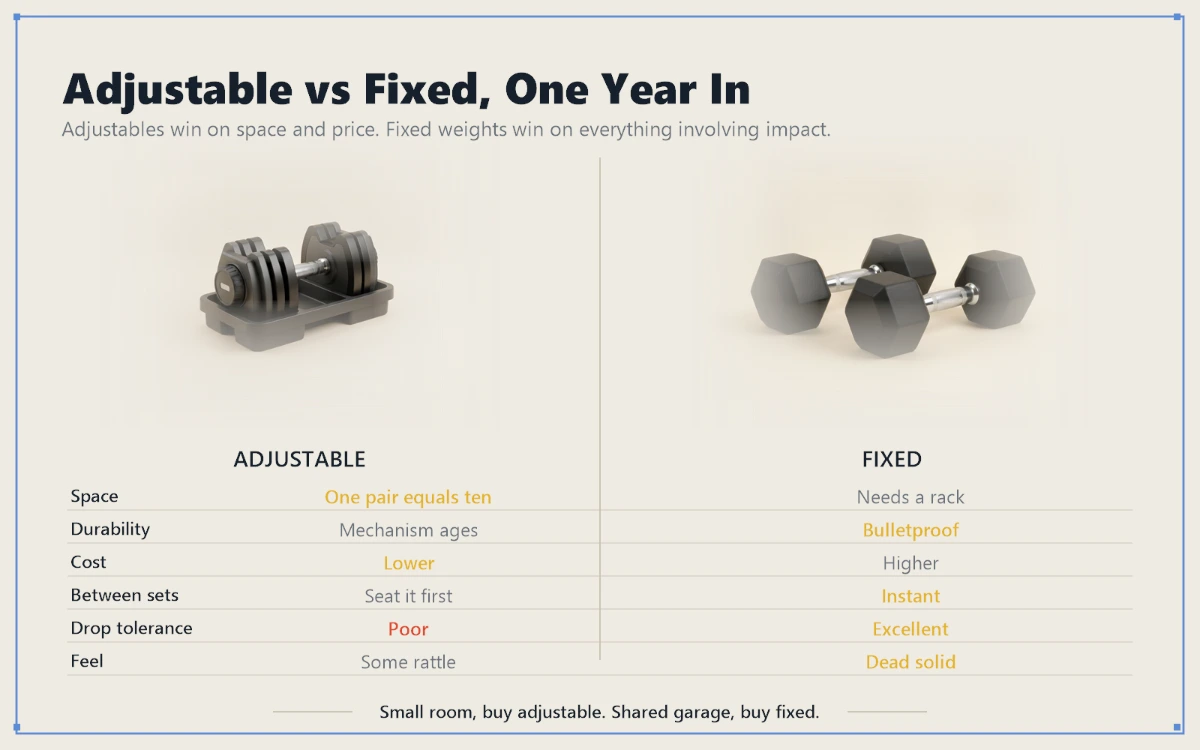
Adjustables win on space and price. Fixed weights win on everything involving impact.
What Actually Breaks First?
After one year, the adjustment system showed wear before anything else.
It did not completely fail, but it became less smooth and required more careful alignment. The plates became noisier, the plastic parts collected damage, and the tray showed the effects of repeated use.
In order, the most noticeable wear appeared in:
- The selector or adjustment mechanism
- The storage tray
- Plastic plate guides and housings
- Plate coatings and edges
- Weight labels
- Rubberized handle surfaces
The solid metal components were generally the most durable.
The biggest lesson was that adjustable dumbbells rarely fail like a simple broken object. They age through small changes. The dial becomes harder to turn. The plates sit less neatly. The tray develops wear. The dumbbell still works, but it demands more attention.
Where Each Design Wears First
The pattern above held across every system I have tested long-term, but each design wears in its own place.
PowerBlock (a pin through a block stack): only cosmetic wear after six months of daily use. The pin scratched and the blocks polished, but nothing loosened. Read the PowerBlock durability review.
Bowflex SelectTech (twist dials and a cradle, the design in this report): stiff dials, plate rattle and a smoother grip across 500 logged sets. Nothing failed, but the small faults added up. Read 500 sets with the Bowflex SelectTech.
NÜOBELL (a rotating handle and a cradle): a solid lock once lifted, but the handle only turns when the plates sit square in the cradle. Read the NÜOBELL 580 review.
Free Tools for Choosing Adjustable Dumbbells
- Adjustable Dumbbell Picker: answer a few questions about your room, budget and training, and it tells you which type of adjustable dumbbell suits you, or whether to buy something else first.
- Loadable Weight Rounder: see what a set's weight jumps mean in practice, and which setting to use when your target falls between two.
Adjustable Dumbbells: Common Questions After a Year of Use
What breaks first on adjustable dumbbells?
The adjustment mechanism is usually the first part to show wear, whether it uses a dial, a selector, or a pin. It rarely fails outright. It simply stops feeling precise. The dial becomes looser, requires more force, or no longer gives a clean click. After that, wear appears in the storage tray, the plastic plate guides, the plate coatings, the weight labels, and finally the grip surface.
How long do adjustable dumbbells last?
They can last well past a year with careful handling. After twelve months of regular training, nothing on mine had actually failed. The steel handles, the frame, and the load security were all still fine. What changed was smoothness. Adjustable dumbbells age gradually through small annoyances rather than breaking in one obvious moment.
Are adjustable dumbbells safe to use?
Yes, when the plates are fully locked and the weight is changed properly. The risk is a plate that looks seated but is not. Before every set, lift the dumbbell two inches out of the tray and pause. Anything that stays behind was never locked. Stop and inspect the dumbbell if you hear grinding instead of a clean click.
Why do my adjustable dumbbells rattle?
Some movement between the plates is normal and intended. The plates need enough clearance to slide in and out of the locking system. That clearance grows as the plate slots, the locking grooves, and the plastic guides wear. Noise on its own is not a fault. A plate that sits crooked or feels loose is.
My selector dial is stiff or stuck. What should I do?
Do not force it. A stuck dial usually means the plates are not sitting square in the tray, and forcing it can damage the internal selector. Lift the dumbbell out, set it back down completely flat, check that the plates are aligned in their grooves, and then try again. Do not lubricate the mechanism unless the manufacturer specifically recommends it.
Can you drop adjustable dumbbells?
You should not. Dropping them is the single biggest threat to the equipment. A traditional gym dumbbell is one solid piece built to survive impact. An adjustable dumbbell is a mechanical system containing moving parts. A single drop can crack a plastic plate guide, bend a locking tab, misalign the plates, or damage the tray. Even when no damage is visible, the mechanism may become slightly misaligned.
Which exercises are hardest on adjustable dumbbells?
Exercises that involve rapid direction changes, contact with the body, or rough landings are the hardest on the equipment. Thrusters, cleans, snatches, renegade rows, and high-repetition conditioning are the worst offenders. Heavy floor presses and walking lunges fall in the middle, where the lift itself is fine but the end of the set is the risk. Curls, presses, rows, goblet squats, and Romanian deadlifts cause almost no wear.
Do I have to use the storage tray?
For most designs, yes. The tray holds the unused plates in position so that the selector can pick the correct ones, and many adjustable dumbbells cannot change weight safely without it. Always return the dumbbell fully to the tray before changing the weight. Adjusting it while it is tilted, partially lifted, or resting on an uneven surface places extra stress on the mechanism.
How do I clean and maintain adjustable dumbbells?
Wipe the handles with a dry microfiber cloth after every session. Sweat and skin oils are what degrade the grips and work their way into the mechanism. Clear dust and debris out of the tray occasionally. Never spray cleaning products directly onto the dumbbell. Avoid lubricant unless the manufacturer recommends one, because it can attract dirt and damage plastic components.
Will adjustable dumbbells rust in a garage or basement?
They can. Plate coatings chip around the locking slots and corners because those edges take the most contact, and exposed metal can eventually develop rust in humid conditions. This is more likely in a garage, a basement, a covered outdoor area, or a room near the coast. Keeping the dumbbells dry is more important than making them look perfect. Wipe sweat off the plates before returning them to storage.
Are adjustable dumbbells worth it compared to fixed dumbbells?
For a small home gym, yes. A single pair can replace ten or more pairs of fixed dumbbells, at a lower total cost and a fraction of the footprint. Fixed dumbbells are better on everything involving impact, including durability, drop tolerance, and speed between sets. Adjustable dumbbells make more sense when space is the main concern. Fixed dumbbells make more sense for a garage, a shared gym, or explosive training.
What should I look for when buying adjustable dumbbells?
Pay more attention to construction than appearance. A simple adjustment system with fewer parts is more valuable than the fastest possible weight change. Avoid models that use thin plastic around the locking system or the plate edges. Check that replacement trays, handles, and selectors are actually sold, and look for a long warranty, engraved rather than printed weight markings, compact dimensions at light weights, and responsive customer support.
How Long Do Adjustable Dumbbells Last? The Short Answer
Living with adjustable dumbbells for a year changed how I think about home gym equipment.
They are not indestructible, and they should not be treated like traditional iron dumbbells. Their weakest point is usually the adjustment mechanism, followed by the storage tray and plastic plate guides.
However, they remain one of the most practical options for home strength training.
So how long do adjustable dumbbells last? Mine made it through a full year with nothing failing, and with careful handling, regular cleaning and controlled exercise selection, a good pair can keep working well beyond that. Most of the early wear is manageable, and many problems can be avoided simply by placing the dumbbells into the tray correctly and never dropping them.
I would buy adjustable dumbbells again, but I would treat them as precision equipment rather than ordinary weights.
That small change in mindset may be the difference between a pair that lasts several months and one that remains useful for years.
Check today's price on the Bowflex SelectTech 552 (affiliate link)
Disclosure: As an Amazon Associate, I earn from qualifying purchases. If you buy through a link in this post, I may earn a small commission at no extra cost to you.
3 Responses to What Wears Out First on Adjustable Dumbbells (and What Is Just Cosmetic)