NÜOBELL 580 Review: I Worked Out Exactly When the Price Holds Up
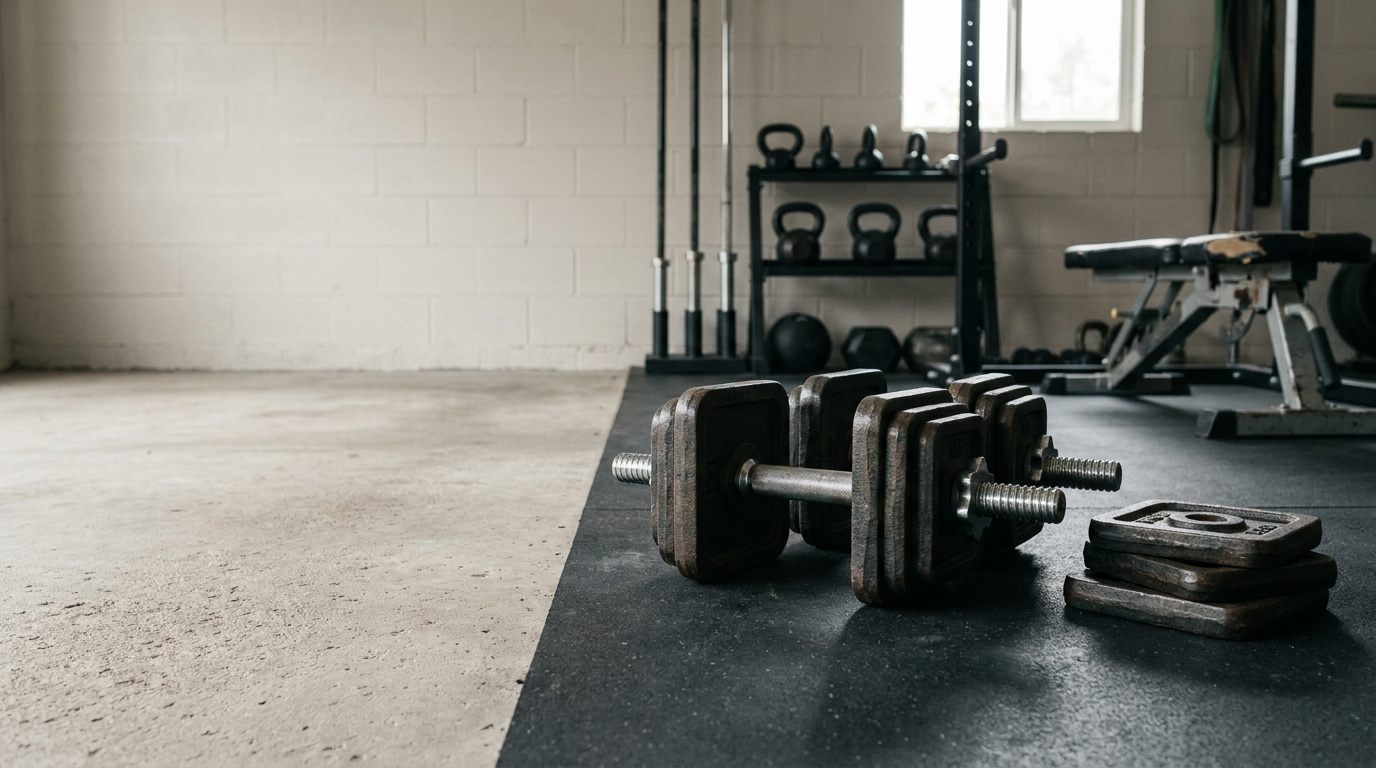
Illustration. The entire argument for these in one frame: a full 5 to 80 lb range occupying a corner of a flat.
Most people judge the NÜOBELL price against the wrong thing. Put it beside two dumbbells and it looks absurd. Put it beside the 32 dumbbells and the rack it replaces, and the arithmetic changes completely.
This NUOBELL 580 review answers that question after months of using the 580s as the only dumbbells in a small home gym. Not whether they feel nice, because they do. Whether the premium survives contact with a calculator.
The short answer: there is a break-even you can work out in about ten seconds, it depends on two numbers specific to you, and it moves the verdict from “expensive” to “cheap” more often than I expected. It also fails completely for one very common type of buyer.
I paid $769 a pair in October 2025. Prices move, so use yours, not mine, in the maths below.
What You Are Actually Buying
The 580 covers 5 to 80 pounds in 5-pound jumps. That is 16 settings per dumbbell, so 32 dumbbell configurations across the pair, and the setting number is simply the weight divided by five all the way up.
Changing weight means seating the dumbbell in its cradle, twisting the handle until the number you want shows in the indicator window, and lifting straight up. The unselected plates stay behind in the cradle. No pin to remove, no plates to load, no adjusting each end separately.
Two consequences of that design matter more than the spec sheet suggests. The dumbbell physically shortens as you select less weight, because the unselected plates never leave the cradle. And the handle is real knurled steel rather than a rubber sleeve, so it does not go slippery or tacky as it ages.
The Comparison That Actually Decides It
A fixed rack covering the same 5 to 80 pounds in 5-pound increments needs 16 pairs, which is 32 individual dumbbells, plus a multi-tier rack to hold them, plus the floor space to stand in front of it, plus freight on roughly 1,400 pounds of iron.
The NÜOBELL pair needs two cradles and about four square feet.
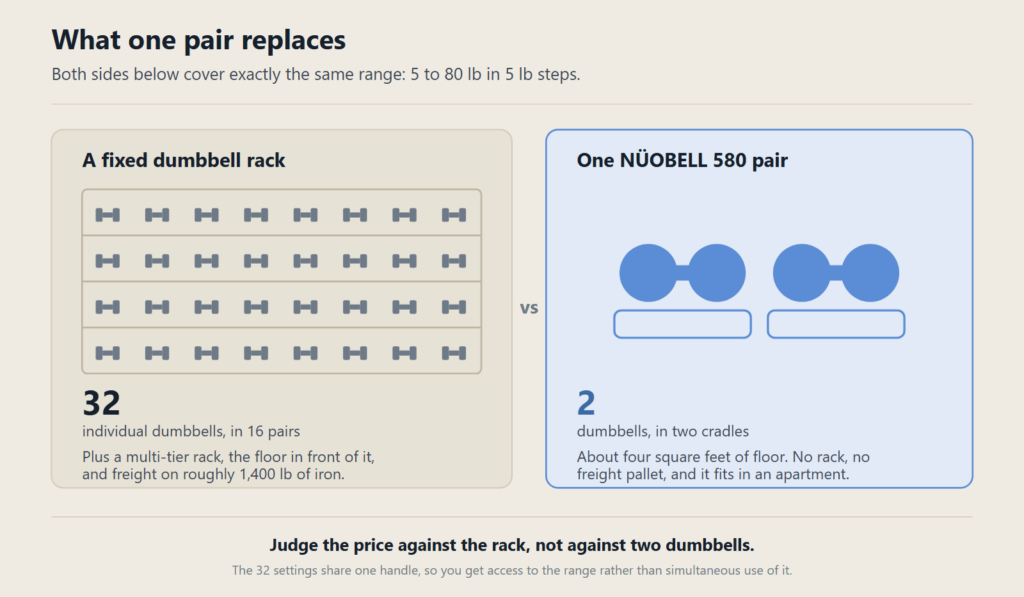
Figure 1. Both sides cover exactly the same range. Only one of them fits in a bedroom.
That is the comparison the price should be judged against, and almost nobody makes it. Against budget adjustables the NÜOBELL is expensive. Against a complete fixed rack it is frequently the cheaper option once delivery is included, and in an apartment it is often the only option at all, because the rack was never going to fit.
The Break-Even, In Two Numbers
Cost per setting. Divide what you paid by 32. That is what each dumbbell configuration cost you. Compare it to what one single fixed dumbbell costs from your local supplier, delivered. If your per-setting number is lower, the pair has already won on cost alone, before space enters the argument.
The calculation is not perfect, and I want to be honest about why. The 32 configurations share one handle and one mechanism, so you cannot set down the 20-pound pair and immediately grab the 40s. You are buying access to the range, not simultaneous use of it.
Cost per session. Divide what you paid by the number of workouts you realistically expect. Four sessions a week for four years is over 800 workouts, and almost any premium collapses to pennies across that. Twice a month for a year is 24, and no premium survives that.
This is where the verdict actually gets decided, and it has nothing to do with the product. Someone training four times a week who uses everything from 10-pound lateral raises to 80-pound rows extracts enormous value. Someone who never goes above 40 pounds is paying for half a machine they will never touch.
Where the Premium Is Real
Adjustment speed. One-handed, a few seconds, no pin and no loose plates. Fast enough for supersets and most drop sets. This is the single biggest practical difference from a plate-loaded system.
Traditional handling. Round plates, an open handle, knurled steel, and a profile that shrinks with the weight. During curls, rows, presses and lunges I stopped noticing I was using an adjustable dumbbell, which is difficult to achieve and worth paying for.
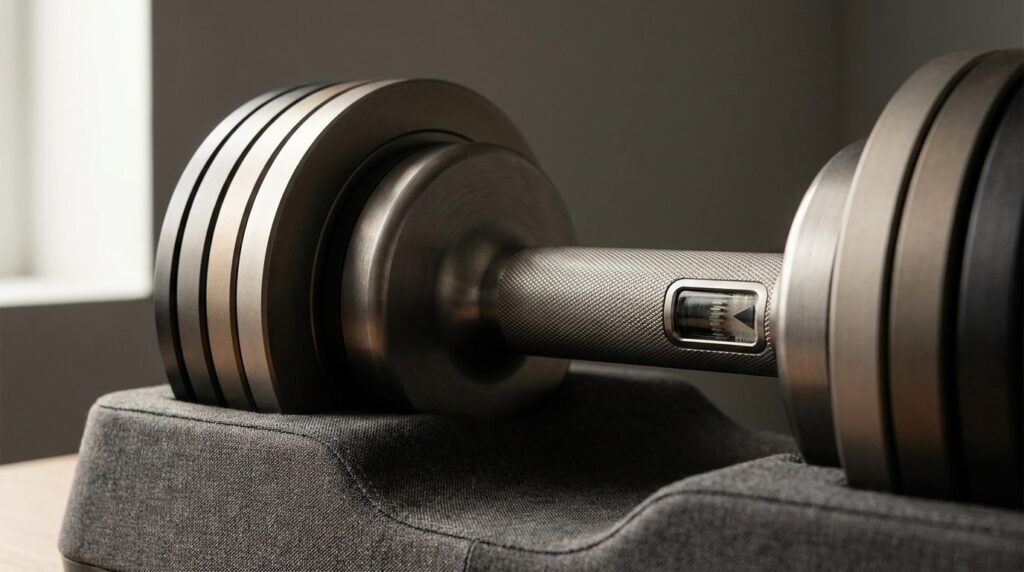
Illustration. Knurled steel rather than a rubber sleeve, which is why the grip does not go slippery or tacky as it ages.
Range in one object. Five to 80 pounds covers light isolation work through moderately heavy compounds. That is 160 pounds across the pair, enough for most home lifters for years.
Space. Two cradles instead of a rack. In an apartment or a shared room this is not a nice-to-have, it is the entire reason the equipment is possible.
Where the Premium Buys You Nothing
Durability. This is the gap that matters most, because the NÜOBELLs look like dumbbells that would survive a commercial gym and they are not. Inside the polished exterior there is a rotating selector, internal locking parts, removable plates and a cradle-dependent loading system. The manufacturer warns against dropping or slamming them, and the warranty excludes damage from improper handling. NÜO Athletics lists a two-year warranty, extended to four years when you buy direct from them, and a claim needs the original receipt. Check the exact terms for your seller and region, because coverage differs between the global site and direct US purchases.
Paying more does not make them drop-safe. It buys convenience, compactness, ergonomics and speed. It does not buy indestructibility, and any review implying otherwise is selling you something.
Small increments. Five-pound jumps are fine heavy and coarse light, which is a real training limitation rather than a nitpick. More on this below.
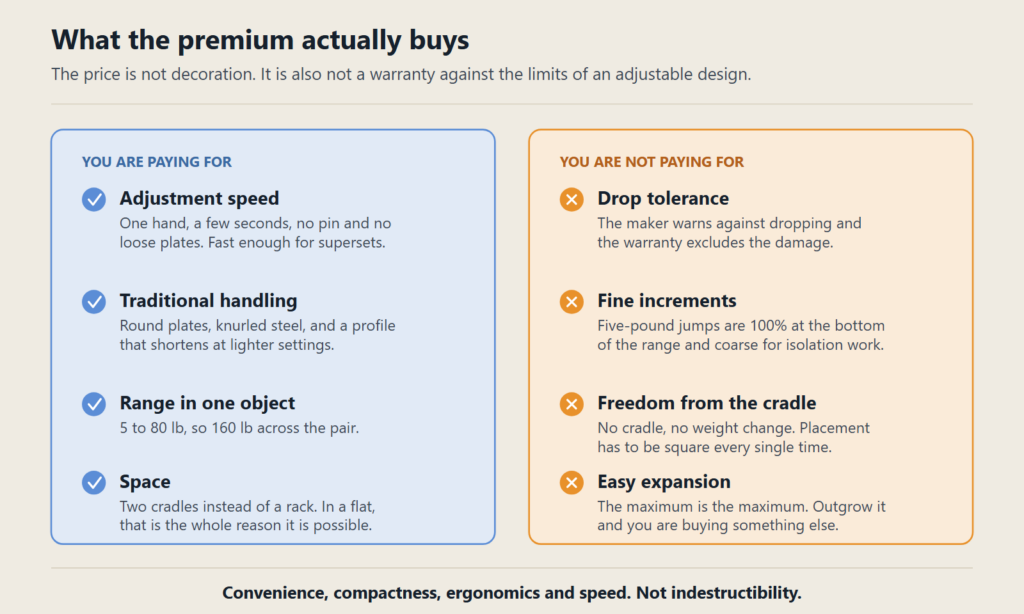
Figure 2. The trade in full. Both columns are true at the same time, which is what makes the price a judgement call rather than a verdict.
The Five-Pound Increment Problem
The jump size is constant. The difficulty of that jump is not.
Going from 5 to 10 pounds doubles the load. Going from 75 to 80 adds under seven percent. The same five pounds is a completely different training stimulus at each end of the range, and the light end is where it hurts.
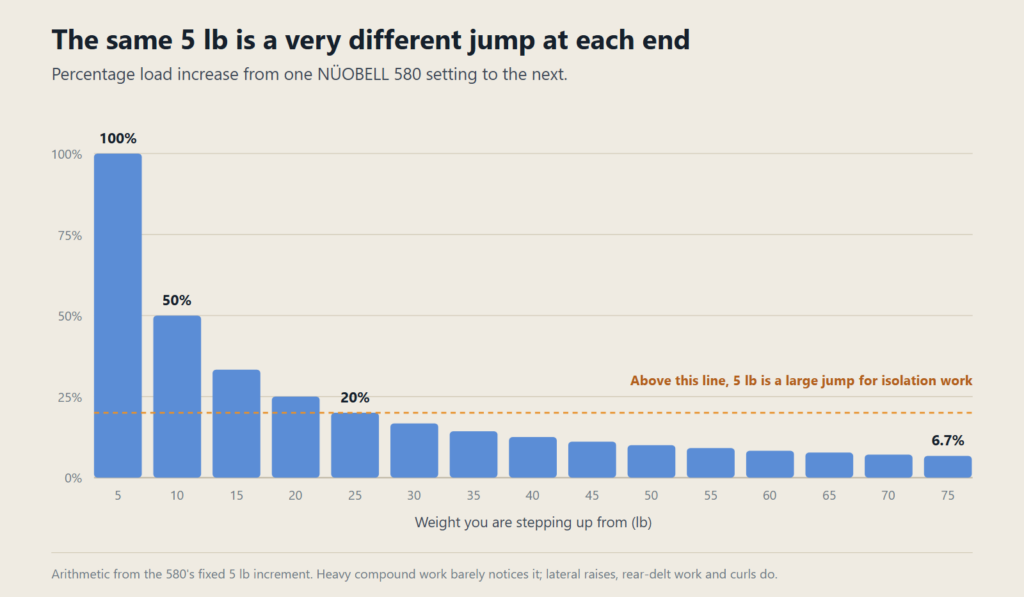
Figure 3. The jump size never changes. What it does to the exercise changes enormously.
For rows, squats, presses and Romanian deadlifts, five pounds per dumbbell is manageable. For lateral raises, rear-delt work, curls and rehabilitation, it is often too much to progress cleanly. If your training leans toward bodybuilding-style isolation work, budget for fractional add-ons or a couple of cheap light fixed dumbbells alongside these.
Everything Depends on the Cradle
The cradle is not an accessory, it is part of the mechanism. It holds the unselected plates and keeps them aligned while the handle rotates. Without it the dumbbell cannot be adjusted at all.
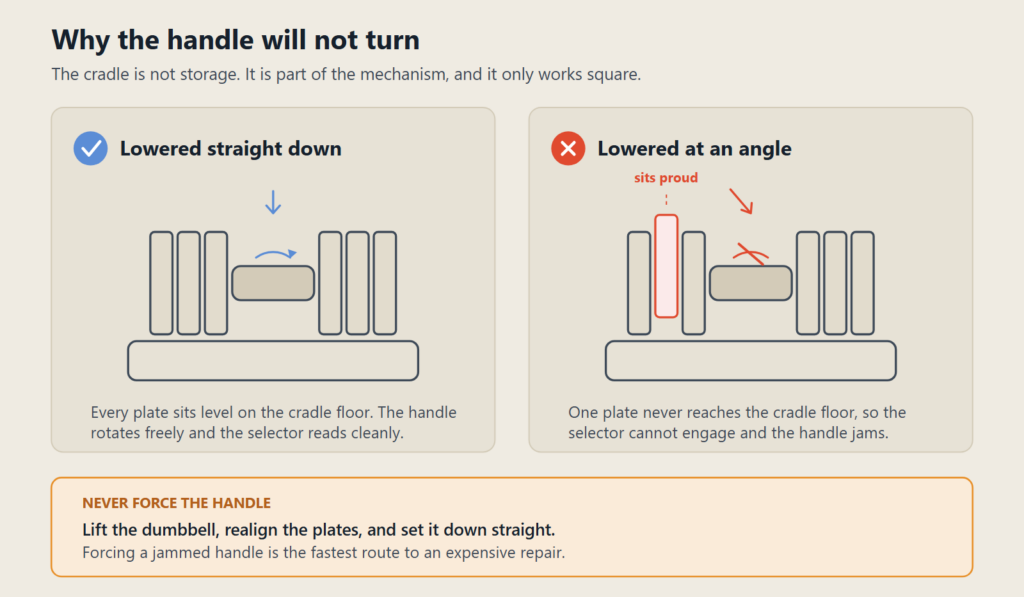
Figure 4. The difference between a weight change that takes two seconds and one that takes twenty.
Return the dumbbell straight down and it seats cleanly. Lower it at an angle and a plate can sit slightly proud, at which point the handle will not turn. The fix is simple: lift, realign, set it down straight. The thing you must never do is force the handle against misaligned plates, which looks like the fastest available route to an expensive repair.
This happened to me most often after heavy sets, when I was tired and less careful about placement. The mechanism was not degrading. My precision was. A stand fixes the underlying cause by putting the cradles at waist height, which is why I stopped thinking of it as an upsell.
The cradle also needs a hard level surface. Thick carpet makes the base feel vague.
How It Feels, Exercise by Exercise
Across curls, rows, presses, lunges and split squats, the NÜOBELLs handle close enough to fixed dumbbells that the difference stops registering. Two cases are worth calling out specifically.
Lateral raises are where the design earns its money. At 10 or 15 pounds only a few plates leave the cradle, so the dumbbell stays short. Adjustable dumbbells that remain full length at every setting make this exercise genuinely awkward. Here it feels normal.
Goblet squats are where it does not. Gripping the dumbbell by its end is less natural than holding a fixed hex or round dumbbell, because the construction was never meant for two-handed end gripping. Workable, but I preferred two dumbbells at my sides.
One more note from real use: the plates have a little clearance and they click during fast direction changes. Not loose, not alarming, but audible during curls, lunges and rows. Slow controlled reps stay quiet. Explosive movements do not.
How It Compares
| System | Feel | Adjustment | Durability | Best for |
| NÜOBELL 580 | Closest to a fixed dumbbell | Twist the handle, seconds | Needs care, cradle-dependent | Small spaces, frequent training |
| PowerBlock | Rectangular, enclosed hand | Move a pin, seconds | Cosmetic wear only at six months | Buyers who want a visible mechanism |
| Bowflex SelectTech | Bulky, long at light settings | Twist dials, seconds | Weakest of the four, faults accumulate | Beginners on a budget |
| Ironmaster | Solid, closest to a real dumbbell | Unscrew and load plates, up to 75 seconds | Highest confidence, almost nothing to break | Heavy lifters who value durability |
Against PowerBlock, you are choosing shape over ruggedness. I preferred the NÜOBELL for curls, presses and anything where wrist freedom mattered, and the PowerBlock for its inspectable, harder-to-damage selector. Details in my six-month PowerBlock durability review.
Against Bowflex, the NÜOBELL is more compact, better balanced and considerably better made, and it costs accordingly. Bowflex is the better first purchase for someone unsure they will stick with it. My fault log is in the 500-set Bowflex SelectTech review.
Against Ironmaster, you are trading durability for speed. Ironmaster changes take up to 75 seconds against a few for a NÜOBELL, but there is almost nothing mechanical to fail. See [I Tested Ironmaster Adjustable Dumbbells and Timed Every Plate Change].
Against a fixed rack, it comes down to the room. Large garage with space for a rack: buy fixed. Apartment, bedroom or shared space: buy these. Anywhere multiple careless people train: buy fixed.
Who the NUOBELL 580 Price Holds Up For
It holds up if you train at home several times a week, have limited floor space, regularly use both the light and heavy ends of the range, value fast weight changes, lift under control, and will not drop them.
It does not hold up if you train occasionally, never need more than 40 or 50 pounds, drop weights or lift explosively, need increments smaller than five pounds, already own fixed dumbbells, have room for a rack, or are buying equipment for a household of people who will not be careful with it.
That last one deserves emphasis. These are a poor choice for shared equipment, and the price makes a bad outcome expensive.
Free Tools for Choosing Adjustable Dumbbells
- Adjustable Dumbbell Picker: answer a few questions about your room, budget and training, and it tells you which type of adjustable dumbbell suits you, or whether to buy something else first.
- Loadable Weight Rounder: see what a set’s weight jumps mean in practice, and which setting to use when your target falls between two.
Questions People Ask
Are NÜOBELL dumbbells worth the money?
They are worth it if you use them often and use the whole range. Divide what you paid by 32 settings and by your realistic number of sessions, and the premium usually disappears for a frequent lifter in a small space. For someone training twice a month or never exceeding 40 pounds, it does not.
Can you drop NÜOBELL dumbbells?
No. The manufacturer warns against dropping or slamming them, and the warranty excludes damage from improper handling. The internal selector, plate connections and cradle-dependent loading all assume controlled placement. If you train to failure and release the weights, buy fixed dumbbells.
Do NÜOBELL dumbbells feel like real dumbbells?
Closer than any other adjustable I have used. Round plates, an open knurled handle and a profile that shortens at lighter settings do most of that work. The difference reappears when plates contact your body or when you grip the dumbbell by its end.
Do NÜOBELL dumbbells rattle?
There is a small amount of plate movement and an audible click during fast direction changes. Adjustable plates need clearance to engage and disengage, so some movement is unavoidable. It is noticeable during curls, lunges and rows, and it settles into the background quickly.
Do you need the NÜOBELL stand?
Not strictly, but it solves a real problem rather than an imagined one. Bending to the floor to adjust 70- and 80-pound dumbbells is tiring, and tired placement is what causes the plate misalignment that stops the handle turning. It adds cost, so factor it into the price you compare.
What happens if the plates are misaligned?
The handle will not rotate. Lift the dumbbell, realign, and set it back down straight. Never force the handle against misaligned plates, which risks damaging the mechanism the entire product depends on.
Is the 5-pound increment a problem?
It depends on the exercise. Heavy compound work barely notices it. Lateral raises, rear-delt work, curls and rehab often do, because the same five pounds is a 50 or 100 percent increase down at the light end. Plan on fractional add-ons if you do a lot of isolation work.
NÜOBELL or PowerBlock?
NÜOBELL for traditional feel and wrist freedom. PowerBlock for a simpler, more inspectable mechanism and better tolerance of imperfect handling. Both need careful placement and neither can be dropped.
NUOBELL 580 Review: The Verdict
The premium is not decoration. The adjustment speed is genuinely fast, the handling is genuinely close to a fixed dumbbell, the range genuinely covers most home training, and the space saving is genuinely the difference between owning a full dumbbell range and not.
What the premium does not do is remove the fundamental compromise of an adjustable design. The selector has to be protected, the dumbbells have to go back into their cradles properly, and they can never be treated like drop-safe commercial weights. You are paying for convenience, compactness, ergonomics and speed. You are not paying for indestructibility, and the polished exterior makes that easy to forget.
Run your own two numbers before you buy. Price divided by 32 settings, and price divided by the sessions you will honestly do. For a frequent lifter in a small room, both come out low enough that the NÜOBELLs stop looking expensive. For everyone else, they are a very well made way to spend more than necessary.
Free guide
Buying your first adjustable dumbbells? Start with the swap list.
The free Machine Swap Playbook maps every common gym machine to the movement it trains and ranks the three purchases that cover the most gaps.
Check today's price on the NÜOBELL 580 (affiliate link).
Disclosure: As an Amazon Associate, I earn from qualifying purchases. If you buy through a link in this post, I may earn a small commission at no extra cost to you.
5 Responses to NÜOBELL 580 Review: I Worked Out Exactly When the Price Holds Up