I Used PowerBlock Dumbbells for 6 Months. Here Is What Wore Out First
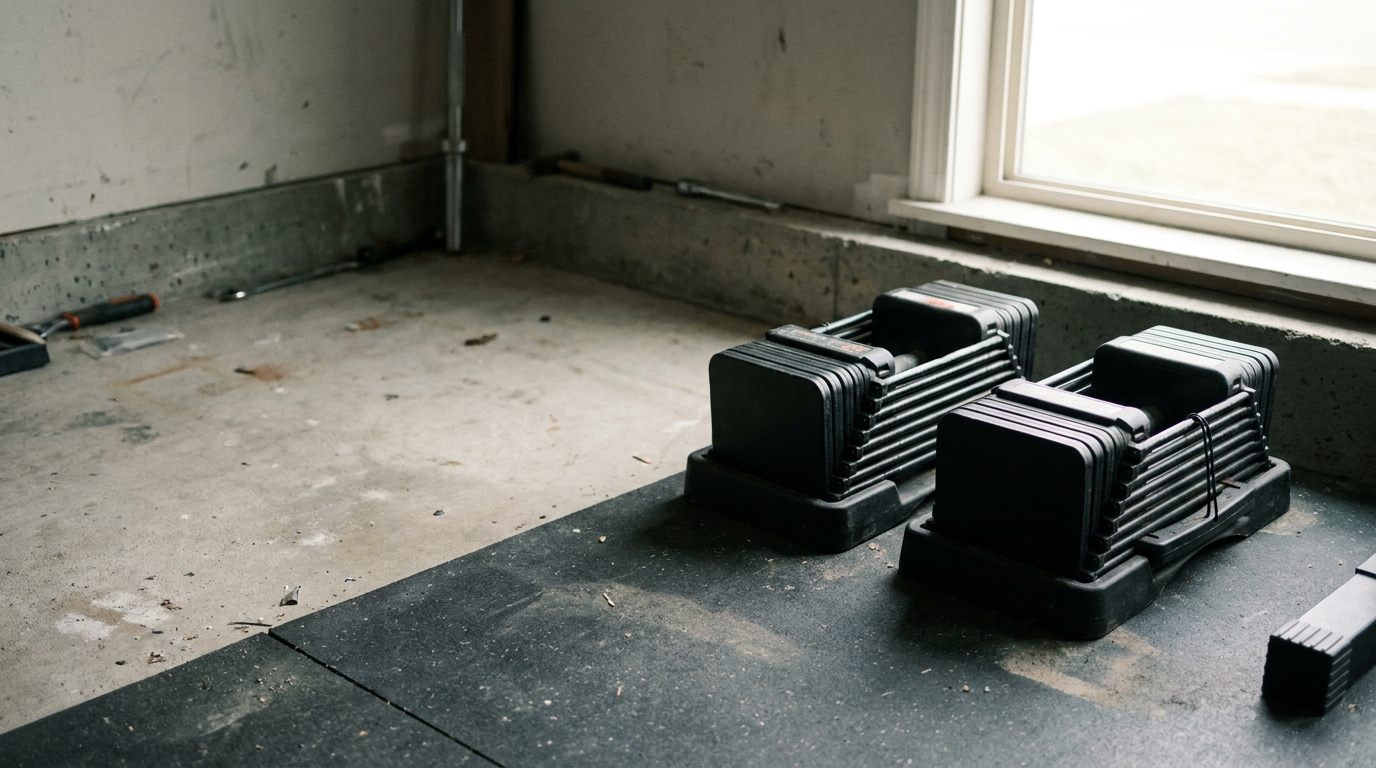
Illustration. Block-style adjustable dumbbells stored the way mine were for six months, on the floor rather than on a stand.
Nothing broke. After six months of daily use, that is the short version, and it is not the answer I expected.
What did happen is smaller, and more useful to know before you spend the money. The selector pin picked up scratches. The block faces polished each other smooth. The printed weight numbers scuffed. And the one thing that genuinely got worse was not a part at all. It was how carefully I put the dumbbells down.
This PowerBlock review is a wear report on the Elite USA 90 (affiliate link), bought for $819 in June 2024. I did not weigh the blocks, so I cannot tell you whether the 50 setting is exactly 50 pounds. What I can tell you is which parts wear first, which mistake is actually dangerous, and what six months of hard use does to a system that depends on one removable pin.
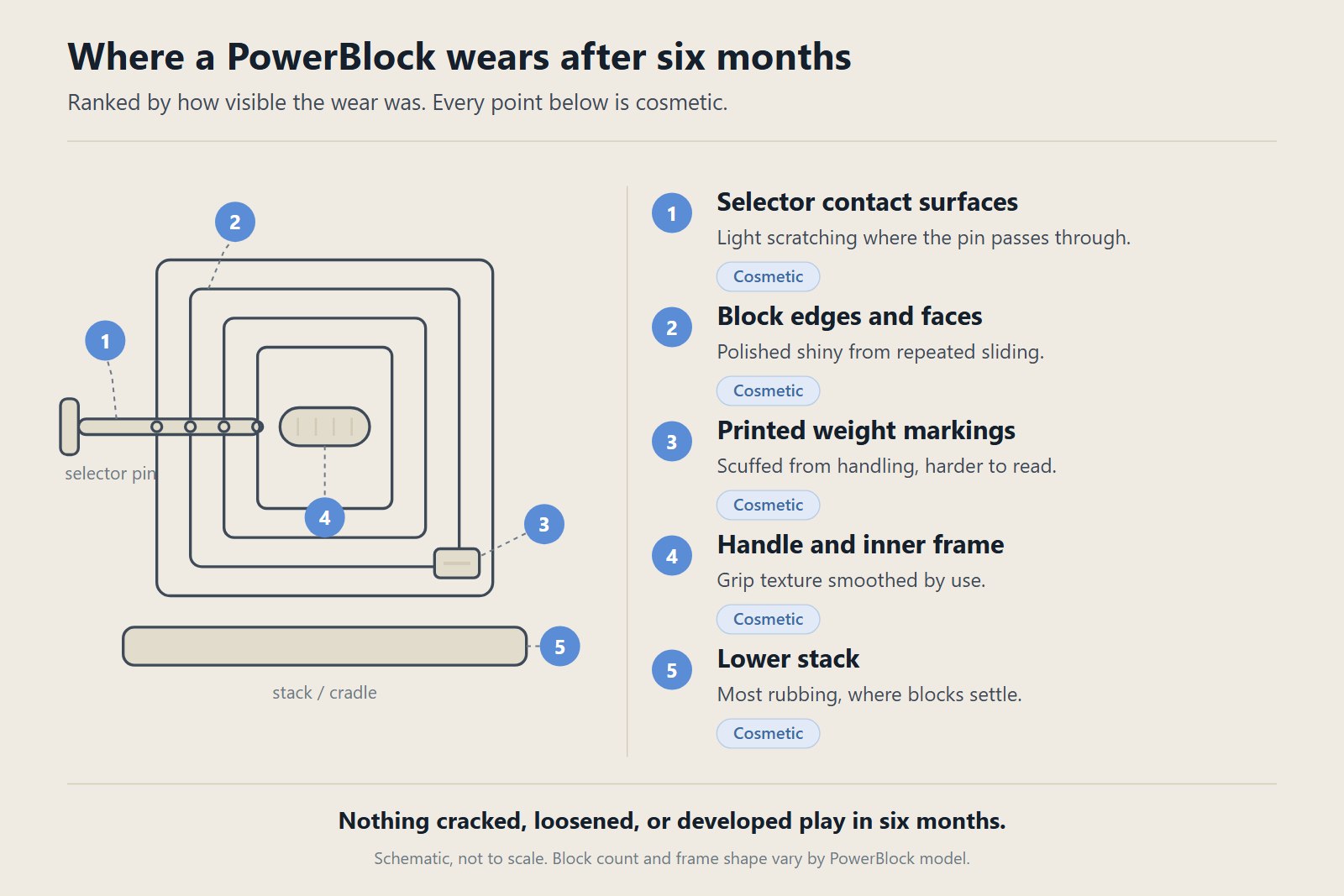
Figure 1. Where a PowerBlock wears after six months: five wear points, all cosmetic.
How I Used Them
These were my only dumbbells for six months. Not a supplement to a rack of fixed pairs, and not a travel option I pulled out twice a month. Every dumbbell exercise I did went through this pair.
That meant curls, hammer curls, shoulder presses, floor presses, one-arm rows, goblet squats, Romanian deadlifts, lunges, split squats, lateral raises, shrugs, calf raises, and triceps extensions. Some sessions needed four or five weight changes. Others, especially anything with supersets or a long warm-up ramp, needed more than twenty.
They lived on the floor on a rubber mat, not on a stand. That detail matters more than it sounds, and I will come back to it.
The Selector Pin After Six Months
The pin is the whole system. Lose it or bend it and you own two expensive plastic boxes, so it was the first thing I checked at the end of the test.
It still works. It does not feel noticeably looser than it did on day one; it has never slid out during a set, and it still seats with the same amount of force. The wear it has is cosmetic: light scratching along the shaft where it passes through the blocks, concentrated at the contact points rather than spread evenly.
The flexible connector joining the two sides of the selector is the part I watched most closely, because it bends every single time you change weight. After six months, it shows the crease you would expect from repeated flexing. No cracking, no separation, no whitening at the fold.
That said, I have not treated it as indestructible, and I would not recommend anyone else does either. I never stepped on it, never twisted it to force a stuck block, and never tossed it into the bin with the resistance bands and lifting straps. When I changed weight, the pin was either in my hand or lying flat beside the stack. Six months of that care is what the result above describes. Six months of the opposite would read differently.
The Weight Blocks and the Stack
The blocks are where the visible wear actually accumulated, and it happened in a predictable pattern.
The faces that slide against each other during every lift became shinier over time, which is exactly what you would expect from repeated metal-on-metal contact. Block edges picked up small nicks. The lower stack, where the blocks settle back down under the weight of everything above them, shows the most rubbing. The printed weight markings on the outer blocks collected marks from handling and are slightly harder to read at a glance than they were new.
None of this affected function. The blocks still separate cleanly and still sit where they are supposed to.
One behavior did show up occasionally throughout the test: an unselected block would rise a few millimetres with the dumbbell and then drop straight back into the stack. This happened more during slow, deliberate lifts off the floor than during actual sets, and more when the blocks were not perfectly centred. I never had an unselected block stay attached through a full set. Pulling the dumbbell straight up rather than diagonally makes it stop happening almost entirely.
The Thing That Actually Got Worse
Here is the honest finding of the whole six months. The hardware held up. My placement did not.
The PowerBlock design assumes the blocks are resting square in the stack. When they are, the pin slides through in one motion. When the dumbbell has been dropped in at a slight angle after a hard set, one block sits a few millimetres off, and the pin needs a wiggle before it passes all the way through.
Early in the test, I put them down carefully because they were new. By month four, I was setting them down the way you set down anything you use every day, and I started having to reposition the dumbbell before the selector would move smoothly. The parts did not degrade. My habits did.
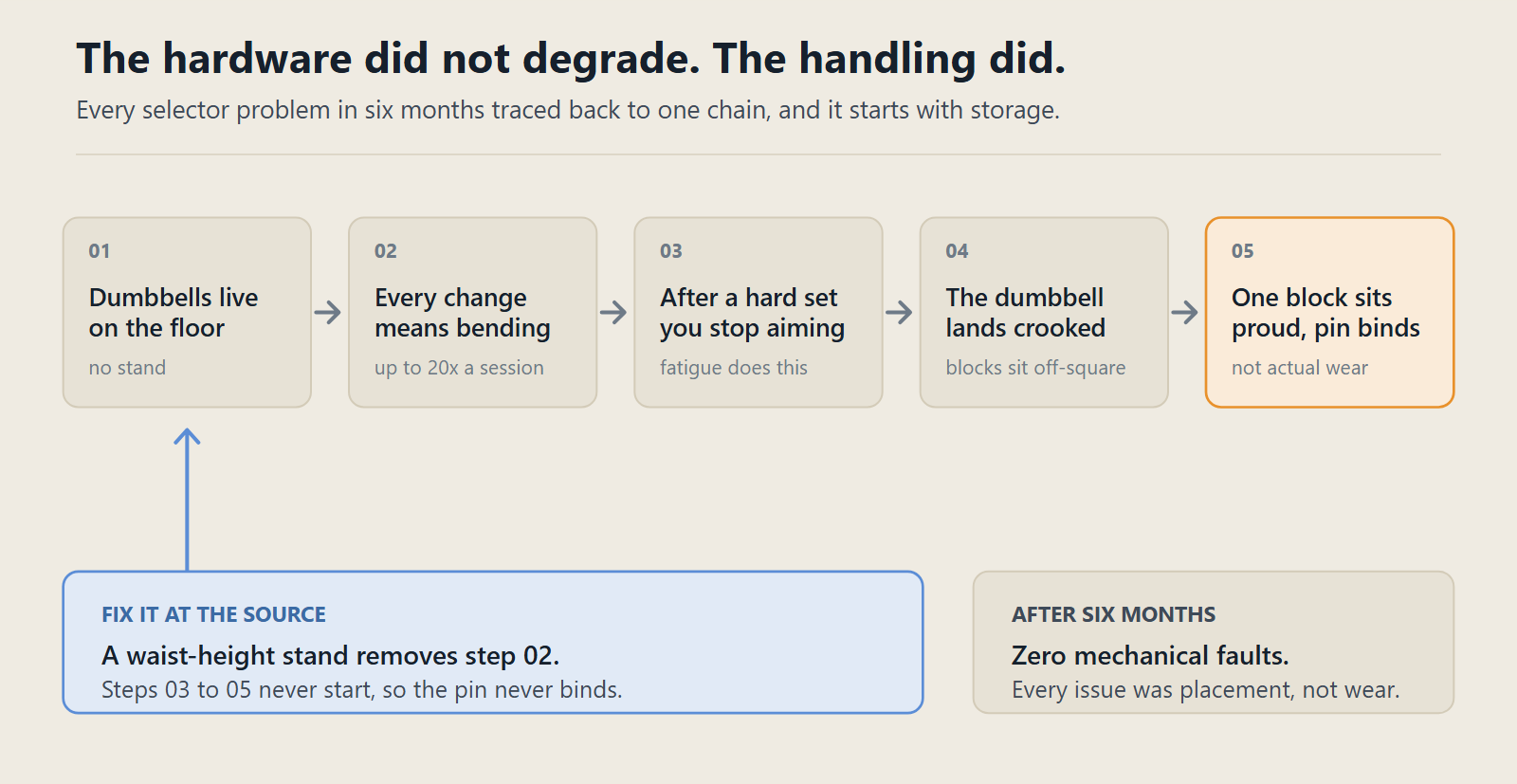
Figure 2. The chain behind every selector problem in the test. It starts with storage, not with the mechanism.
This is why I would buy a stand. Keeping the dumbbells on the floor meant bending down for every single weight change, and after a heavy set of presses, that bend is the moment you stop being precise about alignment. A stand puts the stack at waist height, which removes the fatigue that causes sloppy placement in the first place. It is the single upgrade that would have improved this six months most.
If you are ordering PowerBlocks, add the stand to the same order. I did not, and it is the one thing I would change. The PowerBlock Large Compact Stand (affiliate link) is listed as compatible with the Elite USA 90 and other PowerBlock sets up to 90 pounds.
The Failure Mode Worth Taking Seriously
A partially inserted selector is the real risk with this design, and it is a user error rather than a wear problem.
If the pin is only part of the way through, the dumbbell may still lift. The selected blocks may not be supported correctly. I tested this deliberately, with the dumbbell on the floor and no exercise involved, by stopping the pin short several times. The result was inconsistent pickup: one side catching properly while the other sat unsupported or skewed.
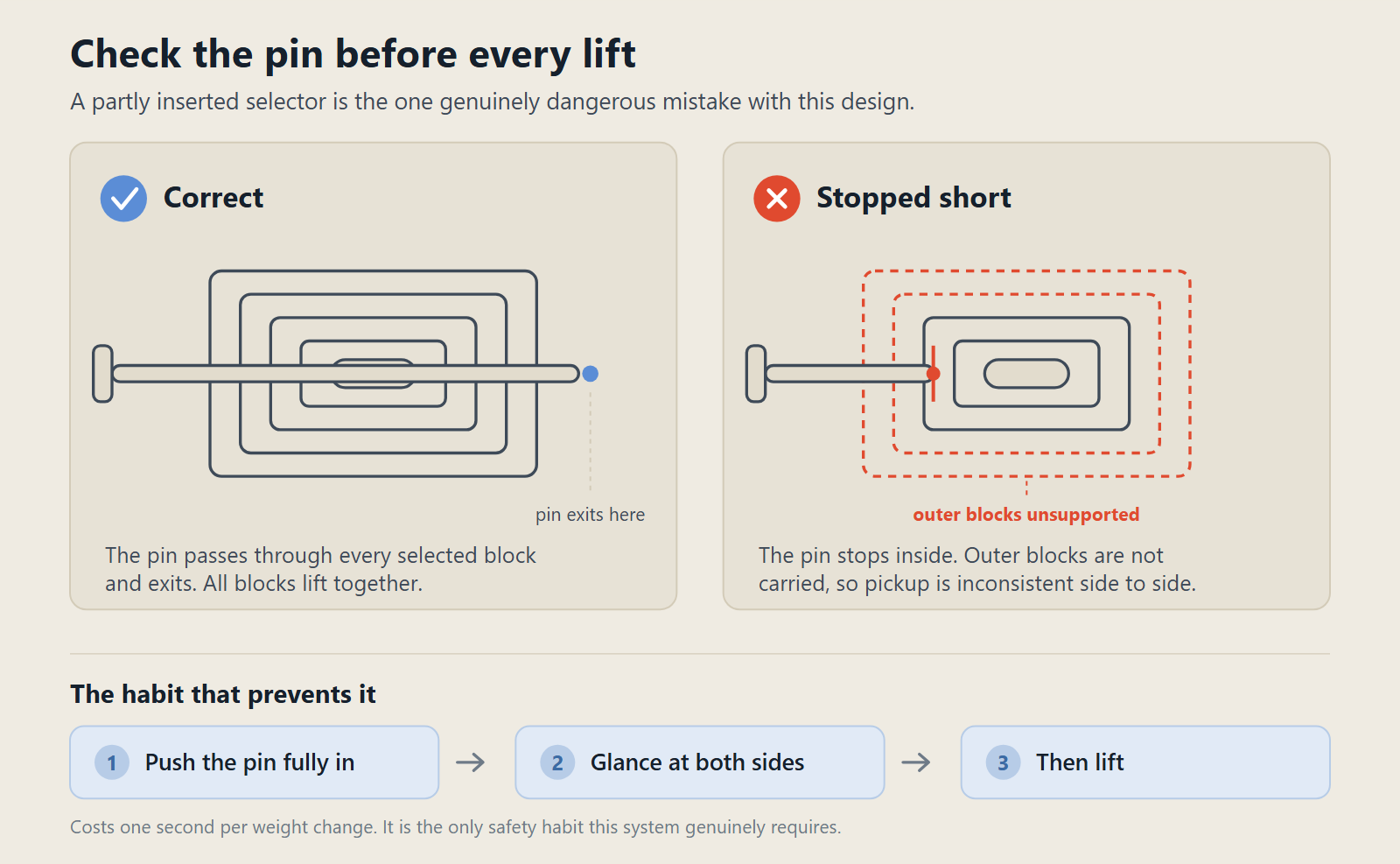
Figure 3. What a correctly seated pin looks like against one that has stopped short, and the three-step check that prevents it.
The bright selector colour helps, because you can see at a glance whether the pin has passed through the intended slot. What the colour does not protect you from is familiarity. After hundreds of weight changes, it becomes very tempting to shove the pin in and lift without looking, and that is precisely when the mistake happens.
My rule ended up being three steps: push the pin fully in, glance at both sides, lift. It costs a second or two, and it is the only safety habit this system genuinely requires.
Handle and Frame
The handle position still feels secure, and the enclosed frame around the hand has not developed play or rattle.
Grip texture is the one place where wear is starting to show in a way you can feel rather than just see. It is slightly smoother than new. During high-repetition sets, especially with sweaty hands, that is noticeable. A quick wipe after training handles it.
The frame itself is worth checking before you buy rather than after. The enclosed space can feel tight if you have larger hands, or if you train in thick wrist wraps or with lifting straps. That is a fit question, not a durability question, and it varies between PowerBlock models. It is the one thing I would want to physically try before ordering.
What I Did Not Test
I never dropped them, so I cannot tell you what happens if you do.
That is a deliberate omission rather than an oversight. Adjustable dumbbells are a mechanical system with tolerances, and repeated impact can affect alignment, selector fit, and internal components in ways that a solid cast dumbbell simply does not experience. I used a rubber mat, but the mat was there to protect the floor, not to make dropping safe.
If you train to failure and release the dumbbells from height as a matter of routine, that is a genuine argument for fixed weights over any adjustable system, PowerBlock included. See my longer piece on what wears out first on adjustable dumbbells for how this plays out across designs.
The Care Routine That Kept Them Working
Very little, honestly, but it was consistent.
I wiped the stack down with a dry cloth every few weeks and cleared hair and grit out of the lower sections where debris collects. Dust between the block faces is what makes them separate less cleanly over time, and it takes about two minutes to prevent.
I did not oil or lubricate anything. Lubricant attracts more dirt than it displaces on a system like this, and it risks affecting the plastic components. Dry and clean is the whole maintenance programme.
How PowerBlock Durability Compares
I have run long-term tests on the three systems most people cross-shop against PowerBlock. Laid side by side, the pattern is consistent: the more work the adjustment mechanism does for you, the more there is to wear out.
| System | Mechanism | What wears first | Drop tolerance | Durability verdict |
|---|---|---|---|---|
| PowerBlock | Removable pin through a block stack | Pin surface, block contact faces | None | Cosmetic wear only at six months |
| Bowflex SelectTech | Twist dial with a cradle | Dial resistance, plate rattle, grip surface | None | Mixed, repeated minor faults over 500 sets |
| NÜOBELL | Rotating handle with a cradle | Cradle alignment, rotation smoothness | None, manufacturer warns against it | Solid, but wholly dependent on the cradle |
| Ironmaster | Steel plates on threaded locking screws | Almost nothing mechanical | Still not recommended | Highest confidence of the four |
Ironmaster wins on durability and loses on speed. There is no selector, no dial, and no cradle, so there is nothing clever to break. You pay for that in adjustment time: a small change runs 25 to 35 seconds and a large one 55 to 75, against a few seconds for the PowerBlock pin.
Bowflex is the weakest of the four on wear. Across 500 logged sets, the dials sometimes resisted turning, plates rattled and occasionally lifted from the cradle, and the grip surface smoothed noticeably. Nothing failed outright, but the accumulation of small faults is exactly what PowerBlock avoided over the same kind of use. The full fault log is in 500 sets with the Bowflex SelectTech.
NÜOBELL sits between them. The knurled metal handle wears better than any rubberized grip, and the selector locks solidly once the dumbbell leaves the cradle. The catch is that the rotating handle needs the plates sitting square to turn at all, which is the same alignment dependency PowerBlock has. See the NÜOBELL 580 review.
PowerBlock’s advantage is that you can see the mechanism. The pin either passes through the blocks or it does not, and there is no enclosed dial or internal cam doing something you cannot inspect. When a problem appears, you can identify it in a second and fix it by hand. That is worth more over years of ownership than a mechanism that is faster on day one.
The wider pattern across every adjustable system I have tested is that the adjustment mechanism wears before anything else. I covered that in my year with adjustable dumbbells, and PowerBlock is no exception. It just happens to wear slowly.
Who These Hold Up For
Six months in, I would recommend them to someone who trains at home in limited space, uses controlled strength movements, changes weight several times per workout, and is willing to set the dumbbells down with a bit of care after each set.
I would steer someone else toward fixed dumbbells if they prefer the feel of a round dumbbell in the hand, use explosive lifts like cleans and snatches, run very fast circuits where weight changes need to be instant, train to complete failure and drop the weights, or have large hands or thick wrist wraps that would crowd the frame.
The system is efficient. It is not careless-proof, and the difference between those two things is what determines whether it lasts.
Six Things to Check Before You Buy
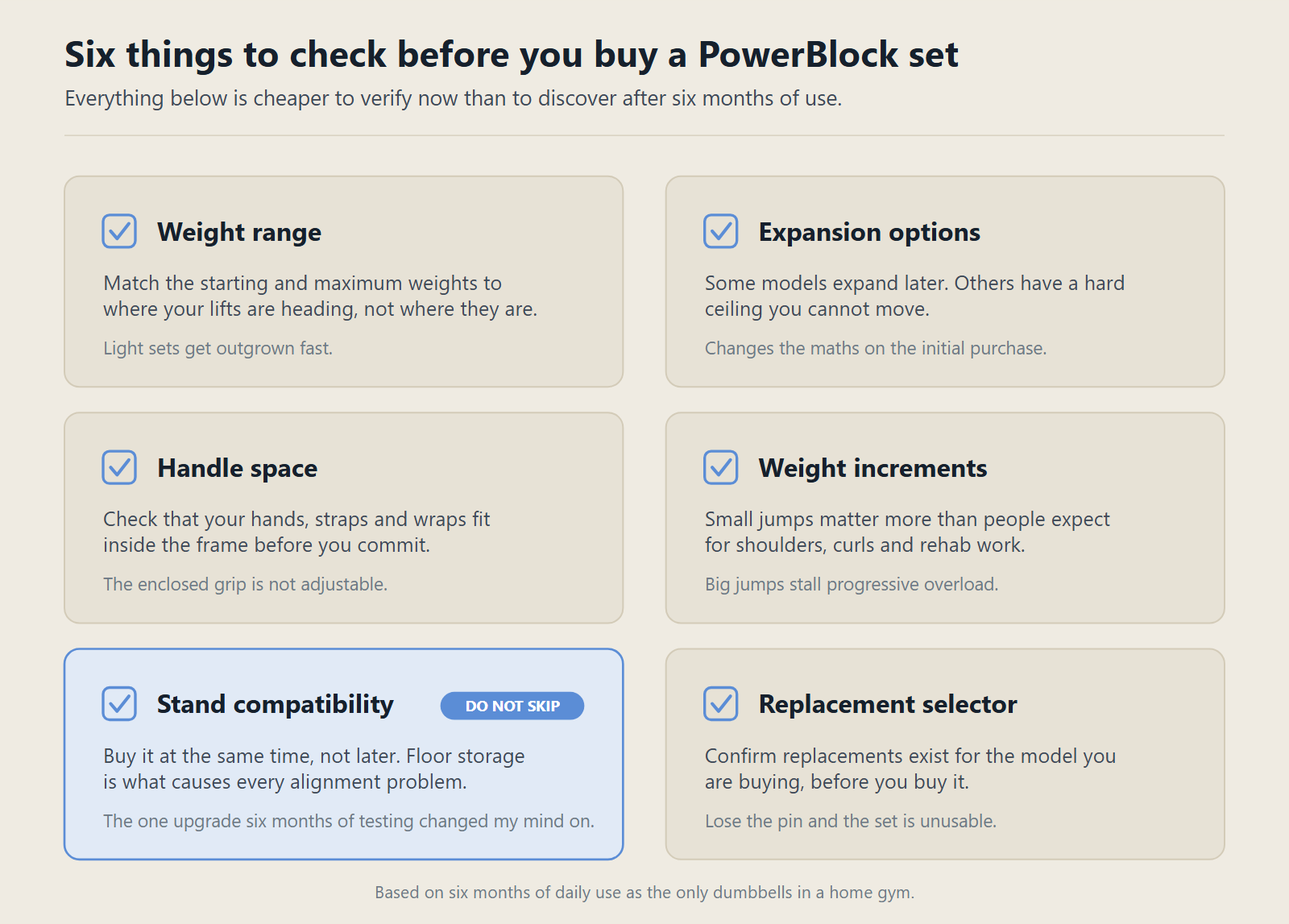
Figure 4. The pre-purchase checklist, with the item six months of testing changed my mind on.
Weight range. Match the starting and maximum weights to where your lifts actually are, not where they are today. Light sets get outgrown fast.
Expansion options. Some models can be expanded later, and some have a hard ceiling. PowerBlock lists which sets take expansion kits. Expandability changes the maths on the initial purchase.
Handle space. Check that your hands, straps, and wraps fit inside the frame before you commit.
Weight increments. Smaller jumps matter more than people expect for shoulder work, curls, rehab, and steady progressive overload.
Stand compatibility. Not essential, but based on six months on the floor, it is the accessory I would buy at the same time rather than later.
Replacement selector availability. The pin is the entire system. Confirm that replacements exist for the model you are buying before you buy it.
Free Tools for Choosing Adjustable Dumbbells
- Adjustable Dumbbell Picker: answer a few questions about your room, budget and training, and it tells you which type of adjustable dumbbell suits you, or whether to buy something else first.
- Loadable Weight Rounder: see what a set’s weight jumps mean in practice, and which setting to use when your target falls between two.
Questions People Ask About PowerBlock Durability
How long do PowerBlock dumbbells last?
Longer than the six months I can personally vouch for. At the end of my test, the only wear was cosmetic, with no cracking, no play in the frame, and no loosening of the selector. The blocks are steel, and the mechanism is a single pin, so the realistic lifespan is limited by how carefully you handle them rather than by how many hours you train.
Can you drop PowerBlock dumbbells?
No. They are a mechanical system with tolerances, and repeated impact can affect block alignment, selector fit, and the internal frame in ways a solid cast dumbbell simply never experiences. This is the single most common way people damage adjustable dumbbells of any brand. If dropping is part of how you train, buy fixed weights.
Does the PowerBlock selector pin wear out?
Mine did not. After six months of daily use, it shows light scratching where it contacts the blocks, but it still seats with the same force and has never slid out during a set. The flexible connector between the two sides has the crease you would expect from constant bending, without cracking or whitening at the fold.
What happens if you lose the selector pin?
The dumbbells become unusable until you replace it. There is no workaround, which is why replacement availability is worth confirming before you buy rather than after. Keep the pin in your hand or beside the stack during weight changes instead of tossing it in with your other accessories.
Do the weight blocks get stuck together?
Occasionally an unselected block will rise a few millimetres and drop straight back into the stack. It happens most when the blocks are not centred or when you pull the dumbbell up at an angle. Lifting straight up almost eliminates it, and in six months I never had an unselected block stay attached through a full set.
Do PowerBlocks rattle over time?
Not in my testing. The block faces polished themselves smooth from repeated contact, which is visible but does not create play or noise. The rattle problem is more associated with dial-and-cradle systems, where the unselected plates sit loose in a tray.
Do you need a PowerBlock stand?
Not strictly, but I would buy one at the same time as the dumbbells. Six months on the floor meant bending down for every weight change, and that fatigue is what makes you set the dumbbells down carelessly, which is what causes the pin to bind. A stand at waist height removes the cause rather than the symptom.
How do you maintain PowerBlock dumbbells?
Wipe the stack with a dry cloth every few weeks and clear hair and grit out of the lower sections where debris collects. Do not oil or lubricate anything. Lubricant attracts more dirt than it displaces on a system like this and risks affecting the plastic components.
PowerBlock or Bowflex: which lasts longer?
PowerBlock, based on my testing of both. The Bowflex dials developed intermittent resistance, the plates rattled and sometimes lifted from the cradle, and the grips smoothed noticeably over 500 sets. PowerBlock showed cosmetic wear over a comparable period and no functional faults.
PowerBlock Review: The Verdict
After six months, the PowerBlock held up better than I expected. The pin is scratched but secure. The blocks are polished but still separate cleanly. Nothing developed play, cracking, or looseness that would make me stop using them.
The wear was cosmetic and predictable. The problems came from how I put the dumbbells down, not from the dumbbells, and one extra second per weight change fixed them.
If you drop, throw, or stack your weights carelessly, buy fixed dumbbells and give them the room. If you want a compact set that will survive years of home training, and you will set it down properly, six months of hard use suggests the PowerBlock design holds up.
Free guide
Replacing the gym with dumbbells? Start with the swap list.
The free Machine Swap Playbook maps every common gym machine to the movement it trains, shows how to load the dumbbell version, and ranks the three purchases that cover the most gaps. Adjustable dumbbells are one of the three. Read it before you order, not after.
Disclosure: As an Amazon Associate, I earn from qualifying purchases. If you buy through a link in this post, I may earn a small commission at no extra cost to you.
5 Responses to I Used PowerBlock Dumbbells for 6 Months. Here Is What Wore Out First