I Tested 5 Folding Squat Racks and Watched Where Each One Moved First
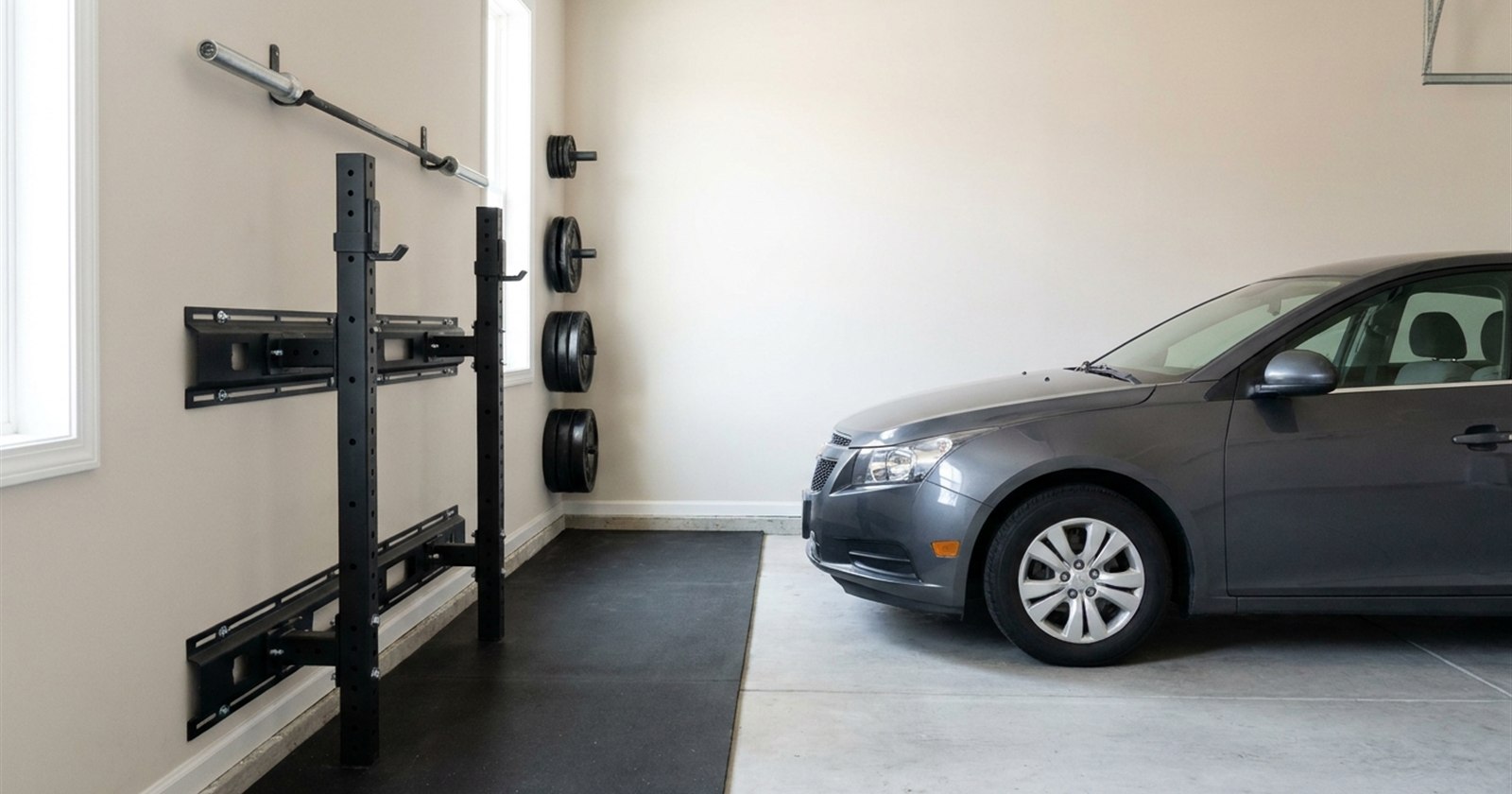
Illustration. The point of a folding squat rack: train in the morning, park the car at night.
A folding squat rack solves a problem a full-size power rack can’t. It gives you a proper place to squat, bench, press and do pull-ups, then moves back against the wall when the garage has to be a garage again.
That convenience comes with an obvious question: is it strong enough? A freestanding power rack spreads force through a big steel frame. A folding rack sends much of that force into wall brackets, hinges, stringers, bolts and the structure of the building. The uprights can look strong, but the whole system is only as dependable as its installation.
So I installed five of them in the same garage. I fitted racks from Rogue Fitness, REP Fitness, PRx Performance and Titan Fitness, plus a cheap 2-by-3-inch wall-mounted model. I checked each one’s uprights, how smoothly it folded, its hinges and mounting hardware, and where it moved first under heavy squats, reracks and pull-ups. Testing ran through August 2025. Models and prices were last checked in November 2026.
Most of the swaps in the free Machine Swap Playbook start with a bar in J-cups, so in a shared garage the rack you can fold away is often the one that decides whether you train at home at all.
The short version: the Rogue RML-3W was the best folding squat rack overall, the REP PR-4100 was the best value, the PRx Profile was the fastest to put away, and the Titan X-3 was the budget pick. The cheap 2-by-3 rack worked for light training but moved first and most. Across all five, the wall and the installation mattered as much as the steel.
The Folding Squat Racks I Tested
| Rack | How it folds | Uprights | Price (Nov 2026) |
|---|---|---|---|
| Rogue RML-3W Fold Back Wall Mount Rack | Swings in toward the wall | 3×3″ 11-gauge, 5/8″ bolts, made in Ohio | $605 at Rogue (on sale for $544); wall stringers extra |
| REP PR-4100 Folding Squat Rack | Swings in toward the wall | 3×3″ 11-gauge, 92″ tall | $499.99 at REP |
| PRx Profile (current model: Profile PRO) | Folds up toward the ceiling | 3×3″ 11-gauge, rated 1,000 lb | $1,049.99 at PRx |
| Titan X-3 Folding Power Rack | Swings in toward the wall | 3×3″ 11-gauge, Westside hole spacing | $389.97 at Titan, $397.99 on Amazon; wall hardware not included |
| A cheap 2×3 wall-mounted rack | Swings in toward the wall | 2×3″ tubing, lighter hinges | Varies |
The specs come from the makers’ pages. The PRx Profile PRO page, for example, lists 3×3-inch 11-gauge steel, a 1,000 lb capacity and a fold-up design that stores 4 inches from the wall. Prices change constantly, so treat them as a snapshot.
The designs weren’t identical, and one difference shaped almost everything else. The Rogue, REP, Titan and cheap racks fold in: the uprights swing toward the wall. The PRx folds up.
A fold-in rack usually needs its pull-up bar released before the uprights can swing in. A fold-up rack stores with one lifting motion that feels much quicker, but it needs ceiling height and carefully placed wall brackets.
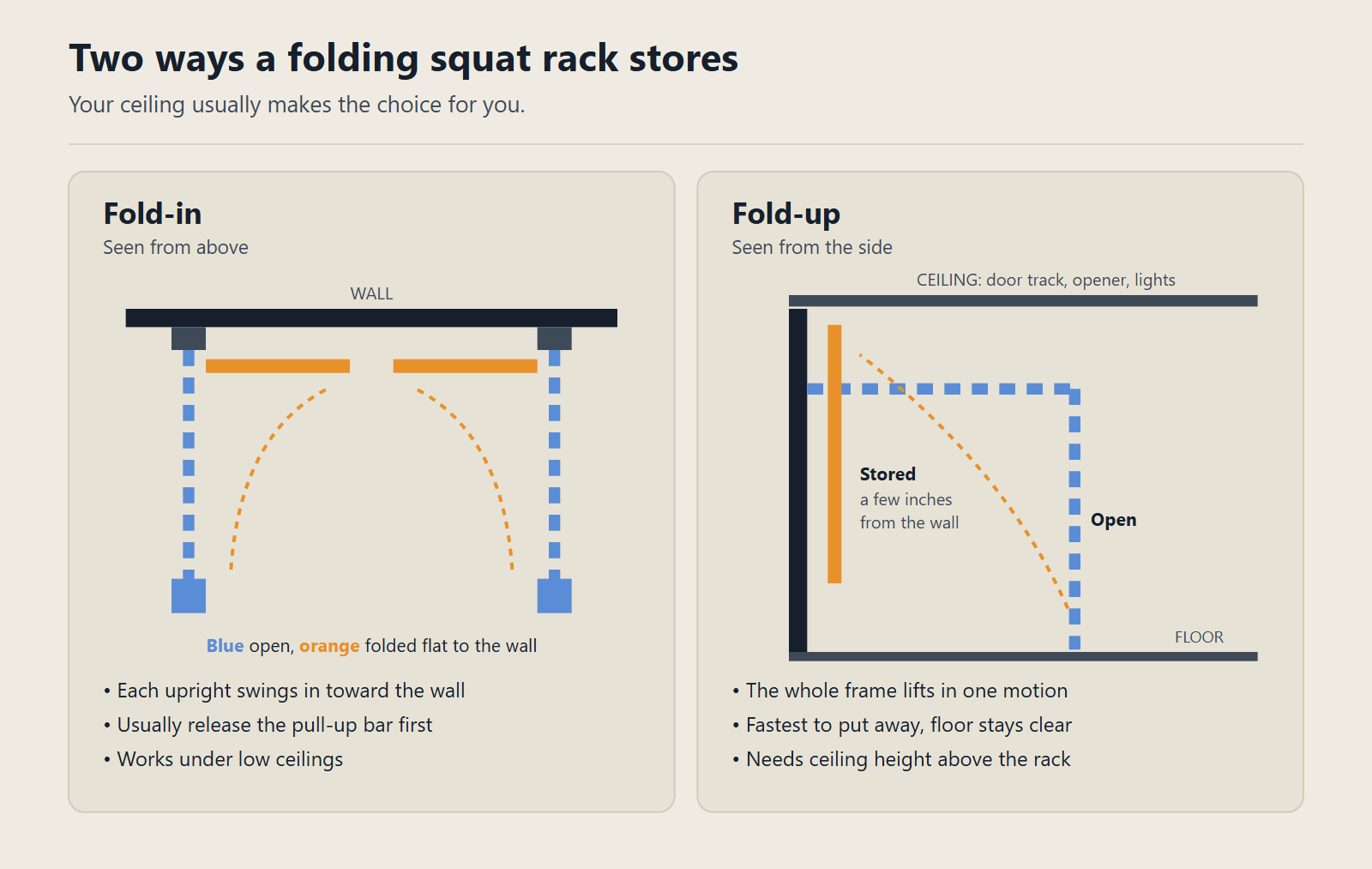
Figure 1. Fold-in versus fold-up. Your ceiling usually makes the choice for you.
What I Checked on Each Folding Squat Rack
Before any weight went on, I checked:
- Upright width and depth, and how consistent the steel was
- Hole spacing and the inside lifting width
- How far the rack projected into the room when open, and how close it sat to the wall when folded
- Hinge alignment and stringer spacing
- Upright height, left-to-right level and front-to-back plumb
- J-cup consistency on both sides
- Any movement at the floor and at the wall connection
Every rack went in according to its maker’s instructions, into structural framing. That mattered more than any other part of the test. A rack fixed to drywall, or to badly placed fasteners, can fail even when its steel is very strong.
Then I trained in each one: back squats, bench presses, heavy reracks and pull-ups, which pull outward and down on the upper structure. I kept every lift within each rack’s published rating. I watched the whole installation, not just the uprights, because the first part to move is not necessarily the first part to fail.
Best Overall: Rogue RML-3W Fold Back Rack
The Rogue RML-3W was the rack I trusted most. It’s built from 3×3-inch 11-gauge uprights with 5/8-inch bolts. Its heavy hinges and removable pins made it feel closer to a permanent rack than a light wall-mounted station.
Installation demands care. The wall stringers had to be level, correctly spaced and fixed to structural framing. Rogue sells them separately and calls them highly recommended. Small errors at the wall became bigger alignment problems at the uprights. I fitted everything loosely first, checked both uprights for plumb, then tightened gradually. Once it was aligned, both sides folded predictably.
It isn’t effortless to fold. The uprights and folding arms are heavy, and putting it away takes deliberate handling. That weight was inconvenient at storage time and reassuring at lifting time.
It was solid under load. During squats and bench presses the J-cups sat firmly against the uprights and the wall brackets barely moved. Pull-ups created more force, because they pull outward and down on the top of the rack, but properly pinned and mounted it stayed controlled. On the heaviest reracks, the first movement I could see was slight flex where the J-cup meets the upright. The folding arms and wall brackets stayed quiet.
Rogue also makes a full-wall Monster Lite version with four uprights whose panels fold over one another. It feels even more like a permanent rack, but it needs more wall and a more demanding install.
Its faults are about convenience. The heavy uprights made folding slower. The removable pull-up bar added a storage step. The pins needed correct alignment, and slight wall or floor irregularities affected how neatly the sides folded. It also projected farther from the wall when stored than the fold-up PRx, and the powder coat wore around the most-used holes.
The Rogue RML-3W won because it felt least compromised as an actual squat rack. Some folding racks are great storage solutions that feel light under a heavy bar. This one felt like a serious rack that happens to fold.
Best Value: REP PR-4100 Folding Squat Rack
The REP PR-4100 came closest to beating the Rogue. REP builds it from 3×3-inch 11-gauge uprights, 92 inches tall, and its 21.5-inch-deep version folds to sit about 6 inches from the wall. That puts it firmly in premium home-gym territory for less money.
Installation was similar to the Rogue’s. The wall had to be measured carefully, the mounting points had to be structural, and the uprights had to stay plumb. The REP needed a little more adjustment before both sides folded smoothly. My garage wall isn’t perfectly straight, so one side first sat closer to the wall than the other. Loosening the hardware and spacing it carefully fixed most of that. It’s common with wall-mounted gear: a precisely made rack can still look crooked on an imperfect wall.
It folds well once aligned. The uprights swing in and leave the middle of the garage open. It isn’t as fast as the PRx, but it worked without taking over the room. Open, the REP PR-4100 felt substantial, and squats, bench presses and pull-ups gave me no real stability concerns.
It moved a little before the Rogue did. On heavy reracks the first movement showed at the J-cup and the front of the upright rather than at the wall. The folding joints had slightly more visible play than the Rogue’s, though not dramatically more.
The REP PR-4100 delivered most of the Rogue’s training experience with heavy uprights and a useful range of attachments. The Rogue’s hardware and hinges inspired a bit more confidence, but REP offered an excellent balance of construction and price.
See the REP PR-4100 at REP Fitness
Get the whole system, not just the rack
A folding rack only earns its wall space if you train in it. The Machine Swap Playbook turns the machines you’d queue for at a commercial gym into barbell, dumbbell and bench swaps you can run in a garage, ordered by movement pattern so a whole session fits around the rack you fold away.
Eighteen swaps. Forty pages. Free, no upsell.
Fastest to Store: PRx Profile Folding Rack
The PRx had the most convenient folding mechanism in the group. Instead of swinging in, the frame lifts toward the ceiling. PRx’s current fold-up model, the Profile PRO, does it with hydraulic shocks and stores 4 inches from the wall.
Fold-up changes your day. I could put it away in one motion instead of moving each upright across the wall, which was ideal when I wanted to park straight after training. It also kept the floor completely clear, because the rack lifted out of the way rather than taking up wall width.
Ceiling height is the catch. Garage-door tracks, openers, lights and beams all limited where it could go. Measure before you buy, not after.
It was stable in normal lifting. Its 11-gauge uprights felt far more substantial than the cheap rack’s. The vertical mechanism adds different movement points, so I paid close attention to the upper wall brackets and the lift. Under heavy reracks the first change I noticed was a slight increase in movement at the upper assembly, which makes sense because the fold-up design concentrates hardware near the top of the wall. It never felt like it might release or fold.
The PRx is the rack I’d choose for a garage that has to be cleared after every session. For maximum confidence under a heavy barbell, the Rogue kept the edge.
See the PRx Profile PRO at PRx
Best Budget: Titan X-3 Folding Power Rack
The Titan X-3 uses the familiar fold-in design with 3×3-inch 11-gauge uprights and Westside hole spacing, at a lower price than the premium racks. Titan notes that wall-mounting hardware isn’t included, so budget for lag screws.
It needed the most adjustment of the major brands. One folding arm had to be repositioned before the upright stood truly vertical, and the finish around several holes was rougher than on the Rogue and REP. It became stable once installed correctly, but the job took longer.
It performed well in ordinary lifting. There was slightly more play in the hinges and pins, but the Titan X-3 never felt alarmingly loose. On heavy reracks, movement showed up earlier than on the Rogue or REP, mainly in the joints and at the wall connection rather than in the uprights.
That makes the Titan X-3 a strong budget choice, but not the rack I’d pick for the most demanding home powerlifting.
What a Cheap 2×3 Rack Taught Me
The cheapest rack used smaller 2-by-3-inch tubing, lighter hinges and more basic hardware. For ordinary squats and presses it was usable.
The difference showed as the weight went up. The worry wasn’t the uprights bending. It was small movements adding up through the whole system: the J-cup shifted slightly, the upright moved, the folding arm flexed and the wall bracket showed more play. Each one was small. Together they made the bar feel unsettled, and I kept my loads on it lighter than on the others.
The lesson: a big advertised capacity means little without good joints, good hardware and a solid installation behind it.
Where a Folding Squat Rack Moves First
Across all five racks, the first visible movement was rarely the main upright. The usual order was:
- The J-cup
- The upright itself
- Play at the hinge or locking pin
- Movement through the folding arm
- The wall bracket or stringer
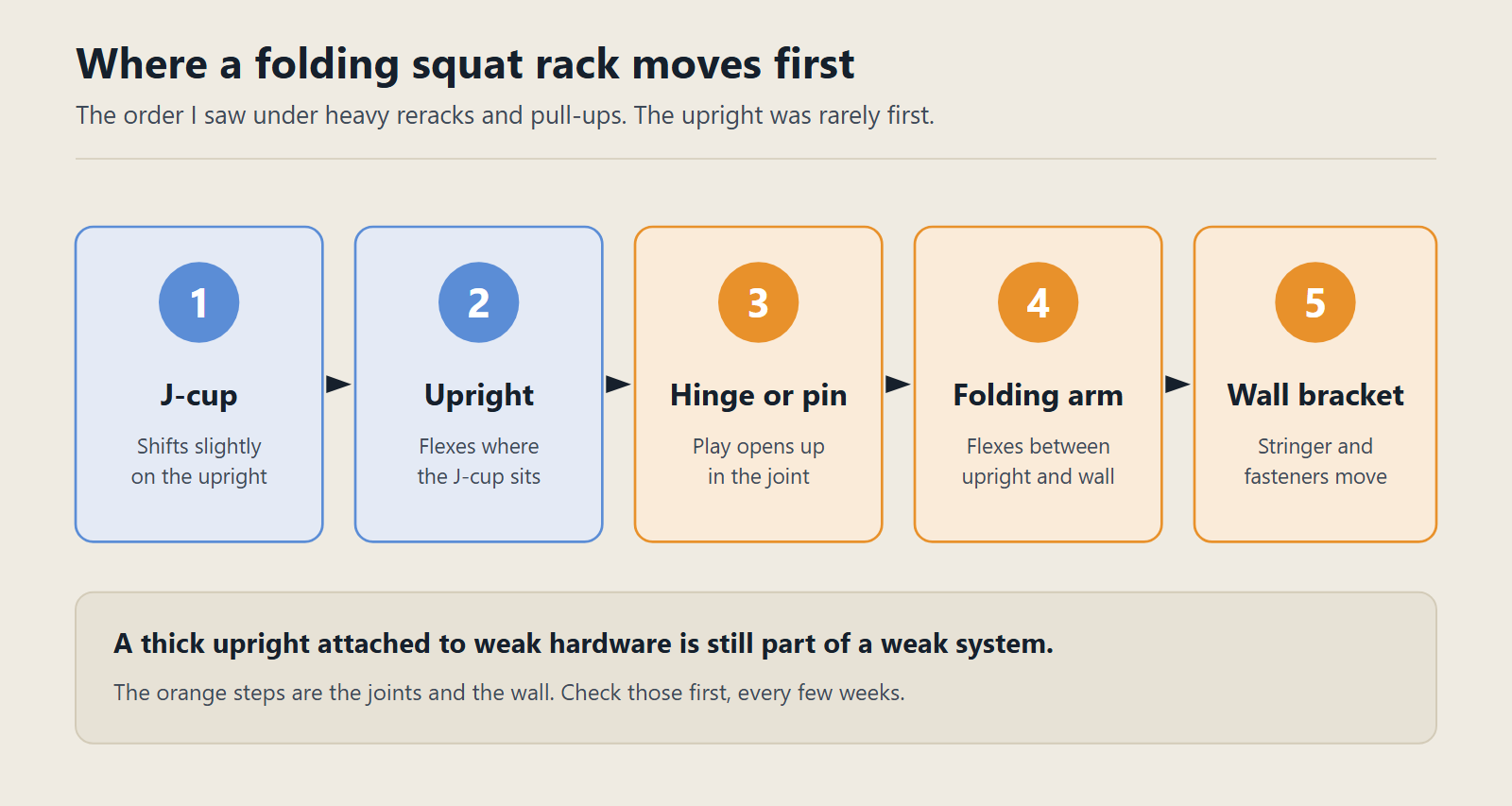
Figure 2. Watch the joints, not just the uprights.
That’s why judging a folding squat rack by upright size alone is misleading. A thick steel post attached to weak hardware is still part of a weak system.
The Wall Matters More Than the Brand
The best rack in this test could become dangerous if it’s installed badly. A wall-mounted rack puts real force into the building, so the installation has to account for:
- Stud material and spacing, or the condition of concrete or masonry
- Fastener type
- Stringer thickness
- How flat the wall is
- Floor slope
- Garage-door clearance
- Electrical wiring and plumbing inside the wall
- Correct bracket spacing
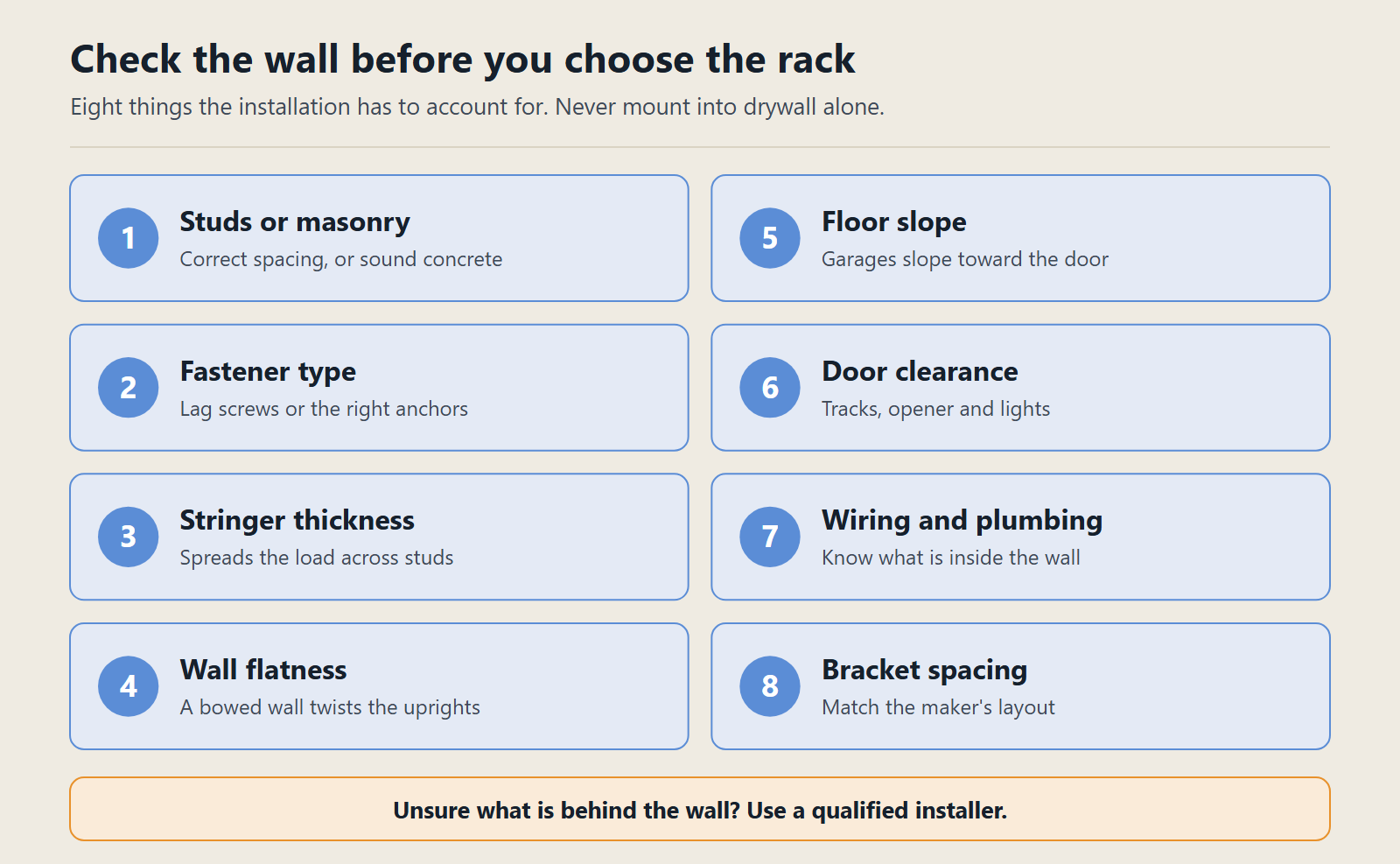
Figure 3. Check the wall before you choose the rack.
Never mount a rack into drywall or other decorative material alone. If you’re unsure what’s behind your wall, use a qualified installer.
How the Five Folding Racks Compared
| Rack | Folding speed | Folding effort | Normal-load stability | Joint rigidity | Overall confidence |
|---|---|---|---|---|---|
| Rogue RML-3W | Moderate | Higher (heavy) | Excellent | Excellent | Best |
| REP PR-4100 | Moderate | Moderate | Excellent | Very good | Excellent |
| PRx Profile | Fastest | Low once installed | Very good | Very good | Very good |
| Titan X-3 | Moderate | Moderate | Good | Good | Good |
| Cheap 2×3 rack | Fast | Light but less refined | Acceptable | Fair | Limited |
The PRx clearly won for daily convenience, and the Rogue won for structural confidence. The differences weren’t always obvious with an empty bar. They became easier to feel during heavy reracks and pull-ups.
Which Folding Squat Rack to Buy
- Heavy training and maximum confidence: Rogue RML-3W. Premium construction, the best hinges and hardware, and it feels like a permanent rack. You need a structurally sound wall and patience when folding.
- Best value: REP PR-4100. Heavy uprights, a big attachment range and most of the Rogue’s feel for less money.
- You park in the space every day: PRx Profile. The fastest to put away, if your ceiling allows a fold-up rack.
- Tight budget: Titan X-3. Capable and much cheaper. Allow extra time for installation, and buy the wall hardware separately.
Your rack will need a bench that stores just as neatly. I covered which benches pair best with a folding rack and what to check on a weight bench pad. If you have the floor space for a freestanding rack instead, see the five power racks I built.
Five Things to Check Before You Buy a Folding Squat Rack
- What’s behind the wall. Find the studs, or confirm the concrete or masonry is sound, before you shortlist anything.
- Your ceiling height. It decides between fold-in and fold-up, and whether the pull-up bar clears your door track and opener.
- The stored depth. Measure how far the rack sits from the wall when folded against how much room the car needs.
- What’s in the box. Some racks ship without wall hardware or stringers, so add those to the price.
- The capacity is a limit, not a target. A published rating assumes a correct installation on a suitable wall. Stay within it.
Free Tools for Training in a Folding Squat Rack
- Machine Swap Finder: type any gym machine and get three ranked swaps, with a gear line showing which ones need a rack or a bench.
- Machine Load Converter: turn the weight you used on a gym machine into a starting load for the barbell or dumbbell swap.
- Loadable Weight Rounder: see what your plate jumps mean in practice, and which load to use when your target falls between two.
Questions People Ask About Folding Squat Racks
Are folding squat racks safe?
Yes, when they’re installed correctly into structural framing or sound masonry and you stay within the published rating. Most problems start at the wall, the fasteners or the hinges rather than the uprights, so the installation matters as much as the rack.
What is the best folding squat rack?
Of the five I tested, the Rogue RML-3W. Its 3×3-inch 11-gauge uprights, heavy hinges and hardware made it feel most like a permanent rack. The REP PR-4100 was close behind for less money.
Can a folding squat rack hold as much as a power rack?
The premium models are built from the same 3×3-inch 11-gauge steel, and PRx rates its Profile PRO at 1,000 lb. But that rating assumes a correct installation on a suitable wall, so a folding rack is only as strong as what it’s bolted to.
Do I need studs to mount a folding squat rack?
You need structural support: wood studs at the right spacing, or sound concrete or masonry with the correct anchors. Never mount into drywall alone. If you’re unsure what’s behind your wall, use a qualified installer.
Fold-in or fold-up: which is better?
Fold-up racks like the PRx store fastest and leave the floor completely clear, but they need ceiling height. Fold-in racks like the Rogue and REP suit lower ceilings and felt slightly more rigid, but take longer to put away.
How far does a folding squat rack stick out from the wall when folded?
It depends on the design. PRx says its fold-up Profile PRO stores 4 inches from the wall, and REP says its 21.5-inch-deep PR-4100 folds to about 6 inches. Fold-in racks generally stick out a little farther than fold-up ones.
Is a cheap folding squat rack worth it?
For light training, a cheap 2-by-3-inch rack can work. As the weight climbed, the one I tested showed small movements adding up through its J-cups, hinges, arms and brackets. For heavy lifting, a 3×3-inch 11-gauge rack is worth the extra money.
The Verdict on Folding Squat Racks
The Rogue RML-3W was my best overall pick. It combined the most confidence-inspiring uprights, hinges and hardware with good attachment support and stability. The REP PR-4100 offered the best value and came close to the Rogue in most practical ways. The PRx Profile was the easiest to store and the one I’d choose for a garage that has to be cleared after every session. The Titan X-3 was a capable cheaper option that needed more installation work and moved a little sooner.
The cheap 2-by-3 rack worked for lighter training, but it showed how quickly small weaknesses in hinges, pins and mounting hardware add up. The biggest lesson of the whole test: the wall and the installation matter as much as the steel. A heavy-duty rack mounted badly is not a heavy-duty system, and whichever you choose, its published capacity is the limit.
Once the rack is on the wall, the next question is what to train in it. The Machine Swap Playbook covers eighteen swaps across the six patterns the gym’s queues form around, with a one-page cheat sheet you can screenshot and use mid-workout.
→ Send me the playbook — it’s free
Affiliate disclosure: WildnSwole earns a commission when you click a link to a partner and make a purchase. As an Amazon Associate, I earn from qualifying purchases. Commissions do not change what the content recommends and they do not add to what you pay.
The content in this article is for general information only and does not constitute medical or personal training advice. Always consult a qualified professional before making changes to your training.
Leave a Reply