I Compared the Pads on 7 Weight Benches. Thickness Told Me Almost Nothing.
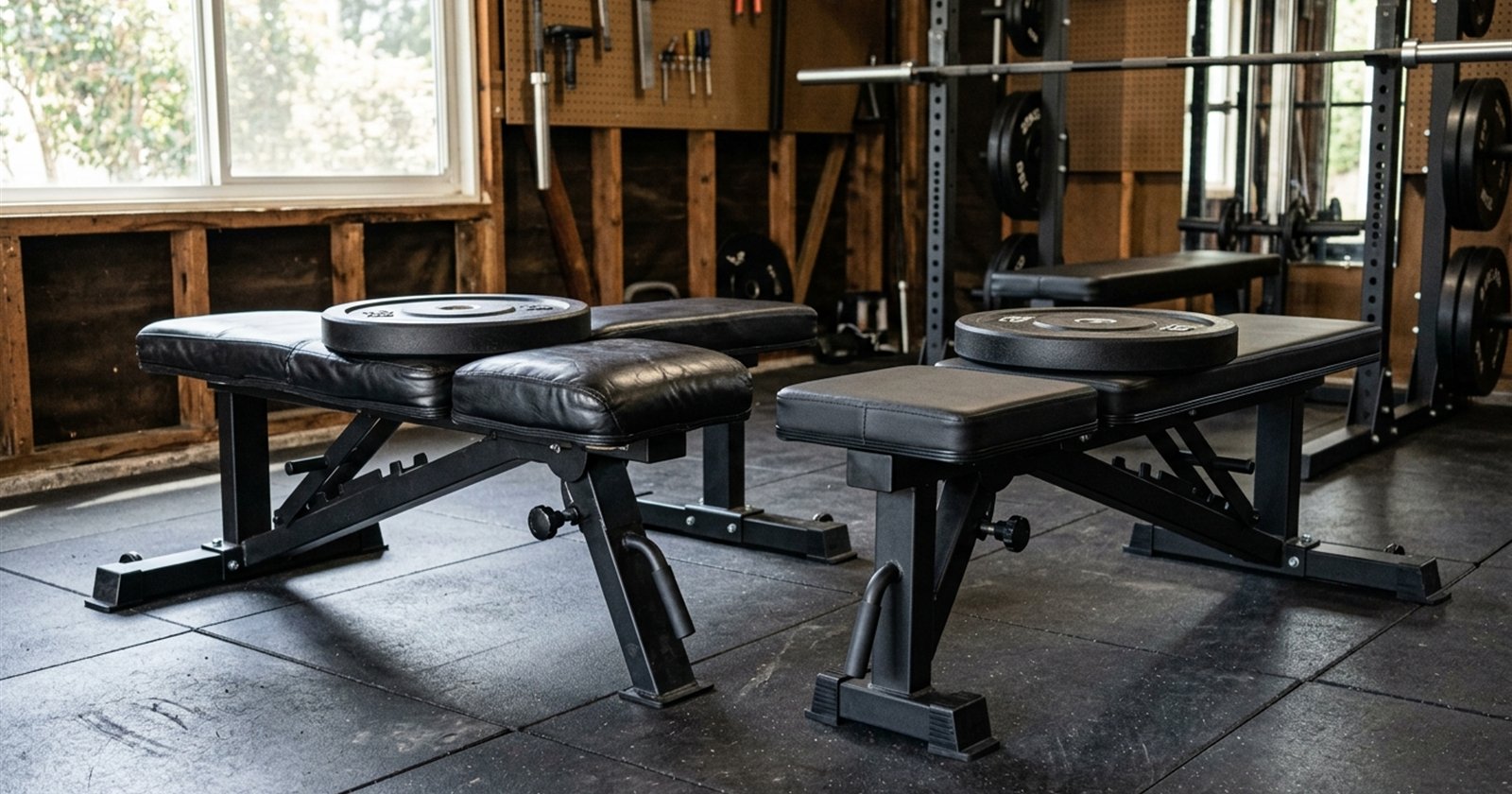
Illustration. The comparison at the heart of this article: the same flat plate, resting on two very different pads.
Weight benches get compared on capacity, adjustment angles, steel gauge and price. Weight bench padding usually gets one word: firm, soft, thick or comfortable. That word tells you almost nothing about how the bench behaves once you lie on it with a heavy dumbbell in each hand.
Two pads of about the same thickness can feel completely different under load. One holds your upper back still through a heavy press. The other gives way until you can feel the board underneath. So I put the pads on seven benches through the same side-by-side comparison: the REP Fitness AB-4100, the Rogue Adjustable Bench 3.0, the Titan Series Adjustable Bench, the Bells of Steel Buzz Saw, the Ironmaster Super Bench Pro, and two budget benches sold on Amazon, a Keppi Bench1000 V2 and a FLYBIRD WB5. Testing ran through May 2024. Models and prices were last checked in November 2026.
A bench is the first thing most people buy when they move their training out of a commercial gym, and nearly every dumbbell swap in the free Machine Swap Playbook needs one. The pad is the part you touch on every rep, so it deserves more than one word.
The short version: the REP AB-4100 had the best weight bench pad overall, the Rogue had the firmest, and the Titan came closest to premium support for less money. The two budget pads felt the most comfortable at first and gave way the most under load.
What a Good Weight Bench Pad Has to Do
Before testing, I assumed the thickest pads would support best. One of the budget benches cured me of that. Its pad looked generous, and most of that thickness vanished the moment weight went on it. A thinner premium pad beside it barely moved and kept my back further from the board.
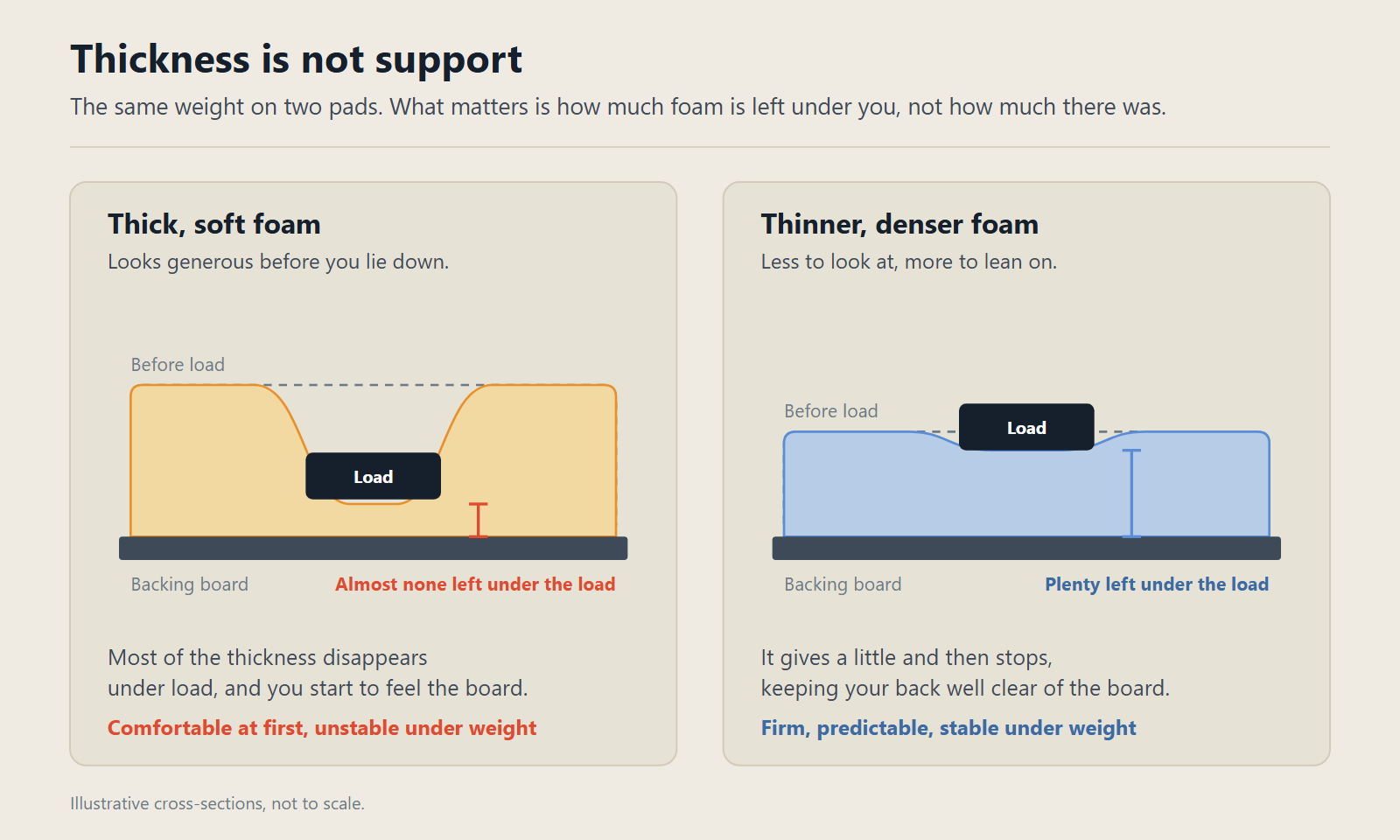
Figure 1. Thickness is how much foam there is. Support is how much of it is still there once you lie down.
Thickness tells you how much foam there is, not how easily it collapses. A good pad has to do several jobs at once: support you without bottoming out, stay comfortable across repeated sets, resist permanent dents, keep your shoulders stable, stop you sliding, and feel the same across its whole surface. Too soft and the bench feels unstable. Too hard and it feels like an upholstered plank.
How I Tested Each Weight Bench Pad
Pad density is a real, measurable property of weight bench foam: its mass divided by its volume. The foam industry’s test standard, ASTM D3574, measures it by weighing a cut sample, and measures firmness by pressing a flat plate into the foam and recording the force it takes to compress it by 25% and 65%, a figure called indentation force deflection. Getting a true density number means stripping the upholstery and cutting the foam out. I was not willing to destroy seven working benches for a figure no bench maker publishes.
So I borrowed the idea behind the firmness test instead. I rested the same flat loading plate on the centre of each back pad, added weight in the same steps, and watched how far the surface sank at each one. I also noted each pad’s unloaded thickness, how quickly it came back to shape, whether it was equally firm side to side, how the edges held up when I pressed near them, whether any dent stayed after repeated loading, and how it felt for flat, incline and seated pressing.
This is a ranking, not a lab measurement. It tells you which pads gave way more than others under identical pressure, and it matched what I felt lying on them. A pad that sank less, recovered quickly and supported evenly behaved like higher pad density, and that behaviour is what you are paying for.
The 7 Weight Bench Pads, Ranked
The premium pads did not just feel harder. They spread the pressure out. The budget pads let the plate sink into a smaller area, leaving a deeper dent directly under it, and that gap widened when I tested the edges.
| Bench | First feel | Give under load | Recovery | Overall support |
|---|---|---|---|---|
| REP AB-4100 | Firm | Low | Fast | Excellent |
| Rogue Adjustable Bench 3.0 | Very firm | Very low | Fast | Excellent |
| Titan Series Adjustable | Firm | Low to moderate | Fast | Very good |
| Bells of Steel Buzz Saw | Medium-firm | Low | Fast | Very good |
| Ironmaster Super Bench Pro | Medium-firm | Moderate | Good | Good |
| Keppi Bench1000 V2 | Medium-soft | Moderate to high | Slower | Fair |
| FLYBIRD WB5 | Soft | High | Slowest | Fair to limited |
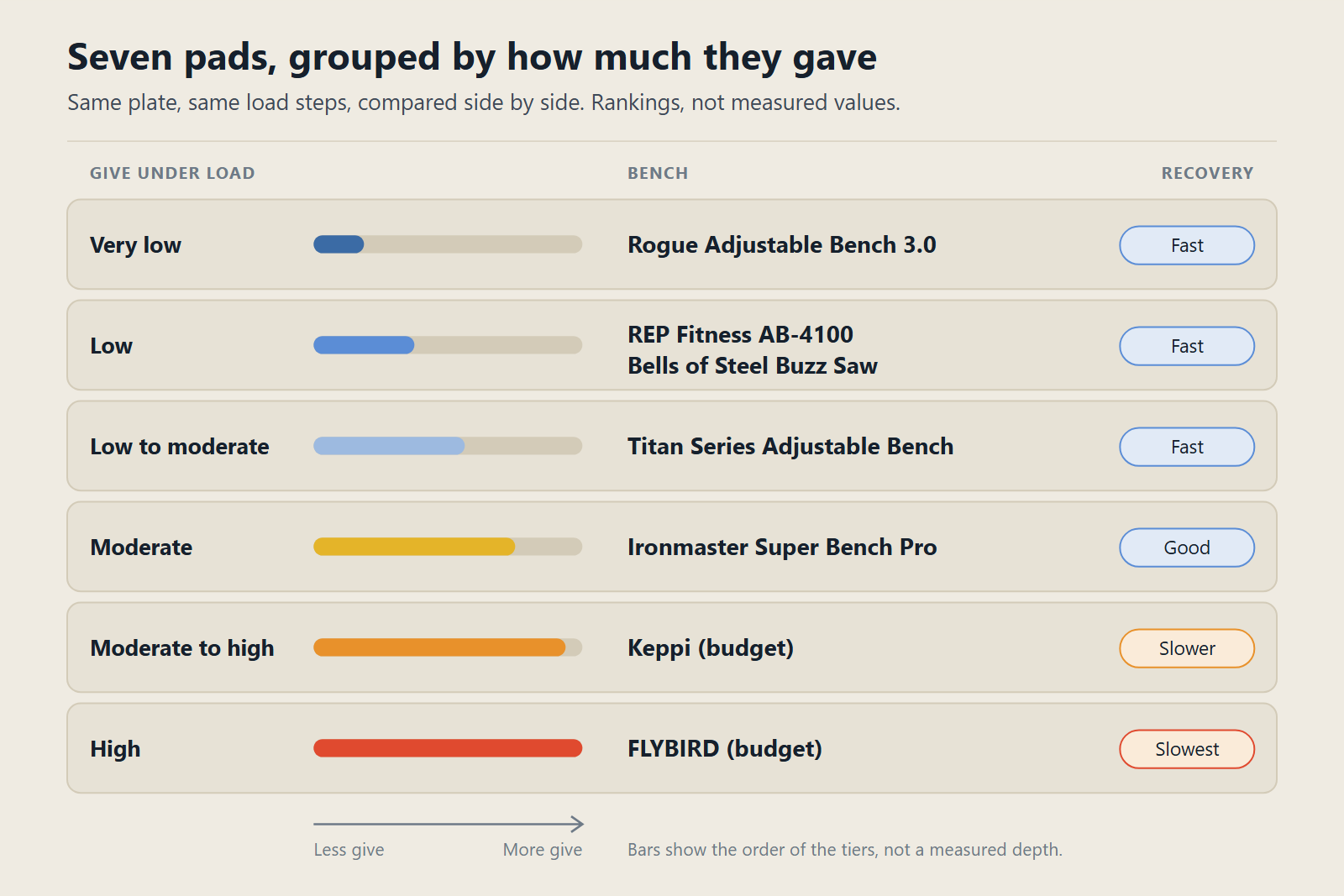
Figure 2. The seven pads grouped by how much they gave under the same load. These are rankings from a side-by-side comparison, not measured values.
Best Overall: REP Fitness AB-4100
The AB-4100 had the best balance of firmness and comfort. It felt supportive straight away without being hard, and under load it gave slightly and then stopped rather than carrying on collapsing. That made it predictable.
On flat presses it gave my upper back a stable platform. My shoulders did not sink unevenly, and the cover had enough grip to stop me sliding during leg drive. It held up just as well on incline, where softer, slipperier pads let you creep down toward the seat. It came back to shape quickly with no visible dent, and pressing near the edge did not make the foam fold.
The Rogue pad was firmer, but the REP was more comfortable across a wider range of exercises, and easier to move and store than the heavier premium benches. For most home gyms it is the best pad here, rather than the most extreme one.
Firmest: Rogue Adjustable Bench 3.0
The Rogue Adjustable Bench gave the least of any pad and felt the closest to a commercial strength bench. It barely changed shape when I set up to press, stayed composed under hard leg drive, and did not shift when I lay slightly off centre. It recovered almost instantly, and its edges were the strongest in the group, which matters for bigger lifters whose shoulders reach toward the sides.
The cost was comfort. It was never painful, but never plush either, and for pullovers and seated curls I sometimes preferred the REP. Buy the Rogue Adjustable Bench if heavy bench pressing is the priority and you do not need a soft all-rounder.
Best Value: Titan Series Adjustable Bench
The Titan did better than I expected. Its pad was firm, reasonably thick and far more supportive than either budget pad. It gave a little more than the REP and Rogue but never came close to bottoming out, and firmness was consistent from the upper back to the lower section, with slightly softer edges that did not affect normal pressing.
The cover was grippy enough for ordinary use, though not as secure as the best premium ones. After repeated loading it returned close to its original shape, a little slower than the REP and Rogue, with no lasting dent. At steeper inclines I felt a bit more give around my lower back and hips, but it stayed supportive enough for regular training. It does not feel luxurious, and it does not feel cheap either.
Best for Grip and Width: Bells of Steel Buzz Saw
The Buzz Saw pad felt medium-firm. It gave a little at first and then settled, and because it is broad it spread my weight over a larger area instead of forming one deep dent under my upper back. That made it feel softer than the Rogue while still supporting well.
The cover was one of its best features. My shirt stayed put and I could set my shoulders without drifting, on flat and on incline. The edges gave more than the Rogue’s but held up far better than the budget pads.
Width is a trade-off, not a free upgrade. A narrower pad leaves room for your shoulder blades to pull back past its edges and for your arms to travel, while a wide one gives more upper-back contact and can get in the way, depending on your build. For larger lifters, or anyone who wants the most support under the upper back, it was one of the most comfortable pads here.
The Odd One Out: Ironmaster Super Bench Pro
The Ironmaster’s back pad was relatively narrow and moderately firm, giving more than the REP or Rogue and less than the budget pads. Flat, it gave adequate support and plenty of freedom for the shoulders, with less upper-back surface than the wider benches. It never bottomed out, though I could feel more movement under a concentrated load.
Its removable seat changes the question. On incline the seat carries part of your weight, so the back pad’s density matters less than it does flat. That works, but fitting and removing the seat adds a step. The foam recovered reliably, a little slower than the top three after the concentrated load, with no lasting damage. It is a good pad on a bench whose design shapes the experience more than its foam does.
Best Budget: Keppi Bench1000 V2
The Keppi had the better pad of the two budget benches. It felt medium-soft and comfortable, and for light dumbbell presses, seated curls and general fitness work it was pleasant. Try it for a minute in a store and you might prefer it to a harder premium pad.
The comparison showed its limits. Under a moderate load it sank noticeably further than the premium pads, into a concentrated dent rather than an even spread, and under heavier pressure I came closer to feeling the frame. It recovered slowly, and by the end of testing the centre felt a little softer than at the start. It suits beginners and light-to-moderate dumbbell training on a tight budget. It is not the pad for frequent heavy pressing.
Softest: FLYBIRD WB5
The FLYBIRD had the softest foam in the group. It felt comfortable on first contact, and that softness turned against it once the weight went up. It sank deeply under my upper back and hips instead of spreading the load, so my body could shift slightly as the foam moved.
The edges folded down under concentrated pressure, which barely matters for seated work and matters a lot on a flat press, when your shoulders sit near the edge. It took the longest of all seven to recover, and after repeated sessions the centre felt softer than when it arrived. For light dumbbells a few times a week that may never become a real problem. For heavier, frequent training, I would want higher pad density and stronger edges.
What Incline Pressing Exposed
Incline showed differences that flat pressing hides. With the back pad raised, your weight concentrates through your upper back and hips, and soft pads give way around exactly those points. I settled lower after setting up, my shoulders felt less stable, and I slid more easily on covers without much grip.
The REP, Rogue and Bells of Steel handled incline best, and the Titan stayed stable enough for normal training. The Ironmaster spread the load differently because of its seat. The Keppi and FLYBIRD started comfortable and grew less stable as each set went on. If much of your training is on an incline, as it is for the chest-supported rows in my dumbbell lat exercises guide, weight the incline behaviour above the flat feel.
The Cover Changes How Firm a Pad Feels
A tight, grippy cover makes weight bench padding feel more supportive, because the surface moves less against you. A loose one lets you shift even when the weight bench foam underneath is reasonably firm. The premium benches paired denser foam with tighter, more textured covers, while the budget benches used smoother material that stretched and moved under pressure, which made them feel softer than their pad density alone would explain.
The hardest pad was not automatically the best, either. The Rogue gave the least, and some people will find it firmer than they need. The REP traded a little rigidity for comfort, and the Bells of Steel used width and grip to feel stable without feeling hard. A powerlifter may want a dense, rigid surface. A home-gym lifter doing presses, rows, curls and core work may prefer something slightly more forgiving. The line not to cross is a pad so soft that it stops supporting you consistently.
Get the whole system, not just the bench
A bench is the first purchase, not the last. The Machine Swap Playbook maps every common gym station to its movement pattern, gives three ranked swaps for each, and shows which ones a bench unlocks, with the load rules on a single printable page.
Eighteen swaps. Forty pages. Free, no upsell.
Which Weight Bench to Buy
Pick by how you train, not by which pad felt nicest for a minute:
- Most home gyms: REP Fitness AB-4100. The best balance of support and comfort, and it moves and stores more easily than the heavier premium benches.
- Heavy bench pressing: Rogue Adjustable Bench 3.0. The firmest pad and the strongest edges in the test.
- Best value: Titan Series Adjustable Bench. Closest to premium support for less money.
- Larger lifters: Bells of Steel Buzz Saw. A wide, grippy pad that spreads the load.
- Light training on a tight budget: Keppi Bench1000 V2. Comfortable, and fine until the weights get heavy.
If you want a REP bench that folds away, my pick is the REP Nighthawk Adjustable Bench. It was not one of the seven pads in this comparison, so I am not ranking its foam against them, but it is the REP bench I recommend across the site: flat, incline and decline in one frame, a wide back pad, and a folding frame for rooms where the floor has to come back after training. Run the four checks below when it arrives.
Check the REP Nighthawk on Amazon
The bench and the dumbbells work as a pair: most dumbbell exercises need a bench to exist at all. If you are buying both, I have run long-term tests on the adjustable dumbbells most people are choosing between, starting with what breaks first on adjustable dumbbells.
Five Things to Check Before You Buy a Weight Bench
You do not need a lab, or seven benches, to check a weight bench pad. The comparison I ran comes down to five checks you can do in a store, or in the first week of a return window.
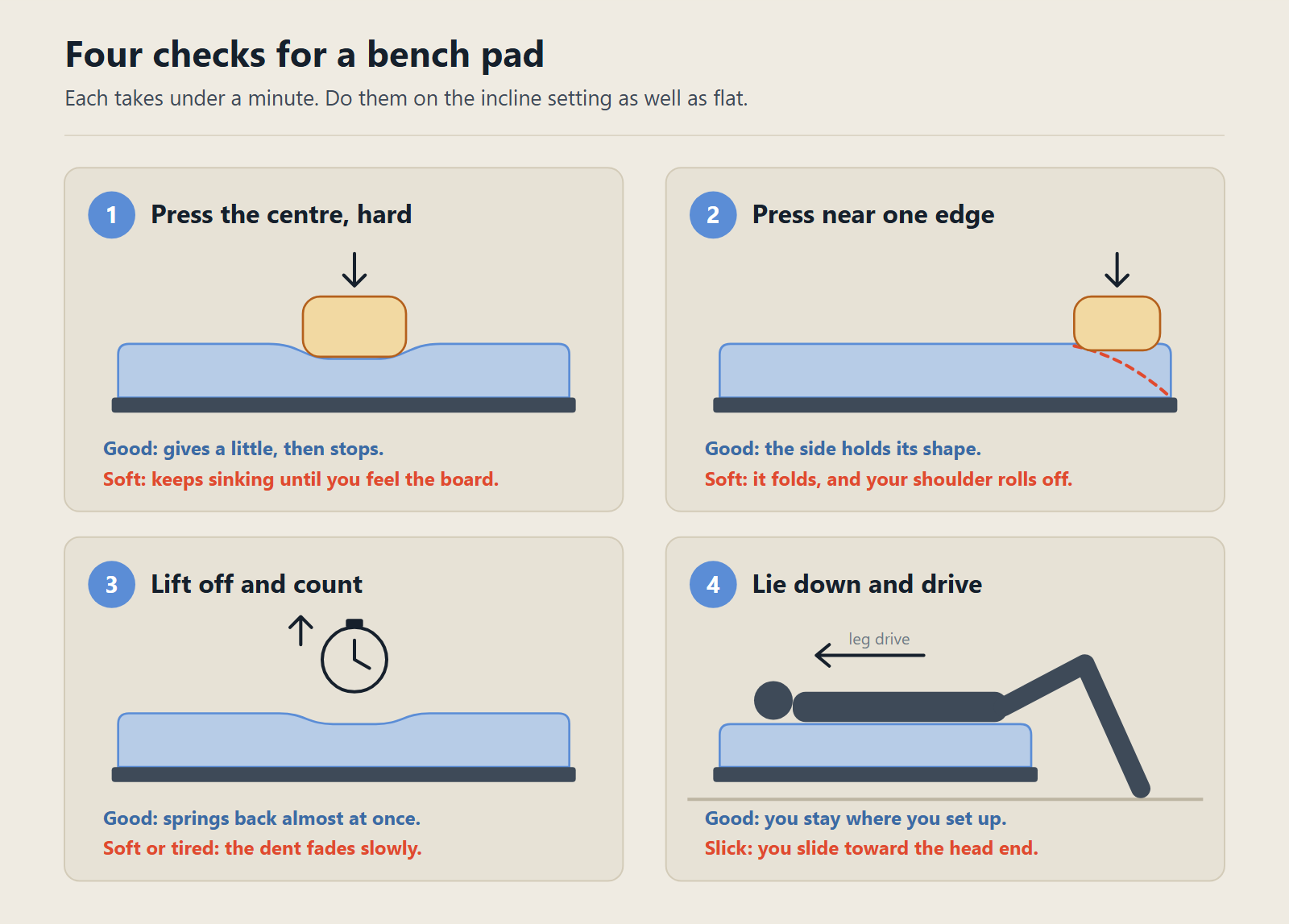
Figure 3. Four of the five checks. Each takes under a minute.
- Press the centre with a flat palm, hard. A good pad gives a little and then stops. A soft one keeps sinking until you feel the board.
- Press near one edge. The side should hold its shape. If it folds, your shoulders will roll off it on a flat press.
- Take your hand away and count. A dense pad springs back almost at once. A slow-fading dent is the clearest sign of soft or tired foam.
- Lie down, set your shoulders and drive with your legs. You should stay where you put yourself. If you slide, the cover is doing too little.
- Do all four again on the incline setting. That is where soft pads give themselves away.
Seven Signs a Weight Bench Pad Is Breaking Down
Worn-out weight bench padding rarely looks like an obvious failure. It shows up as small changes, and one of them on its own may mean nothing. Several together usually mean the weight bench foam is too soft, or beginning to go.
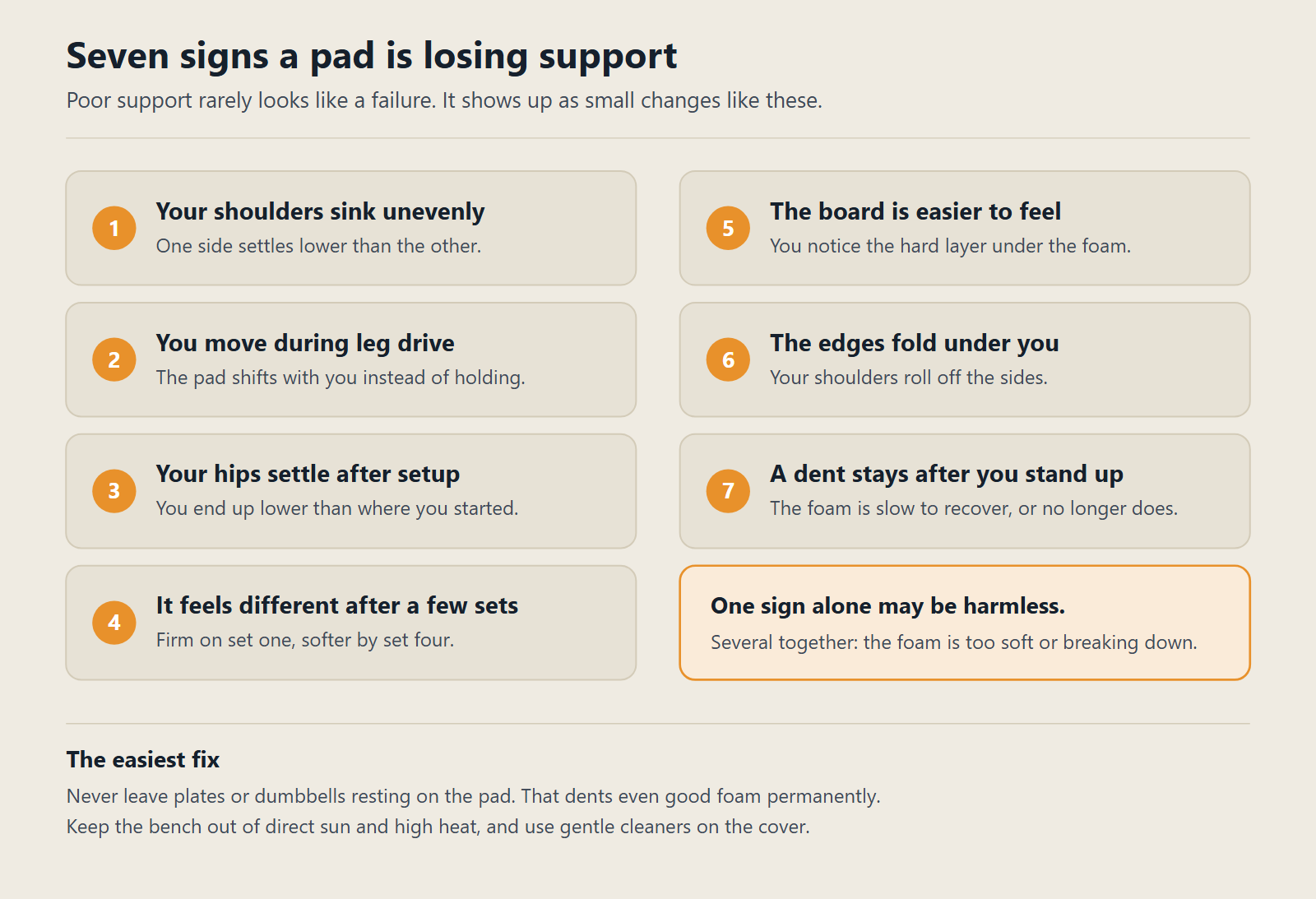
Figure 4. One of these on its own may be harmless. Several together mean the foam is too soft or starting to break down.
A test like this cannot prove how a pad will feel in five years. Going on how each one handled load, recovered and supported its edges, the Rogue inspired the most confidence, with the REP close behind. I would expect the Bells of Steel and Titan to handle regular home use. The Keppi and FLYBIRD leave the most doubt, because they recovered slowly and their centres softened first.
How long any pad lasts also depends on your weight, how often you train, garage heat and humidity, direct sunlight, cleaning products, and whether things get stored on the bench. That last one is the easiest to fix: plates or dumbbells left resting on a pad can dent even good foam permanently.
Free Tools for Setting Up a Home Gym
- Adjustable Dumbbell Picker: answer a few questions about your room, budget and training, and it tells you which type of adjustable dumbbell suits you, and whether to buy the bench first.
- Machine Swap Finder: type any gym machine and get three ranked swaps, with a gear line showing which ones need a bench.
Questions People Ask About Weight Bench Pads
What is weight bench pad density?
Foam density is the foam’s mass divided by its volume, measured in pounds per cubic foot or kilograms per cubic metre. Denser foam generally compresses less and recovers faster. Almost no bench maker publishes it, so in practice you judge it by how much the pad gives under load and how quickly it springs back.
Is a thicker bench pad better?
Not necessarily. Thickness tells you how much foam there is, not how easily it collapses. In this comparison, a thick budget pad lost most of its height under load, while a thinner premium pad barely moved and kept my back further from the board.
Should a weight bench pad be firm or soft?
Firm enough that it stops sinking once you are on it, with a little give for comfort. For heavy pressing, firmer is better because it keeps your shoulders stable. For lighter, general training, a slightly more forgiving pad is more comfortable. Avoid any pad soft enough that you can feel the board.
Which weight bench has the firmest pad?
Of the seven I compared, the Rogue Adjustable Bench 3.0 gave the least under the same load and had the strongest edges. The REP AB-4100 was close behind and more comfortable across a wider range of exercises.
How can I tell if a bench pad is too soft?
Press the centre hard with a flat palm. If it keeps sinking until you feel the board, if the edges fold when you press near them, or if the dent takes a long time to fade, the foam is too soft for heavy pressing.
Why does my bench pad have a permanent dent?
Usually because weight was left resting on it, or because the foam is soft enough that repeated loading has crushed it. Keep plates and dumbbells off the pad between sessions, and keep the bench out of direct sun and high heat.
Does the upholstery affect how firm a bench feels?
Yes. A tight, grippy cover makes a pad feel more supportive because the surface moves less against you. A loose or slick cover lets you shift even when the foam underneath is firm.
The Verdict on Weight Bench Pads
Comparing seven weight bench pads side by side showed that thickness and first-touch comfort are poor stand-ins for support. Good weight bench padding is dense foam that stops sinking, holds its edges and comes back to shape quickly. The thickest-looking pads were not the most supportive, and some sank deeply under load while slimmer premium pads kept my upper back stable and recovered almost at once.
The REP AB-4100 is my pick for most home gyms because it balances support with comfort. The Rogue Adjustable Bench 3.0 has the firmest pad and is the one to buy for heavy bench pressing, and the Titan Series gets closest to premium support for less money. The Keppi and FLYBIRD are comfortable at first, but their softer weight bench foam sank further, recovered slower and gave less stability once the weight went up.
A pad should support the lift, not disappear under it. A little give is comfort. Too much changes your setup, costs you stability and can make a strong steel frame feel cheap.
A bench is one piece. The Machine Swap Playbook covers eighteen swaps across the six patterns the gym’s queues form around, with a one-page cheat sheet you can screenshot and use mid-workout.
→ Send me the playbook — it’s free
Affiliate disclosure: WildnSwole earns a commission when you click a link to a partner and make a purchase. As an Amazon Associate, I earn from qualifying purchases. Commissions do not change what the content recommends and they do not add to what you pay.
The content in this article is for general information only and does not constitute medical or personal training advice. Always consult a qualified professional before making changes to your training.
Leave a Reply