Hack Squat vs Leg Press: The Research Doesn’t Pick the Winner Most Lifters Expect
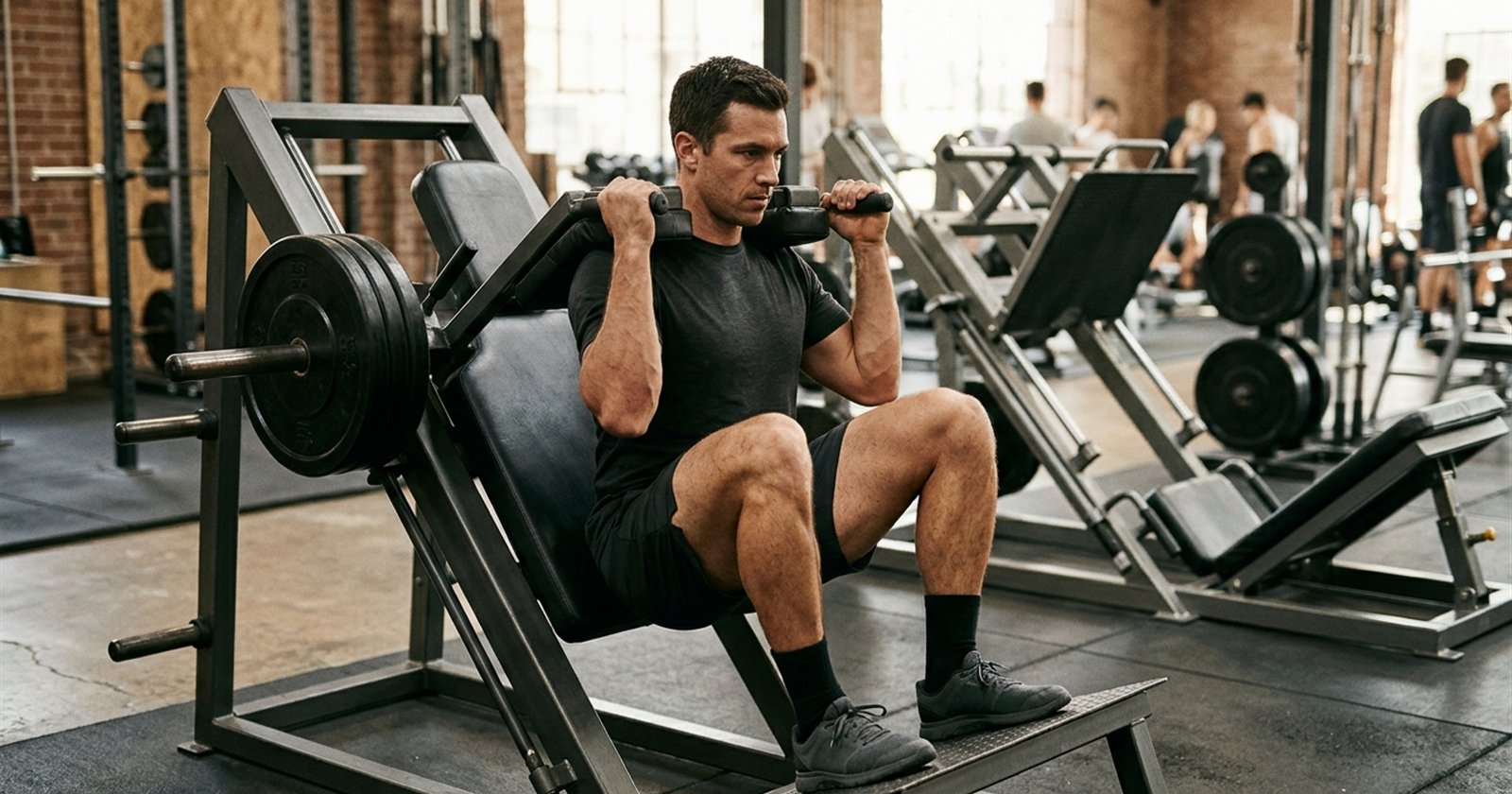
Illustration. The bottom of a hack squat, the hardest point of the rep, with a 45-degree leg press waiting behind.
Hack squat vs leg press is one of the oldest arguments on leg day. The hack squat crowd says it’s the better quad builder because you’re standing and squatting. The leg press crowd says you can load it heavier and it’s easier on your back. Both sides sound sure of themselves. The research is less sure, and more useful.
I haven’t had either machine since I moved my training into a garage in May 2026, so I have no favourite to defend. This comparison leans on the studies instead: what each machine trains, what changes when you move your feet, what happens at the knees and lower back, and which one fits which goal. If you’ve lost access to both, the free Machine Swap Playbook covers the home swaps for the hack squat and the quad machines around it.
The short version: both machines build the quads well, and there is no trial showing one grows them more than the other. The hack squat puts you in a more upright, knee-forward squat with your back supported. The leg press folds you into the seat and lets you load the hips and glutes heavier. Pick by what you need the set to do, not by which machine wins the argument.
Hack Squat vs Leg Press at a Glance
Both are plate-loaded sleds that move on rails, both support your back, and both are hardest at the bottom of the rep, where your knees are most bent. The difference is your body position. On a hack squat your torso stays close to upright and the sled moves your whole body. On a leg press your torso is reclined and fixed, and you push the sled away from you.
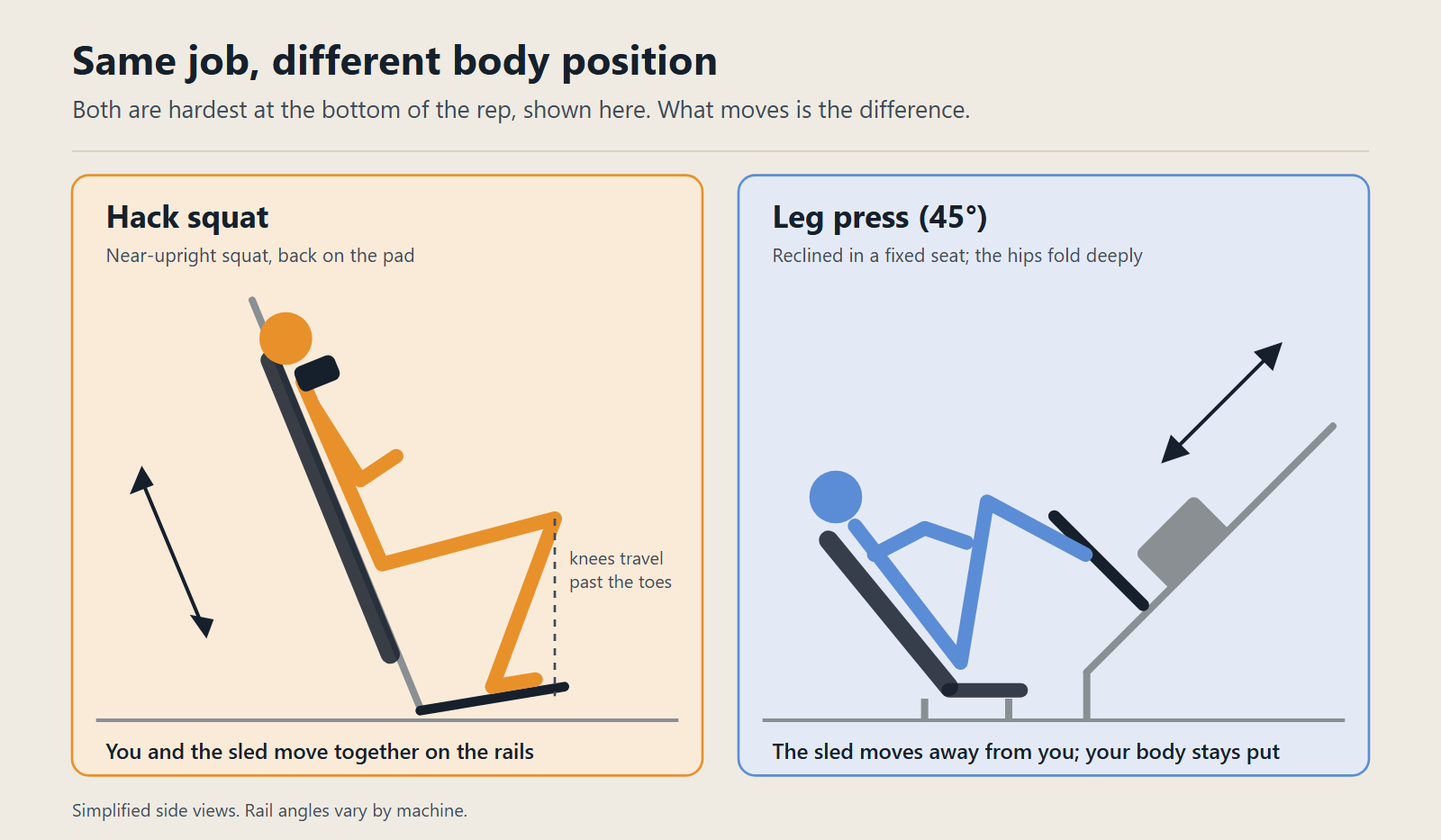
Figure 1. Same job, different body position. The hack squat moves you; the leg press moves the sled.
| Hack squat | Leg press (45°) | |
|---|---|---|
| Body position | Near-upright squat, back on an angled pad | Reclined in a fixed seat |
| What moves | You and the sled together | The sled, away from you |
| Main emphasis | Knee-dominant: quads, knees travel forward | Quads plus heavy hip flexion: glutes and adductors |
| Back support | Full, but you carry the load through your shoulders | Full, load goes through the feet only |
| Trunk demand | Lower than a free squat | Lowest of the three |
| Load you can use | High | Highest |
| Learning curve | Moderate: depth and knee path take practice | Low |
In the hack squat vs leg press table, the “emphasis” row is a tendency, not a rule. Foot position and depth change it on both machines, and the evidence on that is thinner than gym advice suggests. More on that below.
Hack Squat Muscles Worked
The hack squat muscles worked are mainly the quadriceps: the three vasti on the front and outside of the thigh, plus some rectus femoris. Because the knees travel well forward while the torso stays fairly upright, the quads take most of the load. The glutes and adductors work too, more as you go deeper, and the calves hold the ankle steady.
The only study we found that compares the two machines directly is small. Hesari and colleagues had ten male powerlifters do the squat, the hack squat and the leg press at 70% and 90% of their one-rep max.
Vastus medialis and vastus lateralis activity was higher in the hack squat and the squat than in the leg press. That fits the common view that the hack squat is the more quad-focused of the two, and it’s the only hack squat vs leg press study of its kind, so treat it as a hint rather than proof. It measured electrical activity (EMG), not muscle growth, it didn’t record the glutes, and it appeared in a small journal outside the main databases.
Beyond the hack squat muscles worked, what the machine takes away is the balancing. In a study by Clark, Lambert and Hunter, ten men did the back squat and the hack squat at the same relative loads. Their hack squat maxes were much higher, and trunk muscle activity was higher in the back squat for nearly every muscle measured. The pad does the bracing work your core does under a free bar. That’s why hack squat muscles worked lists are short on “core”: the machine is doing that job.
Leg Press Muscles Worked
The leg press muscles worked are the quadriceps, the glutes and the adductors, with the hamstrings doing little. Because you sit reclined and the sled comes toward your chest, your hips fold much further than your knees would let them in most squats. That deep hip bend is what brings the glutes and adductors in.
This is where the best recent evidence on leg press muscles worked sits. In a 2026 trial, Kinoshita, Maeo and colleagues had 17 untrained adults train one leg on the leg press and the other on the knee extension for 12 weeks, then measured muscle volume with MRI.
Whole-quadriceps growth was similar between the two (4.9% with the leg press, 7.1% with knee extensions, not a significant difference). But the leg press also grew the glute max by 15.4% and the adductor magnus by 6.2%. The one quad muscle it barely touched was the rectus femoris: 1.1% growth, against 13.2% with knee extensions.
That’s the clearest picture of leg press muscles worked you’ll find: big gains in the vasti, glutes and adductors, little in the rectus femoris. If that last muscle matters to you, a knee extension alongside the leg press covers it. Our leg extension attachment guide shows how to do that at home.
The hamstrings are the weak spot in the leg press muscles worked list. In the classic knee studies by Escamilla and colleagues, the squat produced about twice the hamstring activity of the leg press. Don’t count the leg press as hamstring work. Program a curl or a hinge for that.
Hack Squat vs Leg Press for Quad Growth
No study has trained one group on the hack squat and another on the leg press and measured which grew bigger quads. So any confident hack squat vs leg press “winner” for quads is opinion.
What we do have points to a tie. In a 10-week study, Kassiano and colleagues had 70 young women train either the 45° leg press every session or rotate between the leg press, the hack squat and the Smith machine squat. Thigh growth was similar in both groups. The rotation, which included the hack squat, did as well as the leg press alone. That doesn’t prove the two are identical, but it does show that swapping one for the other won’t cost you size.
Range of motion matters less than you might think on the leg press. Larsen and colleagues had 23 trained lifters press one leg through a partial range (about 100° of knee bend) and the other through full range for 8 weeks. Quad growth was similar. So you don’t need to chase extreme depth on the sled for your quads, though the glutes are a different story, as the next section shows.
For quads, the hack squat vs leg press choice comes down to which one you can push hard, safely, for the most good reps. That’s usually the one you’re most comfortable in.
Hack Squat vs Leg Press for Glutes
For glutes, the hack squat vs leg press question has a clearer answer: the leg press has the stronger evidence. The 15.4% glute max growth in the Kinoshita trial is a direct measurement, and the reason is the deep hip bend the reclined seat allows.
The hack squat trains the glutes too, and more the deeper you sit. In free squats, depth is what drives glute growth: Kubo and colleagues found full squats grew the glute max by 6.7% against 2.2% for half squats over 10 weeks, while quad growth was the same. The same principle almost certainly holds on a hack squat, but no one has measured it there.
If glutes are the goal, the leg press with a full, controlled depth is the better-supported choice. If you hack squat, sit deep.
Knees and Lower Back: Which Machine Is Easier on Your Joints?
Knees. The hack squat vs leg press knee question is harder to settle than it sounds. The best knee data compares the leg press with the free squat, not with the hack squat. In Escamilla’s 2001 study of ten experienced lifters, the squat produced generally higher knee forces than the leg press, and none of the variations produced any ACL strain.
Across the closed-chain studies, knee forces peak near the bottom of the rep, around 85–105° of knee bend (Wilk and colleagues). That’s normal loading for a healthy knee, but it’s the range to ease into if your knees are sore.
There is no equivalent knee-force study for the hack squat, so claims that one machine is “kinder to your knees” go beyond the data.
Lower back. Both machines take most of the bracing off your trunk. Core and lower-back muscle activity was 17–59% lower on the leg press than in squats in a study of 19 trained women (Saeterbakken and colleagues), and the hack squat cut trunk activity compared with the back squat in the Clark study above. No study we found measured spinal compression directly, so “zero spinal load” isn’t supported either. Two practical notes:
- On a leg press, the risk point is the bottom. If your hips roll off the seat and your lower back rounds, you’ve gone deeper than your hips allow. Stop just before that.
- On a hack squat, the load sits on your shoulders, so your spine still carries it, just with the pad steadying you.
Get the whole system, not just the leg day
If your gym’s hack squat and leg press are always taken, or you train at home without either, the Playbook gives you the swaps. It maps each machine to its movement pattern, ranks three swaps for each, and tells you how to set the load so the first session doesn’t go wrong.
Eighteen swaps. Forty pages. Free, no upsell.
Hack Squat Foot Placement
Most hack squat foot placement advice is borrowed from the leg press, because no study has tested foot position on the hack squat itself. Here’s what the leg press research shows, and how it likely carries over.
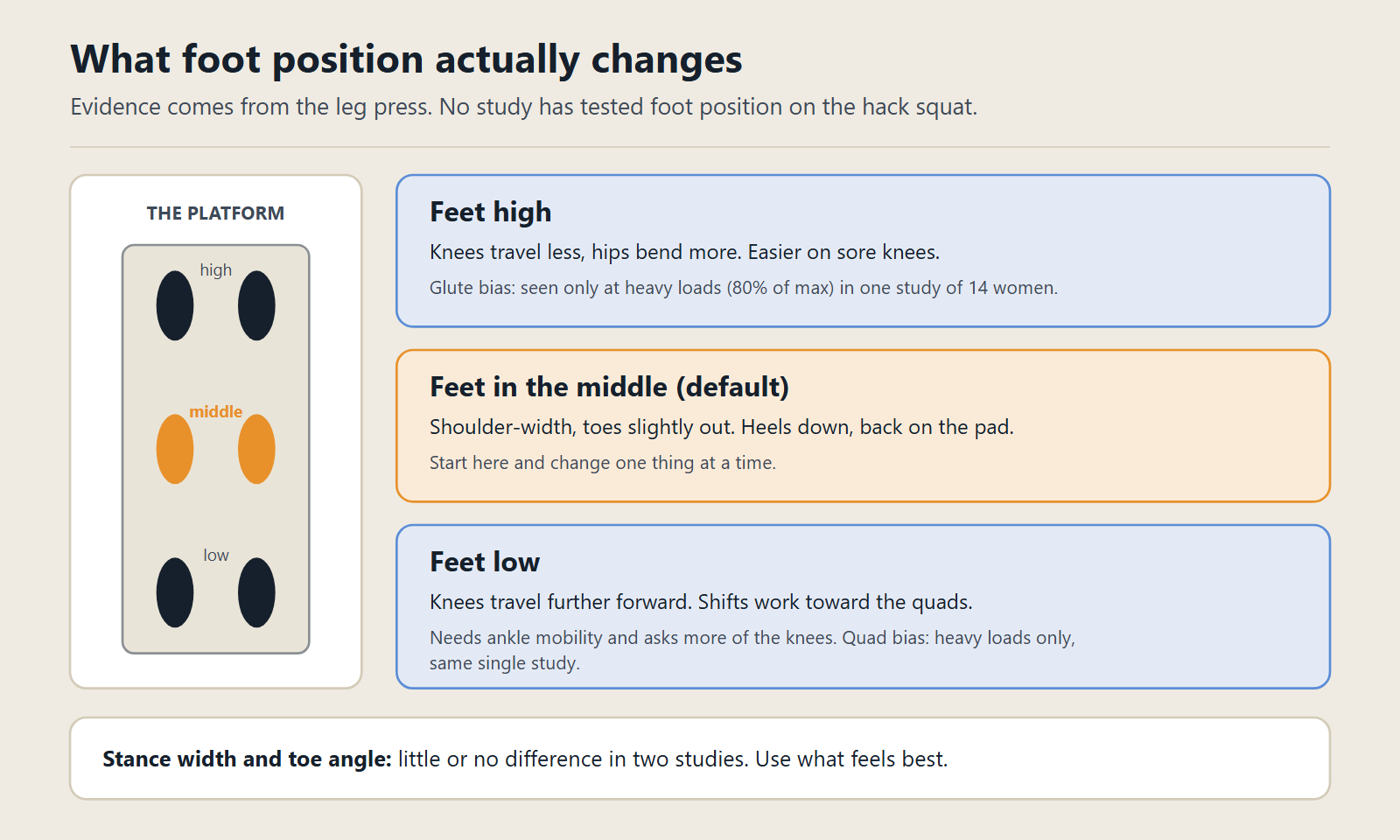
Figure 2. What foot position changes, and how strong the evidence is. On the leg press, high vs low feet shifted muscle activity only at heavy loads.
- Feet low. Your knees travel further forward, which shifts work toward the quads. In a study of 14 women on the 45° leg press, Da Silva and colleagues found low feet raised rectus femoris and vastus lateralis activity at 80% of max. Low hack squat foot placement is the classic “quad” setup, but it needs good ankle mobility and asks more of your knees.
- Feet high. Your knees travel less and your hips bend more. In the same study, high feet raised glute max activity, but only at 80% of max. At 40% there was essentially no difference.
- Stance width and toe angle. These barely mattered. Martín-Fuentes and colleagues found no difference in muscle activity between hip-width and wider stances, or between straight and turned-out feet, and recommended the stance each person prefers. Escamilla found that high vs low feet didn’t change knee forces either.
So treat hack squat foot placement as a comfort and range-of-motion setting first, and a muscle “targeting” setting a distant second. A good default: feet shoulder-width in the middle of the platform, toes turned out slightly, placed so your heels stay down and your lower back stays on the pad at the bottom.
If you want more quads, move your feet a few inches lower and slow the descent. If your knees complain, move them higher. That’s the honest summary of hack squat foot placement.
Leg Press Foot Placement and Depth
The same rules as hack squat foot placement apply on the leg press: mid-platform, shoulder-width, toes slightly out, and adjust from there. A 2020 review of the leg press research by Martín-Fuentes and colleagues rated the evidence on foot-position variants as “not compelling”, and found quad activity peaks near 90° of knee bend.
Depth is the setting that matters more. Lower the sled until your knees reach about 90° or a little beyond, as long as your hips stay on the seat. Going deeper won’t add quad growth, based on the Larsen trial, but a controlled deep range is what gives the leg press its glute work.
Which One Should You Use?
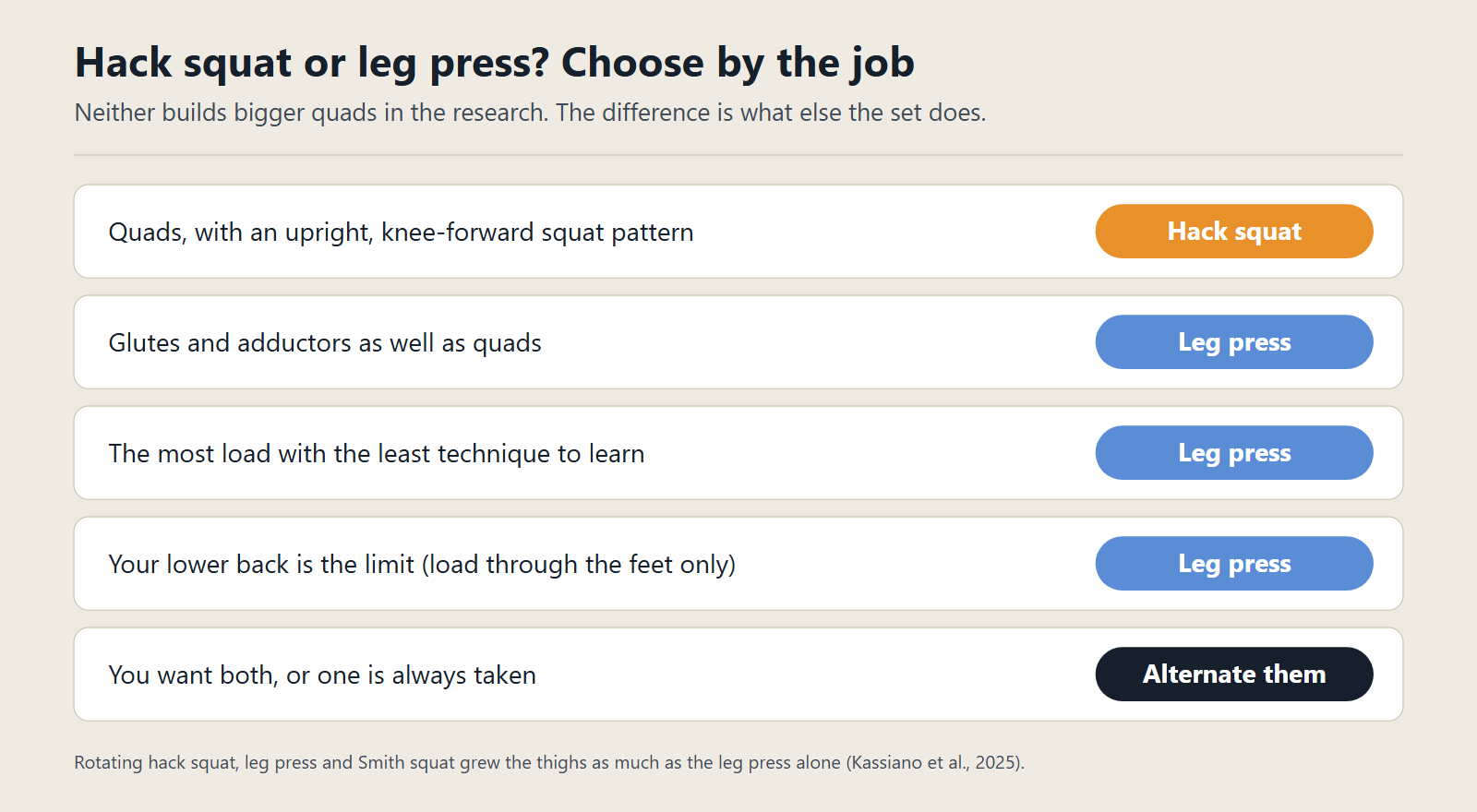
Figure 3. Choose by the job the set needs to do.
- You want quads and a squat pattern: the hack squat. Its hack squat muscles worked list is quad-first. It keeps you upright with the knees forward, which is closer to a free squat.
- You want glutes and adductors as well as quads: the leg press, with full controlled depth. That’s where the leg press muscles worked research is strongest.
- You want the most load with the least technique: the leg press. It’s the easier machine to learn and to push to failure safely.
- Your lower back is the limit: the leg press, since the load goes only through your feet.
- You want both: alternate them. The Kassiano study suggests rotating machines costs you nothing, and our 5 day workout split lists them as interchangeable on leg day.
Can you convert weights between them?
Not reliably. Most lifters move more on a leg press than a hack squat, and more on a hack squat than a free squat, because each step adds support. One study comparing the leg press with a Smith machine squat (Migliaccio and colleagues) needed roughly 2.7 times the relative load on the leg press to match quad activity.
That was a Smith machine, not a hack squat, and sled weights differ by brand, so start light on whichever machine is new to you and work up over two or three sessions. Our progressive overload guide covers how to build from there.
No Hack Squat or Leg Press? The Home Swaps
If you train at home, the hack squat vs leg press choice disappears. You won’t match either machine’s load, so match the job instead.
- For the hack squat, the closest copy is the heel-elevated goblet sissy squat: knees forward, torso upright, heels raised on a plate or wedge. The Machine Swap Finder’s hack squat entry ranks it alongside the reverse Nordic curl.
- For the leg press, the Bulgarian split squat puts all the load on one leg, so light dumbbells still work hard. Our leg press alternative guide builds a full leg day from it.
Five Things to Check Before Your First Session
- Set the safety stops. Both machines have them. Set them just below your lowest working depth before you load the sled.
- Find your depth with an empty sled. This matters on both sides of the hack squat vs leg press choice. Lower until your hips start to lift off the seat (leg press) or your lower back peels off the pad (hack squat). Your working depth is just above that.
- Start mid-platform. Feet shoulder-width, toes slightly out. Change one thing at a time, and only after a few sessions.
- Don’t lock your knees hard at the top. Stop just short of locking out, and keep the movement controlled. The bottom is the hard part; the top is where you breathe.
- Start lighter than your ego wants. Sled weights differ between brands and models. Treat the first two sessions on any new machine as calibration, not a test.
Free Tools for Hack Squat and Leg Press Training
- Machine Swap Finder: type the hack squat, the leg press or any other machine and get three ranked swaps, with a gear line showing which ones need a rack or a bench.
- Machine Load Converter: turn the weight you used on a leg press or hack squat into a starting load for the dumbbell or barbell swap.
- Swap Fault Finder: describe what feels wrong in your own words, such as “my knees hurt” or “I feel it in my lower back”, and get the likely cause and the fix.
Questions People Ask About Hack Squat vs Leg Press
Is the hack squat better than the leg press?
Neither is better overall. The hack squat is the more upright, quad-focused squat pattern, and the leg press loads the glutes and adductors more and is easier to learn. No study shows one builds bigger quads than the other.
Which builds bigger quads, hack squat or leg press?
There is no head-to-head growth study. A small EMG study found higher quad activity in the hack squat, and a 10-week trial found that rotating the hack squat, leg press and Smith squat grew the thighs as much as the leg press alone.
Is the leg press easier on your back than the hack squat?
Usually, yes. On the leg press the load goes through your feet only, while on the hack squat it sits on your shoulders. Both cut trunk demand compared with a free squat, but no study has measured spinal load on either machine directly.
What muscles does the hack squat work?
Mainly the quadriceps, especially the vasti, plus the glutes and adductors as you go deeper. The calves steady the ankle. The back pad does most of the trunk bracing.
What muscles does the leg press work?
The quadriceps, glutes and adductors. In a 2026 MRI study the leg press grew the glute max 15.4% and the vasti well, but barely grew the rectus femoris, so add a knee extension if you want that muscle too.
Where should you put your feet on a hack squat?
Start with feet shoulder-width in the middle of the platform, toes slightly out. Lower feet shift work toward the quads but need ankle mobility; higher feet ease the knees. No study has tested hack squat foot placement directly.
Can you do hack squats and leg press in the same workout?
Yes. A common order is the hack squat first, while you’re fresh enough for the harder pattern, then the leg press for extra volume. Keep the total number of hard sets for the quads sensible across the week.
Is the hack squat bad for your knees?
Not for healthy knees used through a controlled range. Knee forces in all closed-chain leg exercises peak near the bottom of the rep, so ease into depth if your knees are sore, and raise your feet slightly to reduce how far your knees travel.
The Verdict on Hack Squat vs Leg Press
The hack squat vs leg press debate doesn’t have a winner, and that’s the useful part. Both machines build the quads, and the best evidence says swapping between them won’t cost you size. The leg press has the strongest data for the glutes and adductors, is easier to learn, and keeps the load off your shoulders. The hack squat gives you a near-upright, knee-forward squat with the balancing taken away. Most of the gym rules about foot placement turn out to be small effects at best.
So settle hack squat vs leg press by the job the set needs to do, set it up so your back stays supported at the bottom, and push it close to failure. That matters far more than which sled you’re on.
Whether your gym’s sleds are always busy or you train at home without them, the same patterns apply. The Machine Swap Playbook covers eighteen swaps across the six patterns the gym’s queues form around, with a one-page cheat sheet you can screenshot and use mid-workout.
→ Send me the playbook — it’s free
Affiliate disclosure: WildnSwole earns a commission when you click a link to a partner and make a purchase. As an Amazon Associate, I earn from qualifying purchases. Commissions do not change what the content recommends and they do not add to what you pay.
The content in this article is for general information only and does not constitute medical or personal training advice. Always consult a qualified professional before making changes to your training.
Leave a Reply