I Compared My Training Volume on 5 Muscle-Gain Splits. Here’s How Many Sets Actually Counted.

Illustration. The sets on the page and the sets that count are not always the same number.
How many sets per muscle group per week do you actually need, and does the split you choose change how many of them are any good? Workout splits are usually ranked by how many days they put you in the gym. A six-day push/pull/legs plan looks more advanced than three full-body days, a bro split looks specialized because every muscle gets its own workout, and upper/lower gets called the balanced middle. I wanted to know something different: how each split changed the amount of productive training volume I could actually do.
So instead of comparing schedules, I compared weekly set volume across five popular muscle-gain splits: full body three days a week, upper/lower four days, push/pull/legs six days, a five-day bro split and a four-day bodybuilding split. I counted direct sets, accounted for overlap from compound lifts, paid attention to how each session went, and noted when later sets got too weak to be worth much. If you train at home without machines, the free Machine Swap Playbook covers the barbell, dumbbell and bench swaps these plans call for.
This is one lifter’s comparison, not a study. The set counts below are what each plan prescribed and where I settled, not lab measurements, and your numbers will differ.
The short version: the six-day push/pull/legs plan had the most sets on paper. It didn’t give me the most high-quality sets. Upper/lower four days a week gave the best balance, enough weekly sets for every major muscle, split across sessions so performance stayed steady. Full body wasted the least volume. The bro split piled the most volume into single sessions, and that’s where most of my junk volume came from. More sets on paper didn’t mean more productive work. On how many sets per muscle group per week, I settled around 10 to 16 hard sets for most major muscles, which lines up with the research.
What I Mean by Training Volume
Training volume can be measured several ways. Some lifters multiply sets, reps and load to get total tonnage. I counted hard working sets: sets with a meaningful load, ending reasonably close to failure, with technique controlled enough that the target muscle did the work. Warm-ups didn’t count.
I didn’t count every set just because it was in the program. If reps collapsed, range of motion shortened or another muscle took over, the set went down as low quality. That distinction mattered most on high-volume body-part days, where it was easy to log a big number of sets that weren’t doing much. That’s what lifters call junk volume: sets that add fatigue after they’ve stopped adding much stimulus.
Direct sets and overlapping sets
Compound lifts train several muscles at once. A bench press is mainly a chest exercise but also trains the triceps and front delts; a row targets the back but also works the biceps and rear delts. Counting every compound set as a full set for every muscle involved inflates training volume. Ignoring overlap completely underestimates it. I tracked two categories:
- Direct sets: the muscle is the main target. Bench presses and flies for chest, rows and pulldowns for back, squats, leg presses and extensions for quads, hinges and curls for hamstrings, curls for biceps, extensions and pushdowns for triceps, lateral raises for side delts.
- Overlapping sets: the muscle works hard but isn’t the only target. Triceps in pressing, biceps in rows and pulldowns, front delts in chest presses, glutes in squats and lunges, hamstrings in some deadlift variations.
I didn’t give overlapping sets an exact fraction, because the contribution changes with technique and exercise choice. Instead I used overlap to decide whether more direct work was even needed, which stopped me piling 12 direct triceps sets on top of a lot of pressing.
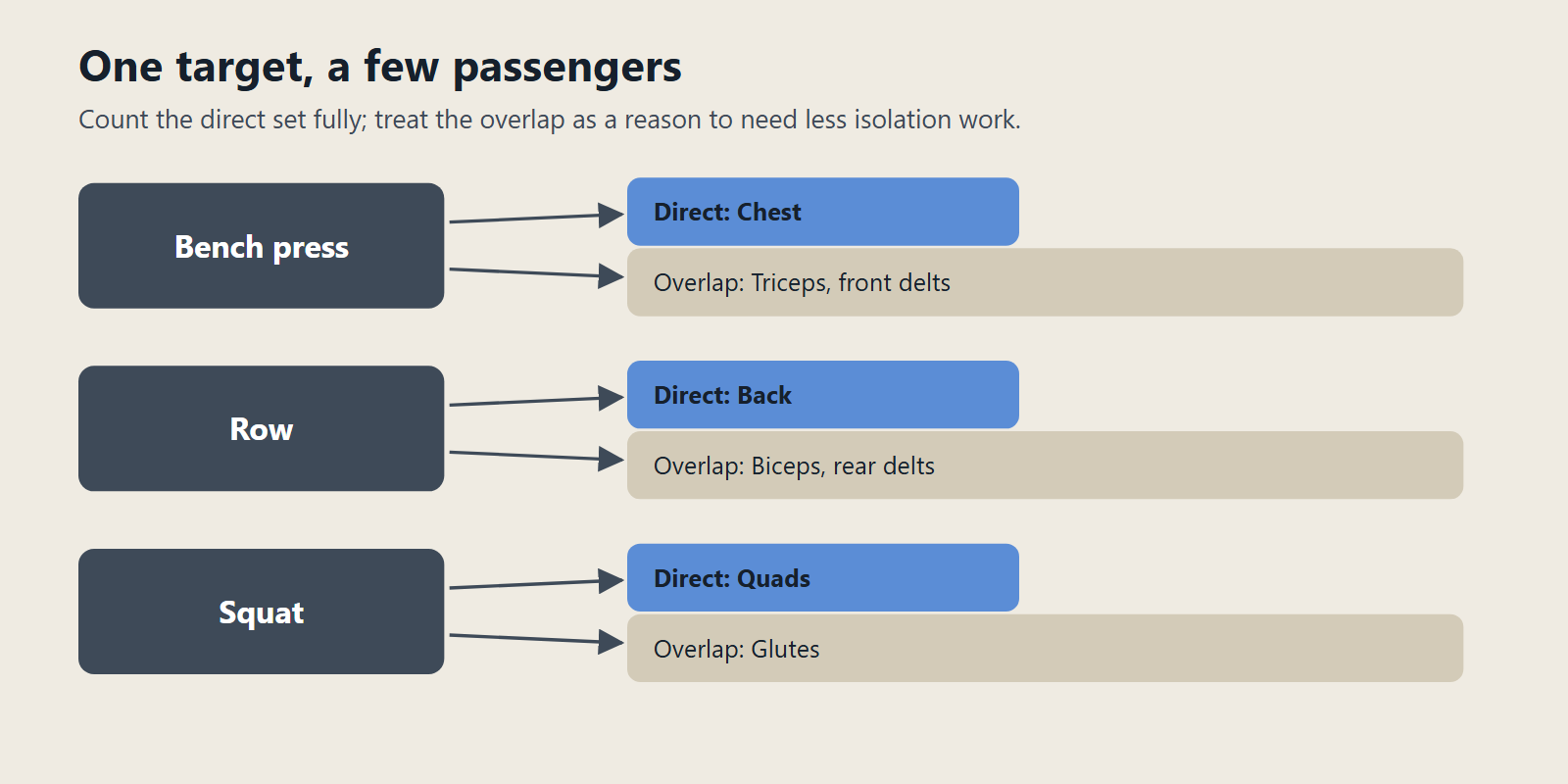
Figure 1. Each compound lift has one main target and a few passengers. Count the passengers before adding isolation work.
Keeping the Comparison Fair
It would have been easy to make one split win by giving it better exercises or more work, so I kept the movement categories similar across every block: a horizontal press, an incline or vertical press, a horizontal pull, a vertical pull, a squat pattern, a hip hinge, a single-leg exercise, a knee-flexion exercise, direct arm work, lateral-delt work and calves. Compound sets mostly ended with one to three strong reps left; isolation sets sometimes went closer to failure. I adjusted volume when performance or recovery clearly dropped.
The goal wasn’t to force every split to hold the same number of sets. It was to see how much useful volume each structure naturally supported. The question underneath was always the same: how many sets per muscle group per week could I do well on each one?
How Many Sets per Muscle Group per Week Worked for Me
My sustainable ranges weren’t identical across muscles. Bigger muscles handled more direct work than smaller ones, but overlap mattered. Here’s where I settled for direct sets:
| Muscle | Productive weekly direct sets |
|---|---|
| Chest | 10–14 |
| Back | 12–16 |
| Quads | 10–14 |
| Hamstrings | 8–12 |
| Glutes | Mostly compounds, limited direct work |
| Side and rear delts | 8–14 |
| Biceps | 6–10, plus pulling |
| Triceps | 6–10, plus pressing |
| Calves | 8–12 |
These aren’t universal recommendations. They’re the ranges where my performance, soreness and joint comfort stayed manageable. Going above them occasionally was fine; staying above them week after week was less productive.
The research lands in a similar place. A meta-analysis by Schoenfeld, Ogborn and Krieger found a graded dose-response between weekly sets and muscle growth, with 10 or more sets per muscle a week trending best. A later systematic review by Baz-Valle and colleagues, in trained young men, found 12 to 20 weekly sets per muscle group a reasonable standard, with no difference between moderate and higher volumes for the quads or biceps. So the honest answer to how many sets to build muscle is “at least about 10 hard sets a week, more if you recover from them”, and the split decides how many of those sets are good ones.
My Volume Ranking
Ranked by high-quality, recoverable training volume:
- Upper/lower, four days a week
- Full body, three days a week
- Four-day bodybuilding split
- Push/pull/legs, six days a week
- Five-day bro split
By raw planned sets, push/pull/legs and the bro split often looked highest. Once I factored in set quality, redundant exercises, overlap and recovery, upper/lower came out on top. (If you’ve read my best workout split ranking, the order is slightly different there: that one ranks splits by recovery, where six-day push/pull/legs came last. This one ranks them by useful volume, where the bro split’s oversized sessions cost it the most.)
1. Upper/Lower, Four Days a Week
Upper/lower trained most major muscles twice a week: upper with a heavier emphasis Monday, lower with a squat focus Tuesday, rest Wednesday, upper hypertrophy Thursday, lower with a hinge and single-leg focus Friday, then the weekend off. It spread weekly volume without chopping the body into too many sessions. (My 4 day workout split post has the full program.)
A typical upper-body week:
- Chest: bench press 4 sets Monday, incline press 4 sets Thursday, chest isolation 2–3 sets Thursday, about 10–11 direct sets
- Back: vertical pull 4 and row 4 Monday, row 3 and pulldown 3 Thursday, about 14 direct sets
- Shoulders: overhead press 3 Monday, lateral raise 4 and rear-delt work 3 Thursday, about 10 direct sets plus pressing overlap
- Arms: 2–3 direct biceps and 2–3 direct triceps sets each upper day, about 4–6 each, plus a lot of compound overlap
Lower-body volume was split by purpose. Tuesday: squat 4, moderate Romanian deadlift 3, leg press or split squat 3, leg curl 3, calves 4. Friday: a hinge 3–4, a second squat pattern 3, a single-leg exercise 3, leg extension 3, leg curl 2–3, calves 4. That gave the quads and hamstrings enough work without one enormous leg day.
Why the volume stayed productive. Most muscles got no more than six to eight direct sets in one workout, and that mattered. Performance faded much more slowly than on body-part splits where one muscle took 12 or more sets in a session, and the first and last chest exercises were far enough apart in fatigue that both felt useful. If you’re wondering how many sets to build muscle in a single workout, that six-to-eight cap is my answer.
Main limitation: upper days could run long with chest, back, shoulders and arms to cover. The fix wasn’t more exercises. It was choosing movements that covered the major functions efficiently. Once the redundant work was gone, upper/lower supported the most consistent weekly training volume of anything I tried.
2. Full Body, Three Days a Week
Full body produced the least junk volume. I trained most muscles every session with only a few sets each: squat and horizontal press emphasis Monday, hinge and vertical pull Wednesday, moderate full-body hypertrophy Friday.
Per-session volume stayed small. Chest might get three bench sets Monday, three incline sets Wednesday and three machine or dumbbell sets Friday: nine direct sets a week with only three per session. Back could reach 12 or more through rows and vertical pulls spread across the week, and the legs got squats, hinges, lunges and curls without any single brutal session.
Set quality was high. I rarely did enough sets for one muscle in one workout to cause heavy local fatigue, so chest work ended before pressing technique slipped and rows stayed controlled. Adjusting volume was easy too: one extra set in each of three sessions added three weekly sets without making any workout much longer.
Whole-body fatigue was the limit. Local fatigue was low; general fatigue was higher. A session with squats, pressing, pulling, hinging and accessories gets exhausting even with few sets per muscle, and the last exercises sometimes suffered because my whole body was tired. Exercise order created a priority problem as well: whatever came first got the best performance. Rotating the first exercise between sessions fixed most of it.
Why it ranked second: full body spreads training volume beautifully but is harder to specialize. When I wanted extra back, shoulder or leg work, sessions got long. Still, it’s the most efficient way to get useful volume from just three sessions.
3. Four-Day Bodybuilding Split
This split gave individual muscles more dedicated attention: chest and triceps Monday, back and biceps Tuesday, legs Thursday, shoulders and arms Friday. It supported high volume, but overlap needed careful managing.
Chest and triceps day might be bench 4, incline dumbbell press 3, machine press 3, cable fly 3, then triceps extensions 3 and pushdowns 3. That’s 13 direct chest sets in one workout. The first eight or nine were usually strong; the last chest exercise felt much less productive, with a big pump but falling load and rep quality. The triceps had already worked through every press before getting six direct sets, which was more arm volume than I needed.
Back and biceps day handled concentrated volume a bit better because I could alternate horizontal and vertical pulls, but grip and elbow fatigue built up, and by the time I got to curls my biceps had already worked through several rows and pulldowns.
Shoulders and arms day caused the biggest conflict: the front delts and triceps still felt chest day, and the biceps and rear delts still felt back day. The schedule separated muscle labels, not the tissues doing the work.
Why it still ranked third: two rest days and only four sessions gave me room to recover from the concentrated workouts, and it was enjoyable and easy to organize. It improved a lot once I cut each large muscle to about eight to ten quality sets per session instead of chasing the biggest pump.
Get the whole system, not just the sets
Weekly set targets only help if every set is one you can do with your equipment. The Machine Swap Playbook turns the machines these splits lean on into barbell, dumbbell and bench swaps, ordered by movement pattern, so your training volume fits a home gym.
Eighteen swaps. Forty pages. Free, no upsell.
4. Push/Pull/Legs, Six Days a Week
Push/pull/legs gave the highest frequency: push, pull, legs, push, pull, legs, rest Sunday. It looked ideal for spreading training volume, since every muscle was trained twice. The problem was total fatigue.
Planned volume was big. A typical push day was chest press 4, incline press 3, shoulder press 3, lateral raise 4 and triceps 3. Twice a week that’s 14 direct chest-press sets, 6 shoulder-press sets, 8 lateral-raise sets and 6 direct triceps sets, plus heavy overlap on the front delts and triceps. Pull days did the same to the biceps, forearms and rear delts, and leg days packed squats, hinges, single-leg work, curls and calves in twice a week. The set totals were impressive. My joint recovery wasn’t.
Quality slipped in the second half of the week. The first push, pull and leg days usually went well. The second round came after several straight training days: loads felt heavier, warm-ups took longer and later sets lost reps. I could hit the planned set count but not always the quality. Cutting volume made it manageable, but then it no longer gave me much more useful work than upper/lower. It just spread similar training volume over six sessions.
Overlap was the real problem. Muscles might get 48 to 72 hours between direct sessions, but my shoulders worked on push and pull days, my elbows worked during every press, pull, extension and curl, and my grip and lower back chipped in across several days.
When it worked best: four or five exercises per workout, one main press instead of several, limited direct arm work, alternating heavy and moderate sessions, no heavy hinges on every pull or leg day, and more compound sets kept away from failure. It can support excellent muscle-building volume, but it needs more restraint than the schedule suggests.
5. The Five-Day Bro Split
The bro split gives each major muscle its own day: chest, back, legs, shoulders, arms, then the weekend off. It produced the most concentrated volume, and the most low-quality late-session sets.
The volume trap. With each muscle trained directly only once a week, I felt pressure to do enough to last the week, the classic bro-split answer to how many sets to build muscle: as many as possible. Chest day grew into flat press, incline press, decline or machine press, dumbbell fly, cable fly and a push-up finisher, easily 16 to 20 direct sets. The early sets were productive; the later ones added more fatigue than performance. That’s junk volume in its purest form, and back and leg days followed the same pattern.
Once a week made distribution hard. Training a muscle once a week didn’t stop progress, but it made spreading volume much harder. A missed chest day could mean nearly two weeks without direct chest work, and bigger sessions brought bigger soreness: the muscle had plenty of time to recover, but needed much of it because the workout had been so brutal.
Arms got more than the log showed. Arm day had curls and extensions, but the biceps had already worked on back day and the triceps on chest and shoulder days. Counting only direct sets made arm volume look reasonable; counting overlap showed it was high, and my elbows noticed before my arms did.
Why it ranked last: great pumps and enjoyable focus, but the least efficient at turning scheduled sets into consistently good weekly training volume. It improved dramatically when I capped body-part days at about eight to twelve hard sets, but by then I’d rather spread those sets over two sessions.
Scheduled Volume Versus Productive Volume
| Split | Scheduled volume | Set quality | Recovery |
|---|---|---|---|
| Upper/lower, 4 days | Moderate to high | Very consistent | Very good |
| Full body, 3 days | Moderate | Highest efficiency | Very good |
| Four-day bodybuilding | High | Good early, lower late | Moderate |
| Push/pull/legs, 6 days | Highest | Variable across the week | Most demanding |
| Five-day bro split | High and concentrated | Largest late-session drop | Moderate |
My impressions, not measurements.
The split with the most sets didn’t win. The split that fit enough sets in without wrecking later performance did. That’s the practical answer to how many sets to build muscle: as many good ones as your split lets you recover from.
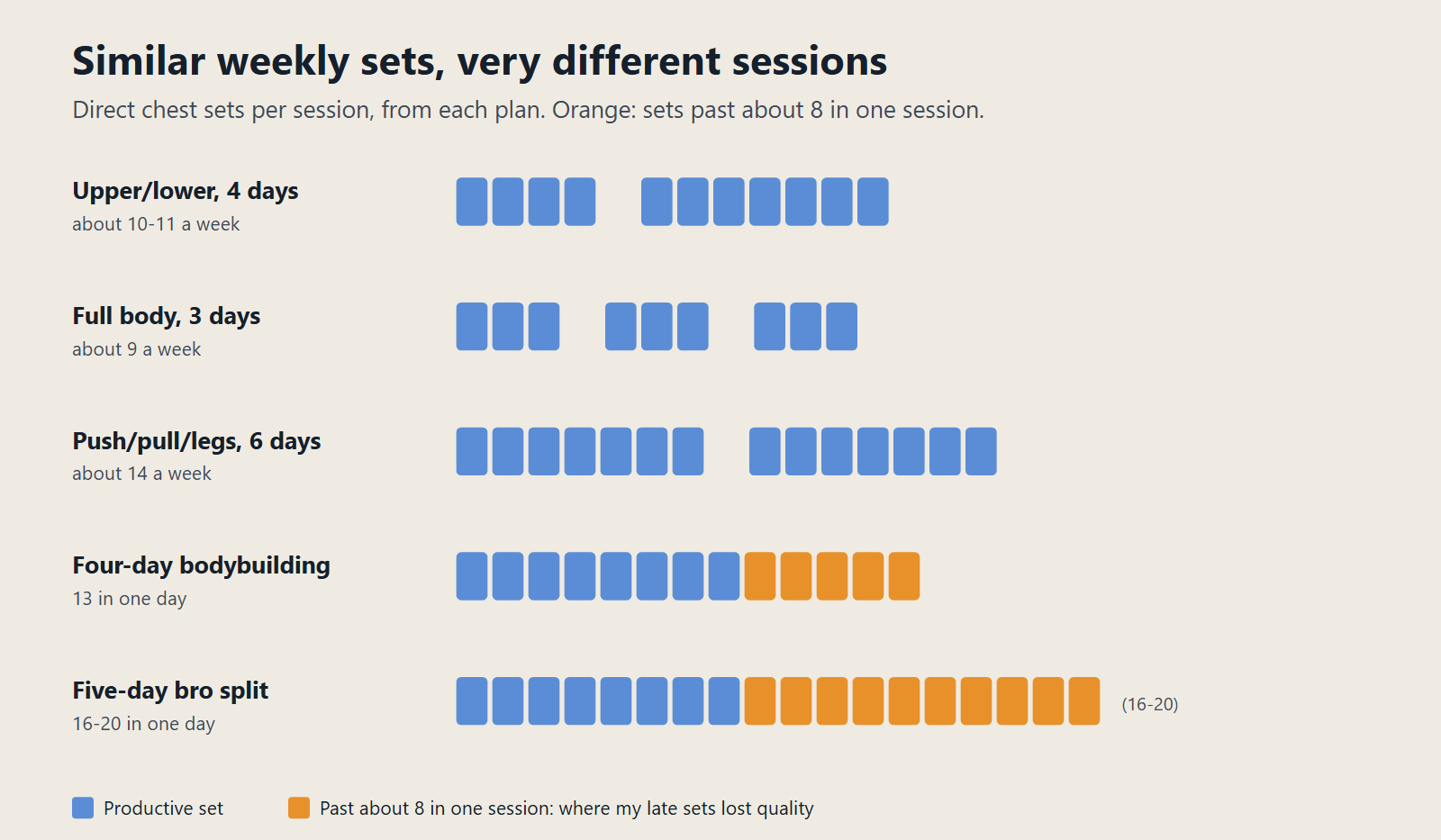
Figure 2. Similar weekly totals, very different sessions. Most of my junk volume sat above the shaded line.
How a Set’s Value Changes Within a Session
My first few working sets for a muscle gave the best mix of load, reps and control. As sets piled up, reps dropped, rest periods stretched, technique got less consistent, stabilizers tired, range of motion shortened, and my focus drifted from performing well to just finishing the plan. Later sets still had some value, just less and less. The bro split hit that point most often because so much work landed in one session; full body hit it least because each muscle only got a little at a time.
Exercise redundancy inflates training volume too. Flat barbell press, flat dumbbell press, machine press and push-ups are four exercises, but not four different stimuli. The same goes for multiple pulldowns, several curl variations or repeated squat patterns. The better splits made it easy to use complementary exercises instead: upper/lower let me press flat on Monday and at an incline on Thursday, variety without redundancy.
Joint Volume Was the Hidden Variable
Muscle-group training volume was only part of the picture. My shoulders took volume from bench, incline and overhead presses, rows, pulldowns, lateral raises and rear-delt work. My elbows took it from every press, every pull, every curl and every extension. The six-day split gave the joints the most frequent exposure; the bodybuilding and bro splits gave the most concentrated exposure. Upper/lower gave them clear breaks between upper sessions, one more reason it supported more sustainable volume.
Compound Sets and Isolation Sets Aren’t Equal
Ten sets of lateral raises and ten sets of squats are not the same training volume in any practical sense. Heavy compounds caused more whole-body fatigue, needed longer warm-ups and loaded supporting tissues; isolation work mostly caused local fatigue and was easier to recover from. Twelve quad sets of heavy squats and lunges felt far harder than twelve split among squats, leg presses and extensions. Twelve back sets of unsupported barbell rows hit my lower back much harder than pull-ups plus chest-supported rows. The split mattered, but exercise stability mattered just as much. Any answer to how many sets to build muscle has to account for which exercises those sets are.
How I Adjusted Volume
I never added several exercises at once, and I never picked how many sets per muscle group per week to do from a chart. I added training volume slowly:
- Start near the low end of your productive range.
- Keep exercises and loads consistent.
- Watch performance and soreness for a few weeks.
- Add one set to a movement that’s recovering well.
- Remove it if performance or joint comfort drops.
That beat picking a high weekly set target before training started. The number I could recover from was something I found through performance, not something I chose from a chart.
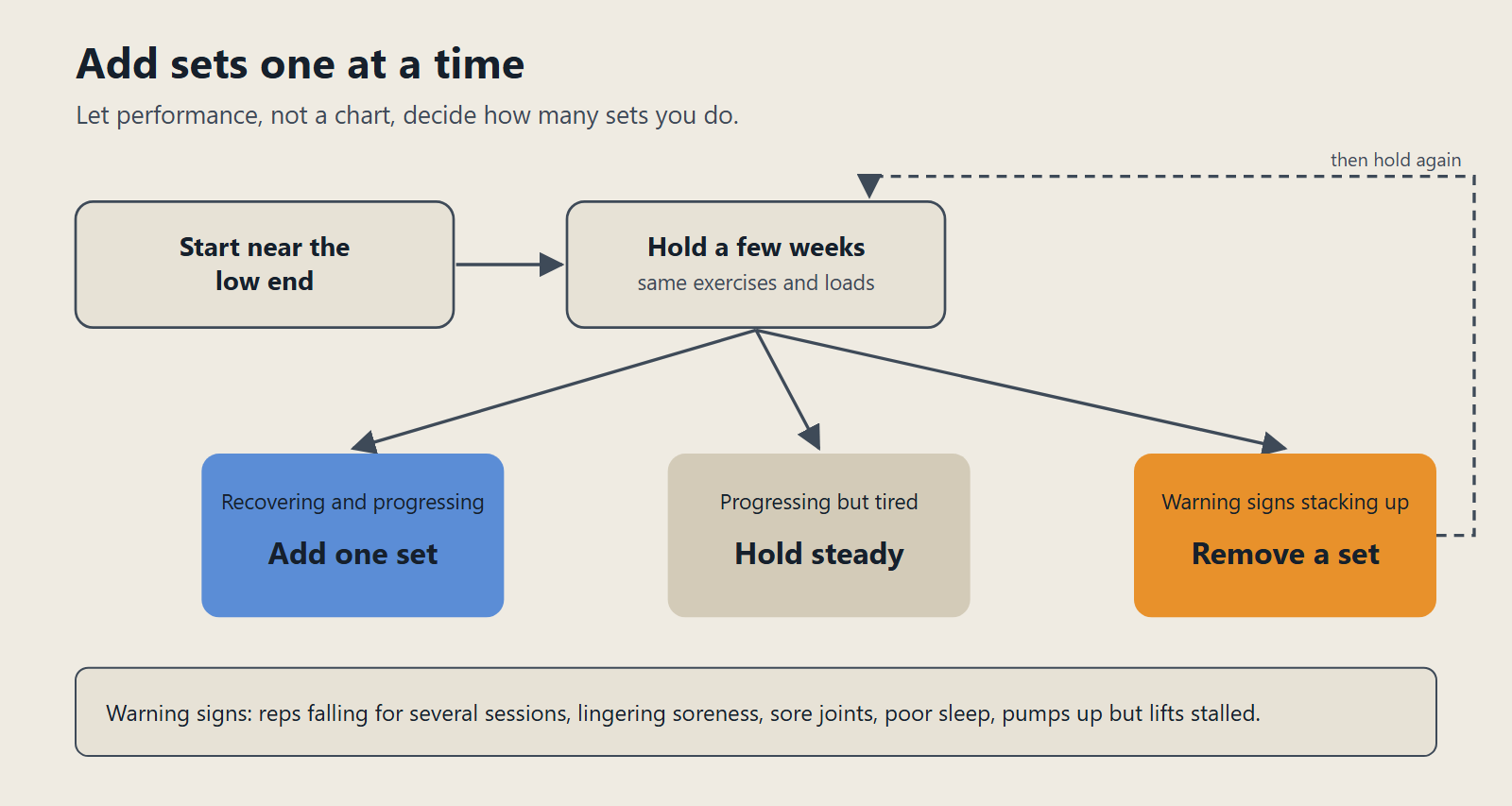
Figure 3. One set at a time, and only where recovery allows.
Signs training volume is too high: reps falling across several workouts, soreness that lingers into the next session, irritated elbows, shoulders, knees or lower back, heavy-feeling warm-ups, poor sleep, low motivation, longer sessions without progress, technique breaking down earlier, frequent unplanned rest days, and pumps getting bigger while performance stalls. One bad workout isn’t a reason to change anything; a pattern across several is.
Signs you can add more: the target muscle recovers comfortably, performance is steady or improving, joints feel good, sessions are still reasonably short, technique holds, you’re not already progressing through load or reps, and the extra set has a specific purpose. A workout feeling manageable isn’t a reason to add volume. Manageable workouts still build muscle.
The Best Split for Each Volume Goal
- Best overall volume distribution: upper/lower. Enough direct work for every muscle without excessive single-session fatigue.
- Best volume efficiency: full body. The highest share of useful sets and the least redundant work.
- Best for exercise variety: the four-day bodybuilding split. More specialized movements, with several rest days.
- Best for high-frequency lifters: push/pull/legs. Works when total volume and failure training are kept in check.
- Best for maximum body-part focus: the bro split. Intense dedicated sessions, but it takes restraint to avoid junk volume.
The Weekly Volume I Kept
After the comparison I went back to a four-day upper/lower split. My answer to how many sets per muscle group per week now looks roughly like this:
| Muscle | Weekly direct sets |
|---|---|
| Chest | 10–12 |
| Back | 12–16 |
| Quads | 10–13 |
| Hamstrings | 8–11 |
| Side and rear delts | 9–12 |
| Biceps | 5–8, plus pulling |
| Triceps | 5–8, plus pressing |
| Calves | 8–10 |
These shift with exercise selection and recovery. The main advantage is that no muscle has to handle its whole week in one session. If you’re building your own week from scratch, my 5 day workout split post shows how the same sets look spread over five days.
Five Things to Check Before Your First Session
- Count direct and overlapping sets. Know how many sets per muscle group per week you’re doing before adding isolation work.
- Cap single-session volume. Six to eight hard sets per muscle per session kept my later sets productive.
- Cut redundant exercises. Pick complementary angles across the week rather than four versions of the same press.
- Start low and add one set at a time. Let performance, not a chart, decide your ceiling.
- Watch your joints, not just your muscles. Elbows and shoulders often hit their limit before the muscles do.
Free Tools for Planning Your Weekly Sets at Home
- Machine Swap Finder: type any gym machine your split calls for and get three ranked swaps, with a gear line showing which ones need a rack or a bench.
- Machine Load Converter: turn the weight you used on a gym machine into a starting load for the barbell or dumbbell swap.
- Loadable Weight Rounder: see what your plate jumps mean in practice, and which load to use when your target falls between two.
Questions People Ask About How Many Sets per Muscle Group per Week
How many sets per muscle group per week should I do?
Most lifters do well with about 10 to 20 hard sets per muscle group per week. Research shows more weekly sets tend to build more muscle, with 10 or more trending best and 12 to 20 a reasonable standard for trained lifters. Start near the low end and add sets only while you’re recovering and progressing.
How many sets to build muscle per session?
In my experience, six to eight hard sets per muscle in one session kept quality high. Past about eight or nine, later sets lost load and reps and turned into junk volume. Spreading the week’s sets over two sessions works better.
What is junk volume?
Junk volume is sets that add fatigue after they’ve stopped adding much stimulus: late sets with collapsing reps, shortened range or another muscle taking over. It shows up most on body-part splits that cram a muscle’s whole week into one session.
Do compound exercises count toward training volume for small muscles?
Partly. Presses train the triceps and front delts, and rows and pulldowns train the biceps and rear delts. Count them as overlap and use them to decide how much direct arm and delt work you actually need.
Which split gives the best training volume for muscle growth?
For me, upper/lower four days a week: enough weekly sets for every muscle, split across two sessions so the later sets stay productive. Full body three days a week was the most efficient per set.
Is more training volume always better?
No. More weekly sets help only while you can recover from them and keep their quality. Past that point, extra sets add fatigue, joint irritation and junk volume without more progress.
How do I know if my training volume is too high?
Watch for reps dropping over several workouts, soreness that lasts into the next session, irritated joints, poor sleep, low motivation and bigger pumps with stalling performance. One bad day isn’t a signal; a pattern is.
Should I count warm-up sets as volume?
No. Count only hard working sets with a meaningful load, taken reasonably close to failure with good technique. Warm-ups prepare you for those sets; they aren’t part of the volume.
The Verdict on How Many Sets per Muscle Group per Week
Upper/lower four days a week gave me the best mix of weekly training volume, set quality, frequency and recovery. Full body was the most efficient, spreading volume so evenly that very few sets felt wasted, though sessions could be draining. The four-day bodybuilding split allowed high volume and variety but needed careful overlap management. Six-day push/pull/legs had the highest scheduled volume and the most frequent fatigue, and only worked once I cut the daily workload. The five-day bro split gave the biggest pumps and the steepest late-session drop.
Ten sets across two fresh sessions didn’t feel like ten sets done back to back after several similar exercises. The weekly total was identical; the quality wasn’t. Direct sets were only part of the workload, and the presses, rows and pulldowns behind them mattered before any isolation work went in. So how many sets per muscle group per week? Enough hard sets, usually 10 or more, spread so you can recover and beat them the following week. The best muscle-gain split wasn’t the one that let me log the biggest number. It was the one that let me repeat enough high-quality sets without every session becoming a volume challenge.
Whatever volume you land on, your sets should fit the gear you have. The Machine Swap Playbook covers eighteen swaps across the six patterns the gym’s queues form around, with a one-page cheat sheet you can screenshot and use mid-workout.
→ Send me the playbook — it’s free
Affiliate disclosure: WildnSwole earns a commission when you click a link to a partner and make a purchase. As an Amazon Associate, I earn from qualifying purchases. Commissions do not change what the content recommends and they do not add to what you pay.
The content in this article is for general information only and does not constitute medical or personal training advice. Always consult a qualified professional before making changes to your training.
Leave a Reply