I Trained on 6 Workout Splits Over a Year and Ranked Them by How Well I Recovered
Illustration. The split lives on paper; whether you recover from it shows up in the rack.
A workout split can look perfect on paper and still leave you exhausted by Wednesday. I learned that by spending a year rotating through six popular schedules, looking for the best workout split for one thing: recovering well enough to keep making progress. I kept weekly training volume roughly similar, used many of the same core lifts, and paid close attention to soreness, strength, sleep, motivation and how my joints felt.
The six were full body three days a week, an upper lower split four days a week, a push pull legs split six days a week, push pull legs rotated across five days, a four-day bodybuilding split, and a five-day bro split. I didn’t rank them by the biggest pump or the busiest week. I ranked them by how well I recovered while still progressing, because a split that leaves performance sliding, joints aching or sessions skipped isn’t sustainable, however hard it feels. If you train at home, the free Machine Swap Playbook turns the gym machines these splits usually call for into rack, bar and bench swaps.
To be clear about what this is: one lifter’s year, not a study. I didn’t keep a spreadsheet of scores, and your recovery depends on your sleep, stress, food, age and training history. What I can give you is the pattern I saw, the research that explains it, and a simple way to judge any split on yourself.
The short version: for me, the best workout split was an upper lower split, four days a week. It trained everything twice a week without making me train sore muscles. Full body three days a week was the easiest to recover from and the most flexible. A strict six-day push pull legs split was the hardest to sustain, even though it looked the most organized. The bro split sat in between: plenty of days off, but sessions so big that much of each workout was low quality.
How I Judged Each Workout Split
I ran each split for several weeks before switching. The goal wasn’t to prove one schedule is best for everyone. It was to see how each one spread fatigue across my week while the main variables stayed reasonably steady.
The things I paid attention to:
- Muscle soreness, and whether it carried into the next session
- Joint discomfort, especially shoulders, elbows and lower back
- Sleep quality and general fatigue
- Motivation before workouts
- Strength and rep quality on the main lifts
- Session length
- Missed workouts and unplanned rest days
- How long I wanted to stay on the program
A 1-to-5 readiness check you can use
Before each workout I gave myself a quick readiness rating. A simple scale worked better than pretending recovery was more scientific than it is:
| Rating | What it means |
|---|---|
| 5 | Fully recovered and eager to train |
| 4 | Minor fatigue, normal performance |
| 3 | Noticeable soreness or lower motivation |
| 2 | Poor readiness, performance slipping |
| 1 | Needs rest or a program change |
The best workout split for you is the one that keeps you around 4 most days without cutting the quality of your training. Try it for a few weeks on whatever you’re running now.
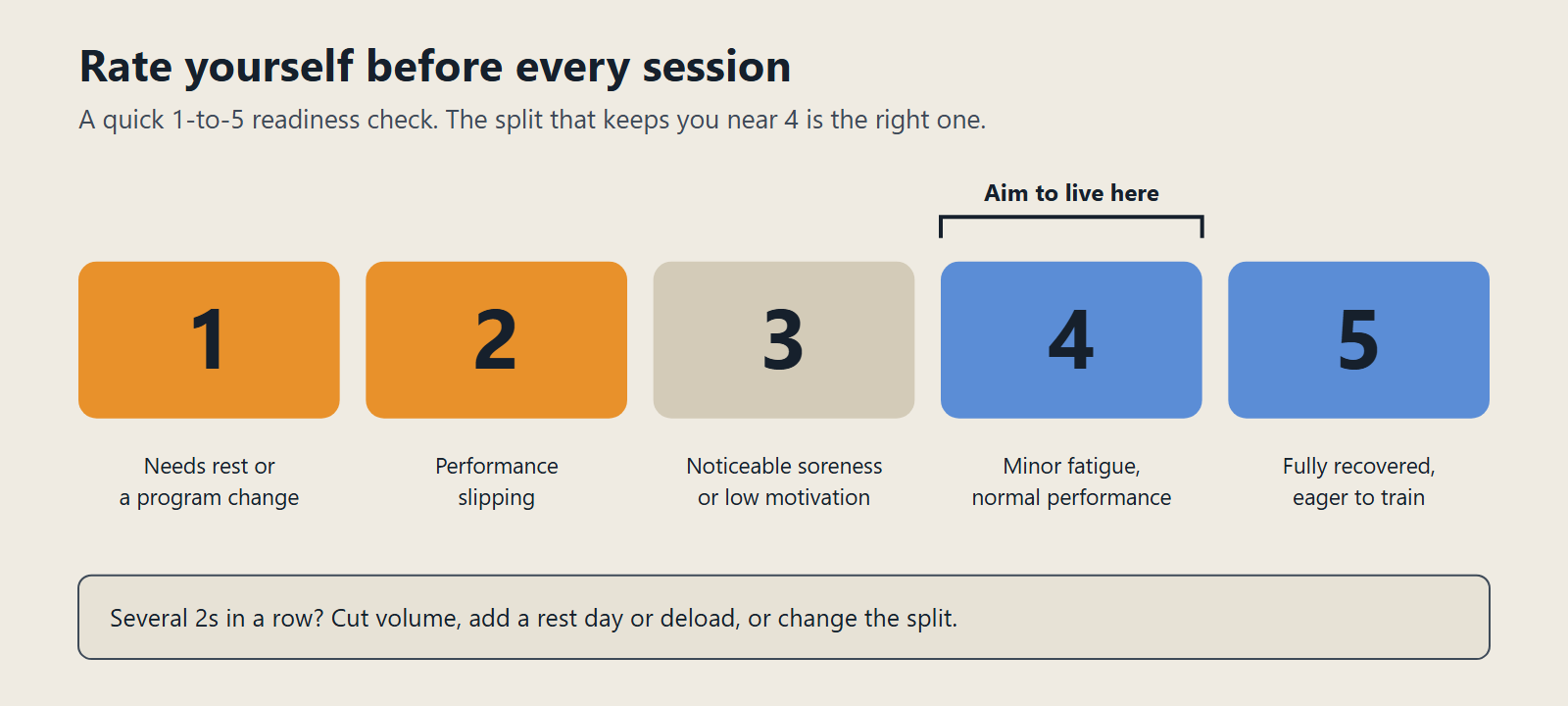
Figure 1. Aim to live around 4. Several 2s in a row mean the split, or the workload inside it, needs to change.
Why Weekly Volume Isn’t the Whole Story
Two programs can contain the same number of weekly sets and feel completely different. Ten weekly sets for the chest could be five on Monday and five on Thursday, all ten in one session, a few sets in each of three full-body workouts, or several pressing variations spread across push days. The total is equal. The fatigue isn’t.
Recovery depended on how many hard sets landed in one session, whether I trained muscles that were still sore, how much exercises overlapped, how long each workout ran, how many days in a row I trained, and whether rest days arrived before fatigue piled up. That’s why the split mattered even when the weekly set count barely changed. (My guide to how many sets per muscle group per week looks at the same splits through weekly volume.)
What the Research Says About Training Frequency
The research backs up the broad pattern. A 2016 meta-analysis by Schoenfeld, Ogborn and Krieger found that, on a volume-equated basis, training a muscle twice a week produced better hypertrophy than once a week, and concluded that major muscle groups should be trained at least twice a week to maximize growth. A larger 2019 analysis of 25 studies by Schoenfeld, Grgic and Krieger then found no significant difference between higher and lower frequencies when weekly volume was matched.
Put together, that means frequency mostly matters as a way to distribute volume. Training a muscle twice a week makes it easier to do enough quality sets without cramming them into one exhausting session. That’s exactly where the once-a-week bro split struggled for me, and why the twice-a-week splits recovered better. It also means no split is magic. The best workout split is the one that lets you do enough good sets and come back ready.
My Recovery Ranking, Best to Worst
- Upper lower split, four days a week
- Full body, three days a week
- Push pull legs rotated across five days
- Four-day bodybuilding split
- Five-day bro split
- Push pull legs split, six days a week
Every split had strengths. The ranking reflects how easily I recovered while training productively, not which schedule could theoretically build the most muscle.
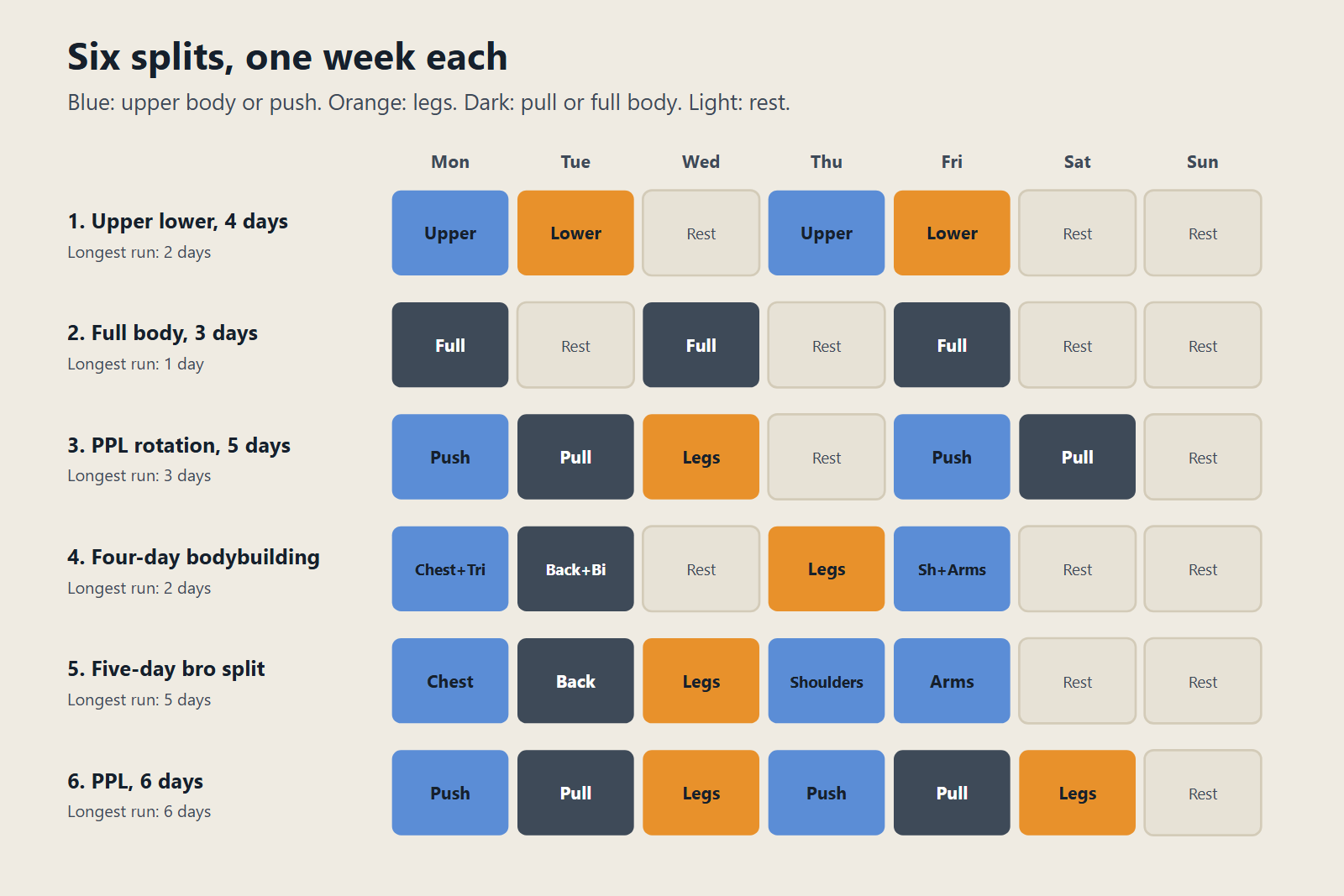
Figure 2. The six weeks side by side. Count the days in a row without rest; that predicted my recovery better than anything else.
1. Upper Lower Split, Four Days a Week
My best overall recovery came from an upper lower split. A typical week: upper on Monday, lower on Tuesday, rest Wednesday, upper Thursday, lower Friday, then rest or light activity at the weekend. The days could move, but I avoided more than two training days in a row.
Why recovery worked. Each muscle group got several days before it was trained again. My upper body recovered while I trained legs, and the other way round. The midweek rest day stopped fatigue from stacking up, and I rarely walked into a session still badly sore from the last one.
Frequency. Most major muscles were trained twice a week, which matches the research. It was enough to practice the main lifts and build volume without marathon sessions. Splitting chest, back or leg work across two days cut the soreness from any single workout.
Joints. My shoulders and elbows felt better than on a push pull legs split. Not because an upper lower split protects joints by magic, but because I had room to vary the work: one upper day built around heavier compound lifts, the other around lighter dumbbells, cables or higher reps. Lower days worked the same way, one squat-focused and the other built around hinges, single-leg work and hamstrings.
Session length. Upper days could run long, with chest, back, shoulders and arms to cover. Cutting duplicate exercises fixed it. I didn’t need three chest presses and four curl variations in one workout.
Main weakness. An upper lower split gets exhausting if both lower days are treated as maximum-effort leg sessions. Heavy squats, deadlifts, lunges and leg presses in the same week create more fatigue than the schedule can hide. Give the two lower days different priorities.
Verdict: the best balance of frequency, rest, performance and flexibility. I trained often enough to progress and rarely felt the schedule was running my life.
2. Full Body, Three Days a Week
Full body was the easiest split to fit around a busy week. I usually trained Monday, Wednesday and Friday, with at least one rest day between sessions, hitting most of the body each time without giving every muscle maximum volume every day.
Why it recovered well. Rest days were built in, and there were never long runs of consecutive training days. Each muscle got only a few sets per session, so local soreness stayed low: three or four working sets for the chest were far easier to recover from than ten on a dedicated chest day.
Rotate the priorities. I couldn’t train every lift heavy every session, so I rotated the emphasis: Workout A built around a heavier squat and press, B around a hinge and pulling, C moderate full-body volume. That cut repetitive stress.
The hidden fatigue. Full body gets hard when every exercise is pushed. Heavy squats, then heavy bench, rows, Romanian deadlifts and accessories make for long, draining sessions. It recovered well only when I accepted that not every lift needed to be hard on the same day. A productive session was usually one lower-body compound, one press, one pull, one secondary lower-body exercise and one or two accessories.
Why it ranked second: the most flexible schedule and the most forgiving of a missed workout, since skipping one session never removed a muscle group from the week. It ranked behind the upper lower split because individual sessions sometimes left me more tired overall. My muscles recovered well; the workouts could flatten my energy.
3. Push Pull Legs Rotated Across Five Days
This was a rotating push pull legs split rather than a fixed weekly one: push, pull, legs, rest, push, pull, rest, with the next week starting on legs. Muscles weren’t trained on the same weekday every week.
Why it beat the six-day version. The extra rest days made a big difference. Each muscle was still trained fairly often, but without six near-consecutive sessions, and the rotation naturally gave some areas extra recovery time. Over several weeks the frequency evened out.
Clear sessions, real overlap. Push, pull and leg days are easy to organize, and each workout had an obvious purpose. But overlap remained. Heavy pressing tired my triceps and front delts, and the next push day could arrive before those smaller muscles had caught up. Pull days loaded my elbows and forearms, especially with rows, pulldowns, curls and deadlift variations together. Leg days were demanding because so much lower-body work was packed into one session.
Main weakness: planning around life. Leg day could land on Saturday one week and Monday the next, which is fine when training is the priority and awkward when you want fixed days off.
Verdict: most of the benefits of a push pull legs split without the relentless fatigue of the six-day version. Effective, but not as simple or as recoverable as the upper lower split.
Get the whole system, not just the split
The best workout split only works if every session fits your gear. The Machine Swap Playbook turns the machines these programs usually call for into barbell, dumbbell and bench swaps, ordered by movement pattern, so any split here runs in a home gym with a rack, a bar and a bench.
Eighteen swaps. Forty pages. Free, no upsell.
4. Four-Day Bodybuilding Split
My four-day bodybuilding split divided the body into more specialized days: chest and triceps, back and biceps, rest, legs, then shoulders and arms, with the weekend off. Each workout had a strong focus, which made it enjoyable.
Concentrated fatigue. The biggest problem was how much volume landed in one place. Chest day tired my chest, shoulders and triceps together, and shoulder-and-arm day hit some of the same areas again. Back day did the same to my biceps and forearms. The schedule was separated by muscle labels, but my body didn’t follow the labels.
Soreness. This split produced more soreness than the upper lower split. Lots of exercises for one area gave a big pump and noticeable next-day fatigue. Satisfying, but not always better performance. When soreness lasted several days, a muscle was “rested” by the schedule and still not ready to perform.
Enjoyment. One of the most enjoyable splits. I could focus on each area without rushing, with more exercise variety, and that helped motivation even when recovery wasn’t ideal.
Verdict: sustainable and fun, but more unnecessary soreness than the top three. It worked best when I limited the number of exercises instead of trying every variation.
5. The Five-Day Bro Split
The classic bro split gives each major body part its own day: chest Monday, back Tuesday, legs Wednesday, shoulders Thursday, arms Friday, weekend off. Every muscle gets a full week before it’s trained directly again. That should make recovery easy. Instead, the bro split created a different problem.
Too much in one session. With a whole day per muscle, I felt pressure to “make the day count.” Chest day grew from a few productive presses into several presses, flies and finishers. Back day became a long string of rows and pulldowns. Leg day was the worst, with every major lower-body movement crammed into one workout. The muscles had a week to recover, but each session did more damage and fatigue than it needed to.
Overlap still existed. Shoulder day came a few days after chest day, and my front delts weren’t always ready. Arm day followed back and shoulders, so my elbows took repeated stress. A bro split separates muscle names, not the joints and tissues doing the work.
Missed workouts hurt. Skip leg day on a bro split and your legs can go nearly two weeks without direct training. On full body or an upper lower split, missing one session never wipes a muscle group off the week.
Performance. The first few exercises went well. Later ones faded because the target muscle was already tired, which meant a lot of volume without consistently good reps. That lines up with the research: once a week makes it hard to fit enough quality sets.
Why it wasn’t last: two full rest days, and some people genuinely enjoy training one area at a time. My general energy was better than on the six-day push pull legs split. The bro split’s problem was inefficient fatigue distribution, not constant weekly exhaustion.
6. Push Pull Legs Split, Six Days a Week
The strict six-day push pull legs split looked ideal when I planned it: push, pull, legs, push, pull, legs, rest Sunday. Every major muscle twice a week, no session covering the whole body, perfectly balanced on paper. It was also the hardest split for me to recover from.
Consecutive days. Six training days created constant background fatigue. Even when the target muscle changed, I was still lifting, warming up, bracing, gripping and loading plates almost every day. A pull day isn’t complete rest from a hard push day. General fatigue built up.
Shoulders and elbows. Push days meant presses, overhead presses and triceps work. Pull days followed immediately with rows, pulldowns, rear-delt work and curls. My shoulders and elbows worked both days, and by the second half of the week my joints felt less recovered than my muscles.
Leg days. Heavy squats and hinges hit sleep, appetite and energy, and the second push day usually came after three straight training days instead of real rest.
Motivation and performance. Missing a day threw the sequence off and I felt pressure to make it up. Six days left little room for travel, work or plans. The first round of push, pull and legs each week was usually productive; the second was inconsistent, with weights that moved well on Monday feeling heavy by Thursday and warm-ups taking longer. I could have cut volume and intensity enough to recover, but that raised the obvious question: why train six days if each session has to be deliberately limited to survive the schedule?
Who may recover better on it: someone with excellent sleep and nutrition, carefully managed volume, short sessions, most sets stopped short of failure, a flexible schedule, a genuine love of frequent training, fast recovery and joint-friendly exercise choices. It wasn’t the right push pull legs split for me.
Workout Split Recovery Comparison
| Split | Muscle recovery | Joint recovery | Schedule flexibility | Overall |
|---|---|---|---|---|
| Upper lower split, 4 days | Excellent | Very good | Very good | Best overall |
| Full body, 3 days | Very good | Very good | Excellent | Easiest schedule |
| Push pull legs rotation, 5 days | Good | Good | Moderate | Strong compromise |
| Four-day bodybuilding | Moderate | Moderate | Good | Enjoyable but sore |
| Five-day bro split | Moderate | Limited | Moderate | Too much local volume |
| Push pull legs split, 6 days | Limited | Poor | Poor | Hardest to sustain |
These are my impressions from a year of training, not measurements, and your column might read differently.
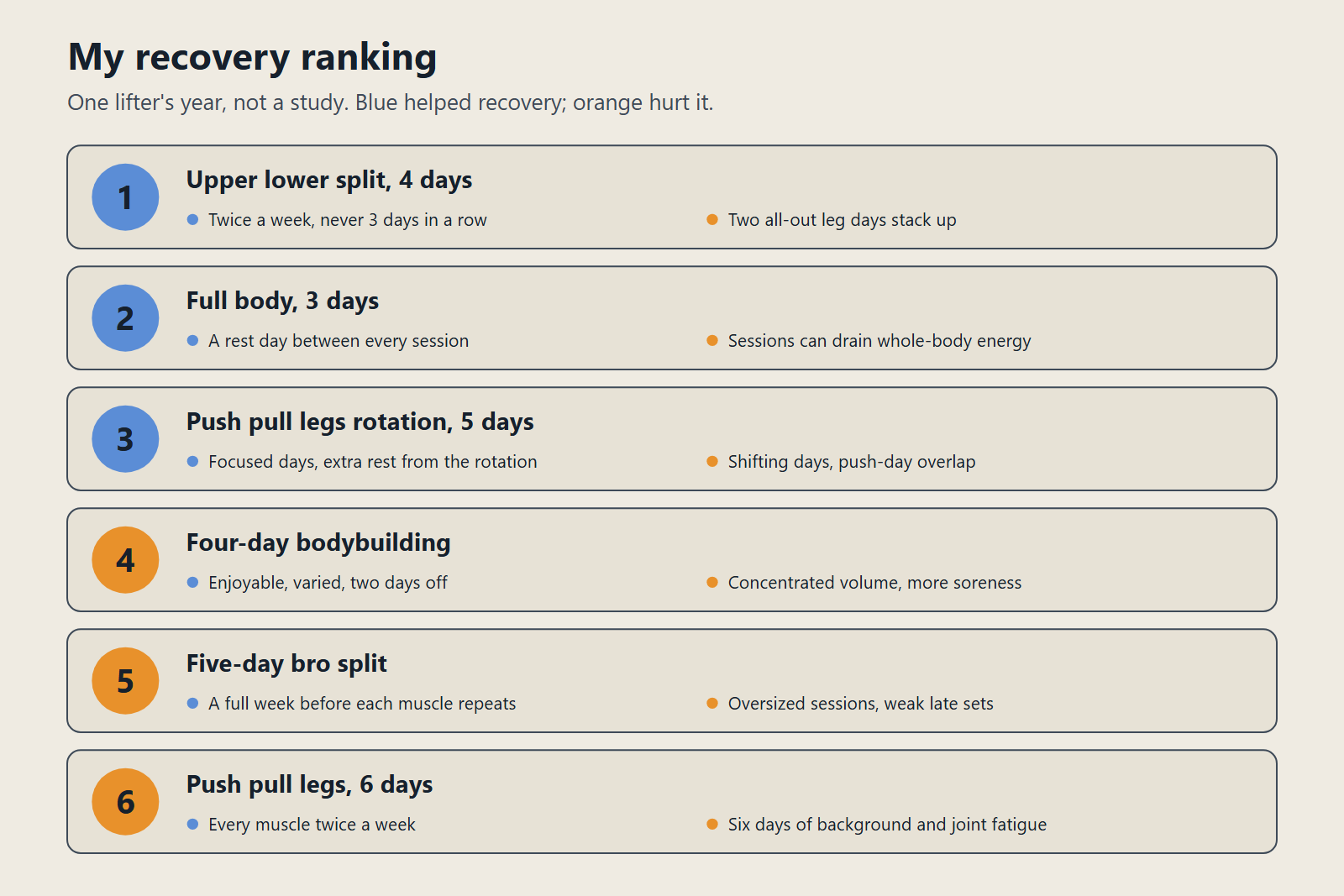
Figure 3. The ranking at a glance, with what helped and what hurt each split.
What Predicted Poor Recovery on Every Split
The same patterns caused trouble whatever the schedule:
- Too many hard sets in one session. Big single-session volume brought more soreness without guaranteeing more progress.
- Too many days in a row. My readiness dropped after three or more consecutive training days, even when the body parts changed.
- Repeated joint stress. Muscle-group labels hid how often my shoulders, elbows, lower back and grip were working.
- Too much training to failure. It made every split harder to recover from. I recovered better when most sets ended with one to three good reps left.
- Long workouts. After roughly an hour, my focus and performance usually dropped off.
- Poor exercise pairing. Heavy squats and heavy deadlifts in one session cost more than splitting them up; the same went for stacked presses or multiple hard row variations.
What Improved Recovery on Every Split
- Alternate hard and moderate sessions. Not every day needs maximum effort; a heavy upper day can be followed later in the week by moderate volume and higher reps.
- Cut redundant exercises. One good press and one complementary chest movement were usually enough.
- Manage failure. Save true failure for safer isolation exercises and the occasional final set.
- Watch joint fatigue. Muscles can feel ready while elbows, shoulders, knees or the lower back are still irritated. Adjust for whatever recovers slowest.
- Deload when needed. When performance slid for more than a few sessions, I cut volume and load for a week instead of forcing the plan.
- Prioritize sleep. No split recovered well on poor sleep. Programming can spread fatigue; it can’t erase it.
Soreness Isn’t the Same as Recovery
Soreness is useful information, but it’s not a reliable readiness gauge. Some days I felt little soreness and trained poorly; other days I was mildly sore and trained normally. The more reliable warning signs were strength declining over several sessions, falling motivation, poor sleep, irritability, joint discomfort that wouldn’t settle, longer warm-ups, worse rep quality and an unusual sense of heaviness. A good split keeps most of those under control.
The Best Workout Split for Different Priorities
- Best overall: the upper lower split. It balanced frequency and recovery better than anything else.
- Best for busy schedules: full body three days a week, easy to rearrange without losing a muscle group.
- Best if you love frequent training: the five-day push pull legs rotation, focused workouts without six days in a row.
- Best for bodybuilding enjoyment: the four-day body-part split, with more exercise variety and several rest days.
- Best for short, focused sessions: the bro split, but only if you cap the volume in each session.
- Best for advanced, high-frequency training: the six-day push pull legs split, which needs the most careful fatigue management and forgives the least.
How to Choose Your Workout Split
The best workout split for you depends on how many days you can reliably train, not how many you’d like to:
- Three reliable days: full body. Each session covers everything, so a missed day costs little.
- Four days: an upper lower split. Twice-a-week frequency with rest built in. My 4 day workout split post has the full program.
- Five days: a push pull legs rotation, or a four-day split plus a light day. My 5 day workout split post walks through a full upper lower push pull legs week.
- Six days: only if you recover fast and keep sessions short. Otherwise drop to five.
At home, any of them works with a rack, a bar, a bench and adjustable dumbbells. My home gym setup guide covers arranging a room so switching between squat, bench and dumbbell work takes one move, and my 100 lb adjustable dumbbell comparison covers the dumbbells that handle most accessory work. If your split calls for machines you don’t have, the leg press alternative and lat pulldown alternative guides show the free-weight swaps I use.
The Weekly Schedule I Kept
After the year, I went back to an upper lower split:
| Day | Session |
|---|---|
| Monday | Upper body, heavier emphasis |
| Tuesday | Lower body, squat emphasis |
| Wednesday | Rest or light walking |
| Thursday | Upper body, moderate volume |
| Friday | Lower body, hinge and single-leg emphasis |
| Saturday | Optional light cardio or mobility |
| Sunday | Rest |
It leaves room to move a workout when life gets busy, and a natural place for an extra rest day without wrecking the whole program.
Five Things to Check Before Your First Session
- Days you can actually train. Pick the best workout split for the days you’ll reliably show up, not the days you hope to.
- Days in a row. Avoid more than two or three consecutive training days unless you recover fast.
- Sets per session. If one workout is carrying a muscle’s whole week, spread it across two days.
- Joint overlap. Check how often your shoulders, elbows and lower back work across the week, not just which muscles are listed.
- A readiness check. Rate yourself 1 to 5 before each session for a few weeks, and change the split if you keep landing at 2 or 3.
Free Tools for Running Your Workout Split at Home
- Machine Swap Finder: type any gym machine your split calls for and get three ranked swaps, with a gear line showing which ones need a rack or a bench.
- Machine Load Converter: turn the weight you used on a gym machine into a starting load for the barbell or dumbbell swap.
- Loadable Weight Rounder: see what your plate jumps mean in practice, and which load to use when your target falls between two.
Questions People Ask About the Best Workout Split
What is the best workout split for recovery?
For most people training four days a week, an upper lower split. It trains each muscle twice a week with rest days built in, so you rarely train sore muscles. Full body three days a week is a close second and easier to schedule.
Is an upper lower split better than push pull legs?
For recovery, it was for me. An upper lower split fits twice-a-week frequency into four days, while a push pull legs split needs six days to do the same, which builds more background fatigue. A five-day push pull legs rotation is a good middle ground.
Is a bro split bad?
Not bad, but inefficient. A bro split trains each muscle once a week, which research suggests is less effective than twice when volume is equal, and it tempts you into huge sessions where the later sets are low quality. It can work if you cap volume per session.
How many days a week should you train?
As many as you can repeat for months while recovering. Three days suits full body, four suits an upper lower split, and five suits a push pull legs rotation. Six days works only with short sessions, good sleep and fast recovery.
Is a push pull legs split good for beginners?
A three-day push pull legs split trains each muscle once a week, and the six-day version is hard to recover from. Most beginners do better with full body three days a week or an upper lower split, which give twice-a-week practice on the main lifts.
How often should you train each muscle?
At least twice a week works well for most people. A 2016 meta-analysis found twice-weekly training beat once-weekly for muscle growth on matched volume, and a 2019 analysis found frequency matters mostly as a way to spread weekly volume.
How do you know if your workout split is too much?
Watch for strength dropping across several sessions, poor sleep, lower motivation, joint aches that don’t settle and longer warm-ups. A quick 1 to 5 readiness rating before each workout makes the trend easy to see.
Can you switch workout splits often?
You can, but give each one several weeks so you can judge recovery and progress fairly. Switching every week or two makes it hard to tell what’s working.
The Verdict on the Best Workout Split
An upper lower split, four days a week, gave me the best recovery while keeping useful training frequency. Full body three days a week was the easiest to sustain and the most forgiving when a workout had to move. A five-day push pull legs rotation was a strong compromise for people who like frequent, focused sessions. The four-day bodybuilding split was enjoyable but sorer. The bro split gave muscles plenty of time off but encouraged oversized workouts. The strict six-day push pull legs split ranked last because fatigue built faster than the muscle-group labels suggested: different areas each day, but my joints, grip, lower back and energy were working almost constantly.
The biggest lesson is that a split is only a framework. Exercise selection, weekly volume, effort, sleep and stress decide whether it works. A supposedly optimal split becomes a poor program when every session is overloaded, and a simple one works extremely well when the workload is recoverable. The best workout split wasn’t the one that kept me in the gym most often. It was the one that let me come back ready.
Whatever split you choose, fill it with movements you can actually do at home. The Machine Swap Playbook covers eighteen swaps across the six patterns the gym’s queues form around, with a one-page cheat sheet you can screenshot and use mid-workout.
→ Send me the playbook — it’s free
Affiliate disclosure: WildnSwole earns a commission when you click a link to a partner and make a purchase. As an Amazon Associate, I earn from qualifying purchases. Commissions do not change what the content recommends and they do not add to what you pay.
The content in this article is for general information only and does not constitute medical or personal training advice. Always consult a qualified professional before making changes to your training.
Leave a Reply