I Trained on a 4 Day Workout Split for 3 Months. Here’s Exactly How I Structured It.

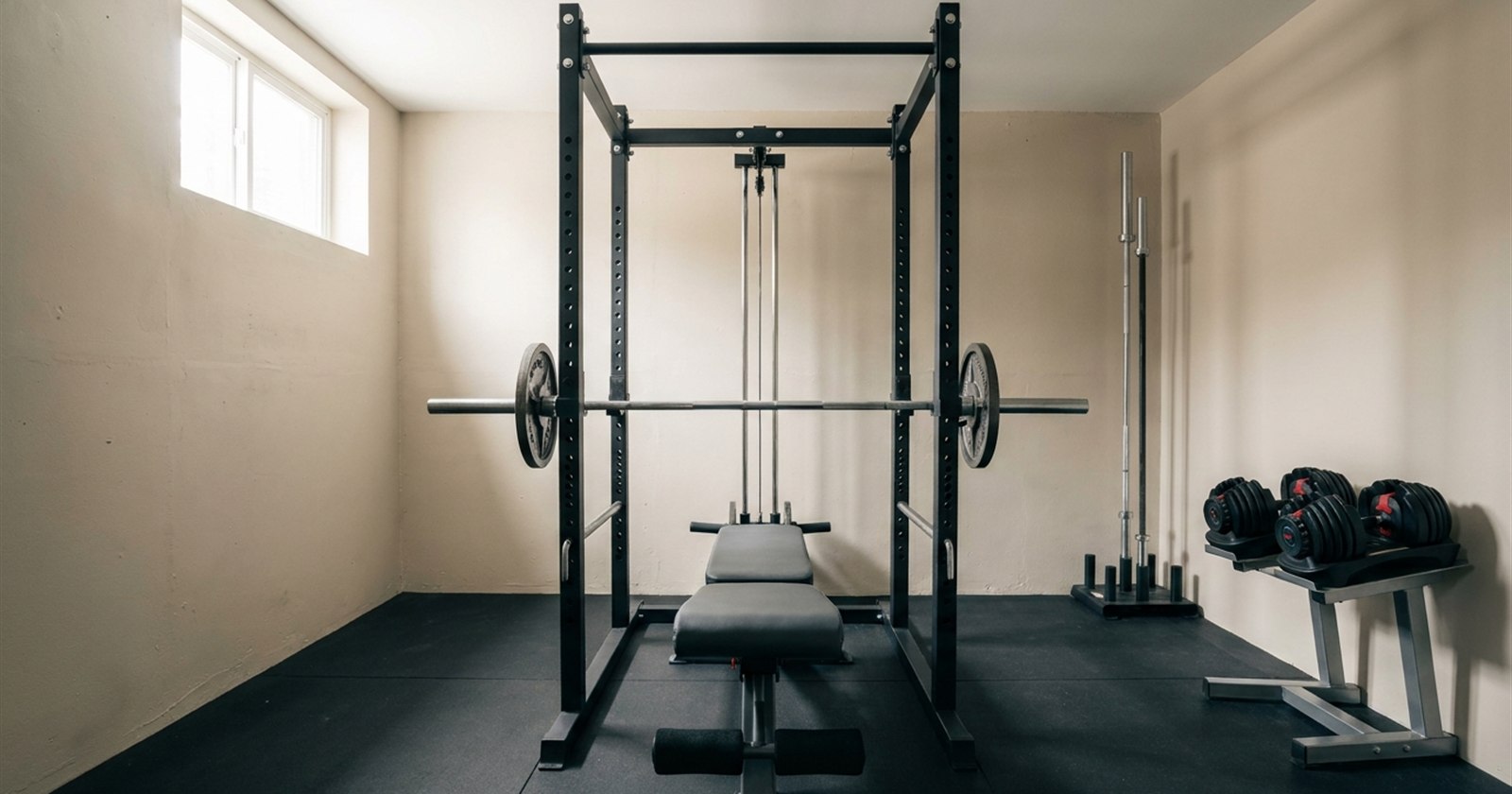
Illustration. Four days, two upper and two lower, each with its own job.
A 4 day workout split gave me the best balance I’ve found between training often enough to progress and resting enough to keep performance steady. I’d already run schedules that had me lifting five or six days a week. They looked productive on paper, but the extra days brought more joint fatigue, a bigger weekly time commitment and less room to adjust when life got in the way. Three days was easier to recover from, but some full-body sessions ran too long. Four days sat in the middle.
For three months I ran a 4 day upper lower split: two upper-body and two lower-body sessions a week. I kept the main lifts consistent, split heavier and moderate work across separate days, and wrote down every exercise, set, rep and change in a training log. If your home gym is missing machines the plan calls for, the free Machine Swap Playbook has the barbell, dumbbell and bench swaps.
This is one lifter’s block, not a study. What I can give you is the structure, what I changed along the way, and a 4 day workout plan you can copy and adjust.
The short version: upper strength Monday, lower with a squat focus Tuesday, rest Wednesday, upper hypertrophy Thursday, lower with a hinge and single-leg focus Friday. The split itself is simple; the details decide whether it works. The biggest wins came from giving each day a clear job, cutting redundant exercises, progressing with double progression, and stopping the two leg days from being equally brutal. By the end, my pressing, rowing, squatting and single-leg work had all improved, and I finished the block without feeling worn down.
Why I Chose a 4 Day Workout Split
I wanted to train each major muscle twice a week, enough chances to practice the main lifts while spreading weekly volume over two sessions. I also wanted a rest day in the middle of the week. Training Monday through Friday had previously dragged my readiness down by Friday, because even when the muscles changed, my shoulders, elbows, grip, lower back and energy kept accumulating fatigue. (My 5 day workout split post covers that block.)
A 4 day workout split solved several problems at once:
- Never more than two training days in a row
- Two upper-body and two lower-body exposures a week
- Three days off lifting
- Shorter sessions than full-body training
- Better recovery than five- or six-day splits
- Easy rescheduling
That last point mattered more than I expected. If Tuesday had to move, I trained Wednesday and the rest of the week survived. If Friday fell through, Saturday was there. Enough structure to build consistency, enough flexibility to survive real life. It’s also why the four-day upper lower option came out on top in my best workout split ranking.
What I Wanted From the Block
The goals mixed strength and size. I wanted to improve the bench press, back squat, Romanian deadlift, pull-ups, rows, overhead pressing and split squats, with enough weekly work for chest, back, shoulders, quads, hamstrings, glutes, arms and calves.
I didn’t need every session to train every muscle. The week was the complete unit, and that mindset stopped me from adding exercises just because one workout looked short.
The Weekly Structure
| Day | Main emphasis | General intensity |
|---|---|---|
| Monday | Upper strength | Heavier compounds |
| Tuesday | Lower, squat focus | Heavier squat work |
| Wednesday | Rest | Recovery |
| Thursday | Upper hypertrophy | Moderate loads, more reps |
| Friday | Lower, hinge and single-leg focus | Moderate strength and volume |
| Weekend | Rest or light activity | Recovery |
Exercises shifted a little over three months, but each day’s purpose in the 4 day upper lower split never changed, and that consistency made progress easy to track.
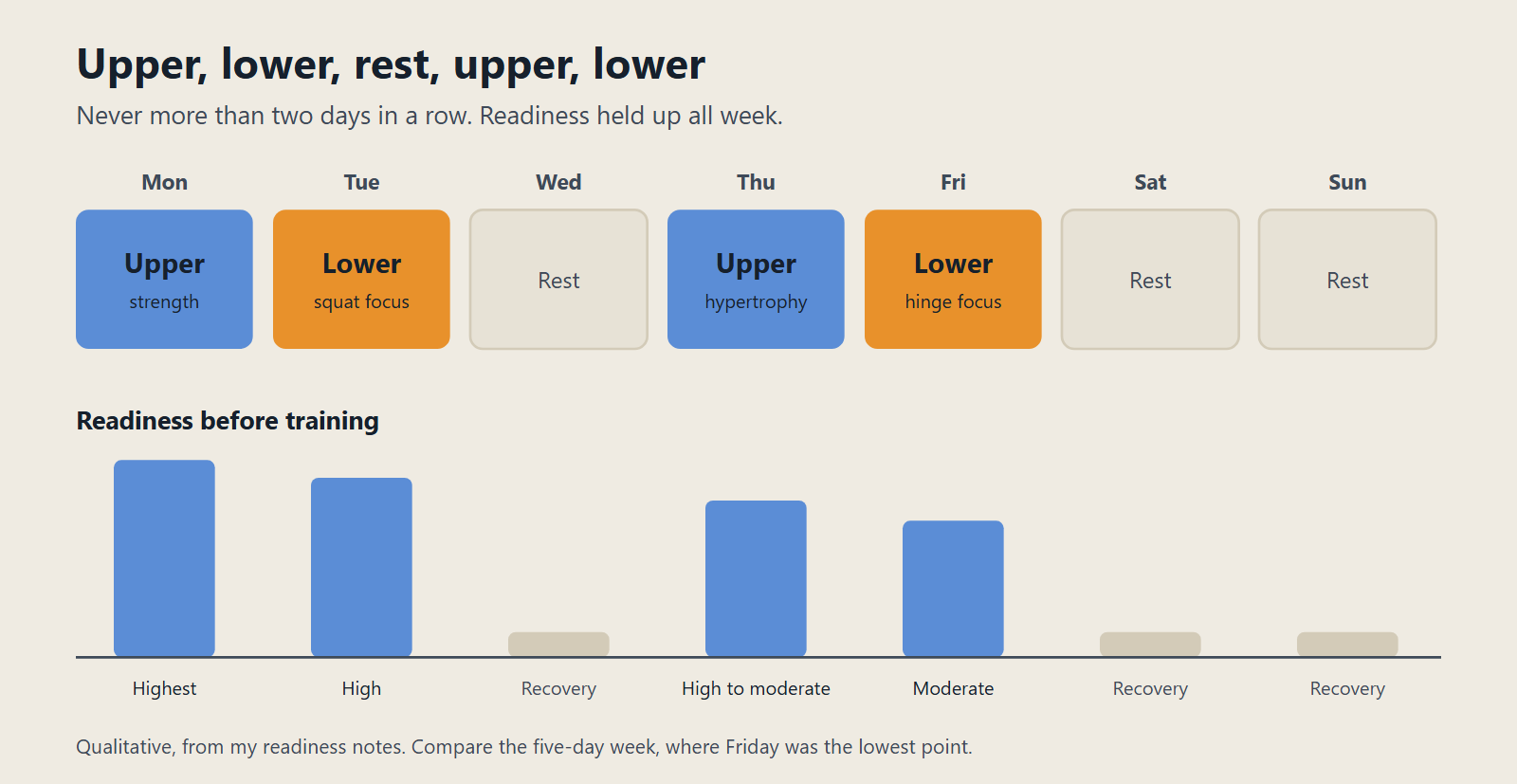
Figure 1. Never more than two days in a row. The Wednesday rest day stops the week from sliding.
Monday: Upper-Body Strength
Monday was the heaviest upper day of the 4 day workout plan, and after the weekend my shoulders, elbows and grip were at their freshest. It was built around one horizontal press and one major pull: bench press, weighted pull-ups or heavy pulldowns, an overhead press, a row, and optional arm work. The first four did nearly all the work.
Bench press was the main lift: a few warm-up sets, then three to five working sets in a moderate rep range, most ending with one or two strong reps left. No max singles. When every working set hit the top of the range with solid technique, I added a little weight the next week, slower than adding weight every session, but far more sustainable.
Weighted pull-ups paired well with the bench because they work the upper body through a different pattern; a heavy pulldown filled in when needed. I kept early sets away from failure, because one all-out first set wrecked the rest. Reps went up first, then load.
Overhead press came after the bench, so I didn’t expect peak numbers from it. Moderate volume kept it progressing without the shoulder and elbow fatigue that showed up later in the week when I overdid pressing. Partway through I swapped the barbell for seated dumbbell presses, which were kinder to my wrists and shoulders and easier to recover from.
Rows alternated at first between barbell rows and chest-supported rows. The barbell version builds more total-body tension but loads the lower back right before Tuesday’s squats. I leaned more and more on chest-supported rows, which kept the upper-back work and protected my squat day.
Arm work started as several exercises and shrank to one biceps and one triceps movement for two or three controlled sets, because the presses, pull-ups and rows had already trained my arms hard. When my elbows complained, I cut direct arm work entirely.
Tuesday: Lower Body, Squat Focus
Tuesday centered on the back squat, the anchor of the 4 day upper lower split, and trained the rest of the lower body without stacking too many demanding lifts: back squat, a moderate Romanian deadlift, split squats or leg press, a hamstring curl and calf raises. The squat got the heaviest effort and everything else supported it.
Back squat used the same progression as the bench: a few working sets in a planned rep range, adding load only when the sets were consistently strong. No weekly PR attempts. The best squat sessions were the ones where the last rep looked like the first.
Romanian deadlift was my first big mistake. Heavy RDLs after heavy squats left my hamstrings, grip and lower back still beaten up by Friday, and made Tuesday far longer than it needed to be. I turned it into a moderate secondary lift, still challenging but further from failure, so Tuesday stopped being two heavy lower-body sessions glued together.
Split squats or leg press added quad and glute volume without another heavy barbell lift. Split squats demand more balance and leave more local soreness; the leg press is easier to stabilize and recover from. On hard squat days I chose the stable option.
Hamstring curls trained knee flexion without loading the spine, using a machine, cable, band or sliding setup. Controlled range mattered more than the equipment. (No machine? My leg curl alternative guide has the swaps.) Calf raises came last, moderate to high reps with brief pauses at the stretch and the top. Calves get skipped when they don’t have a slot, so they went at the end of both lower days.
Wednesday: The Rest Day That Made the Split Work
Wednesday wasn’t an empty day. It was part of the structure, breaking up fatigue before the second upper and lower sessions. I walked, did light mobility, prepped food and slept a bit more when I could. No hard lifting, and no tough conditioning either: when I added demanding cardio, Thursday suffered. Light movement eased stiffness without becoming another stress. That midweek break is the main reason this 4 day workout split recovered better than my five-day week.
Get the whole system, not just the split
A 4 day workout plan leans on a few machines, mostly pulldowns, leg press, leg curls and leg extensions. The Machine Swap Playbook turns each into a barbell, dumbbell or bench swap, ordered by movement pattern, so all four days run in a home gym.
Eighteen swaps. Forty pages. Free, no upsell.
Thursday: Upper-Body Hypertrophy
Thursday, the second upper day of the 4 day workout plan, trained the same general muscles as Monday with different exercises and loading: more stable movements, moderate reps and a bit more isolation. It wasn’t a second heavy day. Its job was to add quality volume without repeating Monday.
Incline dumbbell press was the main press, hitting chest and shoulders from a new angle with each arm moving independently. Moderate reps, most sets stopped before form slipped, and far easier on my joints than another heavy barbell press. (My 100 lb adjustable dumbbell comparison covers dumbbells that go heavy enough for it.)
Chest-supported rows became one of the most reliable exercises in the program. They trained the back without much lower-back bracing, which protected Friday, and because they’re stable I could push close to failure without technique falling apart. Full stretch at the bottom, no momentum.
Pulldowns or bodyweight pull-ups added a vertical pull to balance the row. I changed grips occasionally but not weekly; sticking with one variation long enough to progress beat chasing novelty. (Training at home? See my lat pulldown alternative guide.)
Lateral raises covered the side delts, which pressing alone didn’t hit as directly as I wanted, with manageable weight and clean reps. A chest fly was optional and skipped whenever the pressing already felt like enough; the program got better when I stopped treating optional exercises as mandatory. Direct arm work lived mostly here: one biceps and one triceps movement, chosen for joint comfort. More exercises gave a bigger pump, not a better week.
Friday: Lower Body, Hinge and Single-Leg Focus
Friday was deliberately different from Tuesday, and that difference is what makes a 4 day upper lower split recoverable. No heavy back squat. The emphasis was the posterior chain, single-leg strength and moderate leg volume: a Romanian deadlift or other controlled hinge, a front squat, goblet squat or leg press, reverse lunges or rear-foot-elevated split squats, leg curls, leg extensions and calf raises.
The main hinge could take a slightly stronger push because Tuesday’s hinge was moderate, but I still avoided frequent all-out sets. Hinges create more overall fatigue than most exercises, and sloppy reps under fatigue strain the lower back. Small load increases with a consistent bar path and range worked best.
The secondary squat changed the stimulus without repeating Tuesday: front squats demand more torso control, goblet squats are easy to set up but run out of load, and the leg press gives more quad work with less balance demand. I picked whichever matched my recovery at the time. (See my leg press alternative guide for home options.)
Single-leg work was highly productive and very easy to overdo. Reverse lunges and split squats caused far more soreness than their set count suggested, so a few working sets per leg was plenty. Reverse lunges fit a small home gym better because they need less forward travel; split squats got more stable once I marked my foot positions.
Leg curls and extensions trained the hamstrings and quads without another heavy compound lift, a good fit for the end of the week because they create local fatigue without much whole-body stress. Calves got their second weekly session here, which worked better than one big calf day.
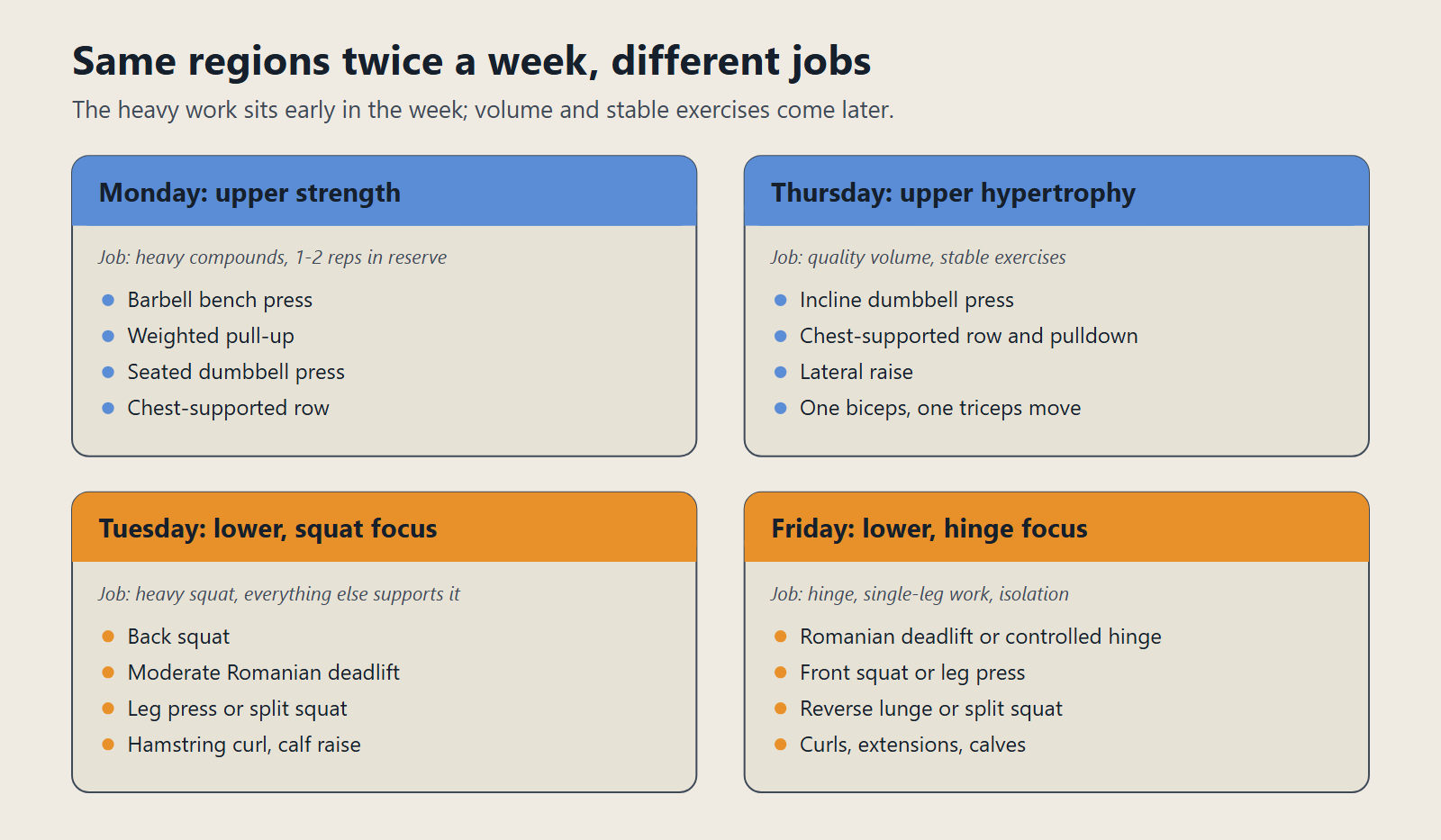
Figure 2. Same body regions twice a week, but never the same job twice.
How I Managed Weekly Volume
I didn’t start my 4 day workout plan with the most volume I thought I could survive. I started moderate and added only when recovery and performance allowed. Most major muscles got two exposures a week:
| Muscle | Weekly structure |
|---|---|
| Chest | Heavy press Monday, moderate press Thursday |
| Back | Heavy pull and row Monday, supported pulls Thursday |
| Shoulders | Pressing Monday, lateral work Thursday |
| Quads | Squat Tuesday, secondary squat and single-leg work Friday |
| Hamstrings | Moderate hinge Tuesday, stronger hinge and curls Friday |
| Biceps | Indirect work both upper days, direct work mainly Thursday |
| Triceps | Pressing both upper days, limited direct work |
| Calves | Both lower days |
The 4 day workout split worked because volume was distributed rather than concentrated. My guide to how many sets per muscle group per week compares that volume across five splits.
How Double Progression Works
I used double progression for almost every exercise. Each movement gets a rep range, say three sets of 5 to 8. You keep the same load until you can complete every set near the top of the range with solid technique, then add a small amount of weight and drop back toward the bottom of the range. Reps are the first thing you progress; load is the second.
A worked example for a bench press programmed at 3 sets of 5 to 8:
| Week | Load | Reps per set | What happens next |
|---|---|---|---|
| 1 | 185 lb | 8, 7, 6 | Same load |
| 2 | 185 lb | 8, 8, 7 | Same load |
| 3 | 185 lb | 8, 8, 8 | Top of the range on every set: add weight |
| 4 | 190 lb | 6, 6, 5 | Back near the bottom; build again |
Illustrative numbers, not my log.
Double progression suits a home gym well: no percentage maths, fewer plate changes, and real progress on weeks when adding weight isn’t realistic. One extra rep is still progress. My progressive overload post shows how that played out over 16 weeks, including when to take a deload week.
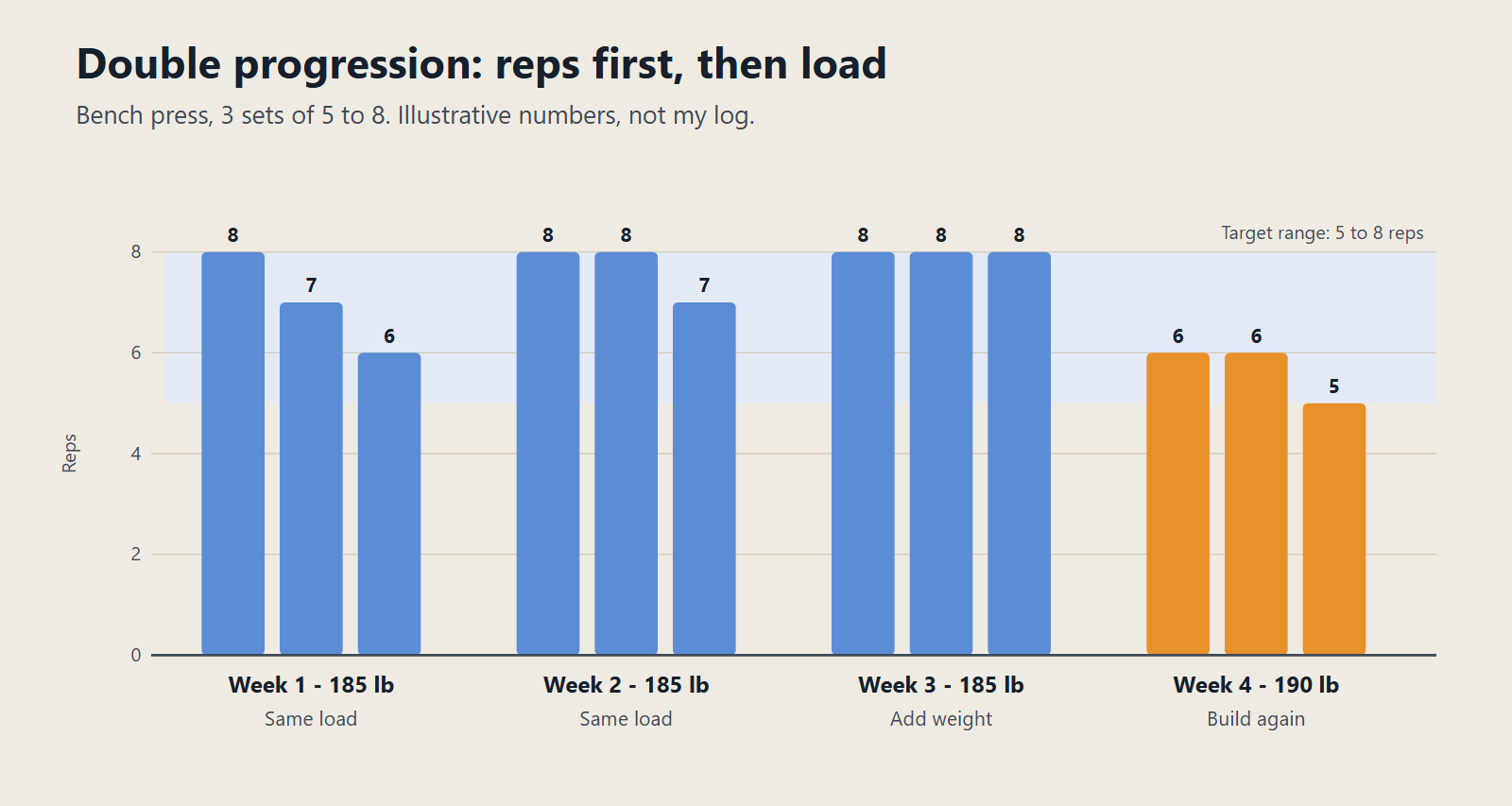
Figure 3. Reps first, then load. The sawtooth is the point.
How Close I Trained to Failure
Most compound sets stopped with one to three good reps left. Isolation exercises went closer to failure more often, especially on the final set. That single change improved recovery more than almost anything else; when I pushed every compound set to the limit, the next session paid for it.
The research supports going hard without going all the way. A 2023 meta-analysis of 15 studies by Refalo and colleagues found no evidence that training to momentary muscular failure builds more muscle than stopping short of it. Training hard doesn’t require turning every rep into a test.
Month by Month
Month one: learning the structure. The weekly schedule felt comfortable immediately; the problem was doing too much on Tuesday. Heavy squats, heavy RDLs, split squats, curls and calves made a very long session. I lowered the RDL effort and sometimes swapped split squats for something more stable. Upper-body recovery was good, apart from elbow fatigue from Monday’s arm work. By the end of the month both strength days were shorter.
Month two: performance improved. The clearest progress came here. Bench working sets went up, squat technique got more consistent, pull-ups and rows improved, and Thursday’s stable exercises let me add reps without hurting the rest of the week. Friday became more productive once I stopped trying to make it as heavy as Tuesday. Readiness stayed steady and I rarely needed an unplanned rest day. This was when the 4 day upper lower split clearly beat my five-day schedule.
Month three: routine. The novelty faded, which was useful, because it showed whether the program could survive ordinary motivation. It could. Some lifts slowed, as expected, and instead of solving every plateau with more volume I checked sleep, technique, rest periods, load selection, joint comfort and whether the exercise still matched the goal. By the last week I was ready for a lighter period but not desperate to stop, a good sign the fatigue had been managed.
Session Length, Missed Workouts and Recovery on a 4 Day Upper Lower Split
Most sessions ran about an hour, sometimes a bit more. Monday and Tuesday ran longest because of compound warm-ups; Thursday was usually quickest because the exercises needed little setup; Friday depended on how much single-leg work I did. Four days meant fewer weekly warm-ups, showers and transitions than five, so even with slightly longer sessions the week felt less disrupted. Storing the bench and bar upright between sessions cut setup time too; my home gym setup post covers that layout.
Missed workouts were easy to absorb on a 4 day workout split. Miss Monday and you can train Tuesday and Wednesday, rest Thursday and finish Friday and Saturday. Miss Friday and Saturday is open. I never merged two full workouts into one; I either moved the day or dropped a little accessory work. A missed session never wiped a muscle group off the week.
Readiness followed a gentle pattern: highest Monday, high Tuesday, recovery Wednesday, high to moderate Thursday, moderate Friday, recovery at the weekend. Friday wasn’t as fresh as Monday, but it was far better than the fifth day in a row on my old schedule. My shoulders, elbows and lower back all did well on it.
The Mistakes I Made
- Too much work on strength days. I added isolation exercises because the sessions felt incomplete. The compounds already did the job.
- Making both lower days heavy. Heavy squats and heavy hinges twice a week created needless fatigue. The days needed different priorities.
- Changing exercises too often. Progress is hard to measure when the movement keeps changing. Give an exercise several weeks.
- Too much single-leg volume. Split squats and lunges cause more soreness than their set count suggests.
- Ignoring joint overlap. My pressing and pulling muscles recovered faster than my elbows and shoulders whenever volume crept up.
- Treating optional work as mandatory. The program improved when I skipped accessories that added fatigue without solving a clear need.
A 4 Day Workout Plan to Start From
This is the final version of my 4 day workout plan, with typical starting sets and reps added. They’re common ranges, not my logged numbers. RIR is reps in reserve, how many more good reps you could have done. Progress everything with double progression.
| Day | Exercise | Sets × reps | RIR |
|---|---|---|---|
| Mon: upper strength | Barbell bench press | 3–4 × 5–8 | 1–2 |
| Weighted pull-up | 3 × 5–8 | 2 | |
| Seated dumbbell press | 2 × 8–10 | 2 | |
| Chest-supported row | 3 × 6–10 | 1–2 | |
| Triceps and biceps (optional) | 2 × 10–12 each | 1 | |
| Tue: lower squat | Back squat | 3–4 × 5–8 | 2 |
| Romanian deadlift (moderate) | 2 × 8–10 | 3 | |
| Leg press or split squat | 2 × 10–12 | 2 | |
| Hamstring curl | 3 × 10–15 | 1 | |
| Calf raise | 3 × 10–15 | 1 | |
| Thu: upper hypertrophy | Incline dumbbell press | 3 × 8–12 | 1–2 |
| Chest-supported row | 3 × 10–12 | 1 | |
| Pulldown | 3 × 10–12 | 1 | |
| Lateral raise | 3 × 12–20 | 0–1 | |
| Chest fly (optional) | 2 × 12–15 | 1 | |
| Triceps extension and curl | 2 × 10–15 each | 0–1 | |
| Fri: lower hinge | Romanian deadlift or controlled hinge | 3 × 6–10 | 2 |
| Front squat or leg press | 3 × 8–12 | 2 | |
| Reverse lunge or split squat | 2 × 8–12 per leg | 2 | |
| Leg curl | 2 × 10–15 | 0–1 | |
| Leg extension | 2 × 12–15 | 0–1 | |
| Calf raise | 3 × 12–20 | 0–1 |
Exact exercises can change. What matters is how the effort is distributed: Monday and Tuesday carry the heavy work, Thursday and Friday add volume with more stable exercises and different priorities.
Who a 4 Day Upper Lower Split Suits
It suits you if you want each muscle trained about twice a week, care about both strength and size, need schedule flexibility, prefer moderate-length sessions, recover better with a midweek break, and can commit to four consistent sessions without lifting six days a week. It’s especially good if three-day full-body sessions run too long for you.
Something else may fit better if you can only train two or three days, strongly prefer short daily workouts, want a dedicated day for every muscle, need extra practice on a competition lift, play a demanding sport several days a week, can’t recover from two lower-body days, or have a truly unpredictable schedule. A 4 day workout split is flexible, but it still needs four good training slots.
Five Things to Check Before Your First Session
- Four reliable slots. Pick days with a rest day between the two pairs, like Monday, Tuesday, Thursday and Friday.
- Different jobs for each day. One heavy and one moderate upper day; one squat-focused and one hinge-focused lower day.
- Rep ranges for double progression. Write a range for every exercise, and add weight only when every set reaches the top.
- Reps in reserve. Keep compounds one to three reps short of failure; save the hard limit for isolation work.
- A log. Sets, reps, load and a quick readiness note. Without it, double progression is guesswork.
Free Tools for Running a 4 Day Workout Split at Home
- Machine Swap Finder: type any gym machine your split calls for and get three ranked swaps, with a gear line showing which ones need a rack or a bench.
- Machine Load Converter: turn the weight you used on a gym machine into a starting load for the barbell or dumbbell swap.
- Loadable Weight Rounder: see what your plate jumps mean in practice, and which load to use when your target falls between two.
Questions People Ask About the 4 Day Workout Split
Is a 4 day workout split enough to build muscle?
Yes. A 4 day workout split trains every major muscle twice a week, which research suggests beats once a week for growth, and leaves room for enough weekly sets without marathon sessions.
What is the best 4 day workout split?
For most people, a 4 day upper lower split: upper strength, lower squat, rest, upper hypertrophy, lower hinge. Giving each of the four days a different job matters more than the exact exercises.
How do you structure a 4 day upper lower split?
Pair a heavy and a moderate upper day, and a squat-focused and a hinge-focused lower day, with a rest day after the first pair. Upper, lower, rest, upper, lower is the classic layout.
What is double progression?
Double progression means progressing reps first, then load. You keep a weight until every set reaches the top of its rep range with good technique, then add a little weight and work back up from the bottom of the range.
Is a 4 day workout plan better than 5 days?
For recovery, it was for me. Four days gave nearly the same frequency as five, with a midweek rest day, less joint fatigue and much easier rescheduling when a session moved.
How long should a 4 day workout routine take?
About an hour per session is typical, a little longer on the heavy strength days. Cutting redundant accessories is the easiest way to keep sessions from creeping up.
Should both leg days be heavy on a 4 day split?
No. Make one day squat-focused and heavy, and the other hinge- and single-leg-focused with more stable exercises. Two equally brutal leg days was the biggest mistake I made.
Can you run a 4 day workout split at home?
Yes. A rack, a barbell, an adjustable bench and adjustable dumbbells cover every day, with free-weight swaps for the pulldown, leg press, leg curl and leg extension.
The Verdict on the 4 Day Workout Split
The 4 day workout split was one of the most sustainable programs I’ve run. It gave me enough frequency to improve the main lifts and build useful weekly volume, sessions stayed focused without becoming overly specialized, the Wednesday rest day stopped fatigue from piling up across the week, and the weekend gave a second recovery block. It worked best once I stopped treating every day as a max-effort session: Monday and Tuesday carried the heavy work, Thursday and Friday added volume through more stable exercises and different priorities.
A program doesn’t need to be complicated to stay productive. Upper, lower, rest, upper, lower is about as simple as it gets. What mattered was what each day was expected to do, and progressing it patiently with double progression. Four days gave me enough work to improve and enough recovery to come back ready.
Whatever version of the four days you run, the machine slots are easier at home with the right swaps. The Machine Swap Playbook covers eighteen swaps across the six patterns the gym’s queues form around, with a one-page cheat sheet you can screenshot and use mid-workout.
→ Send me the playbook — it’s free
Affiliate disclosure: WildnSwole earns a commission when you click a link to a partner and make a purchase. As an Amazon Associate, I earn from qualifying purchases. Commissions do not change what the content recommends and they do not add to what you pay.
The content in this article is for general information only and does not constitute medical or personal training advice. Always consult a qualified professional before making changes to your training.
Leave a Reply