I Tried Seven Benches With Leg Extensions. Most of the Attachments Ended Up Against the Wall.
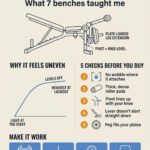
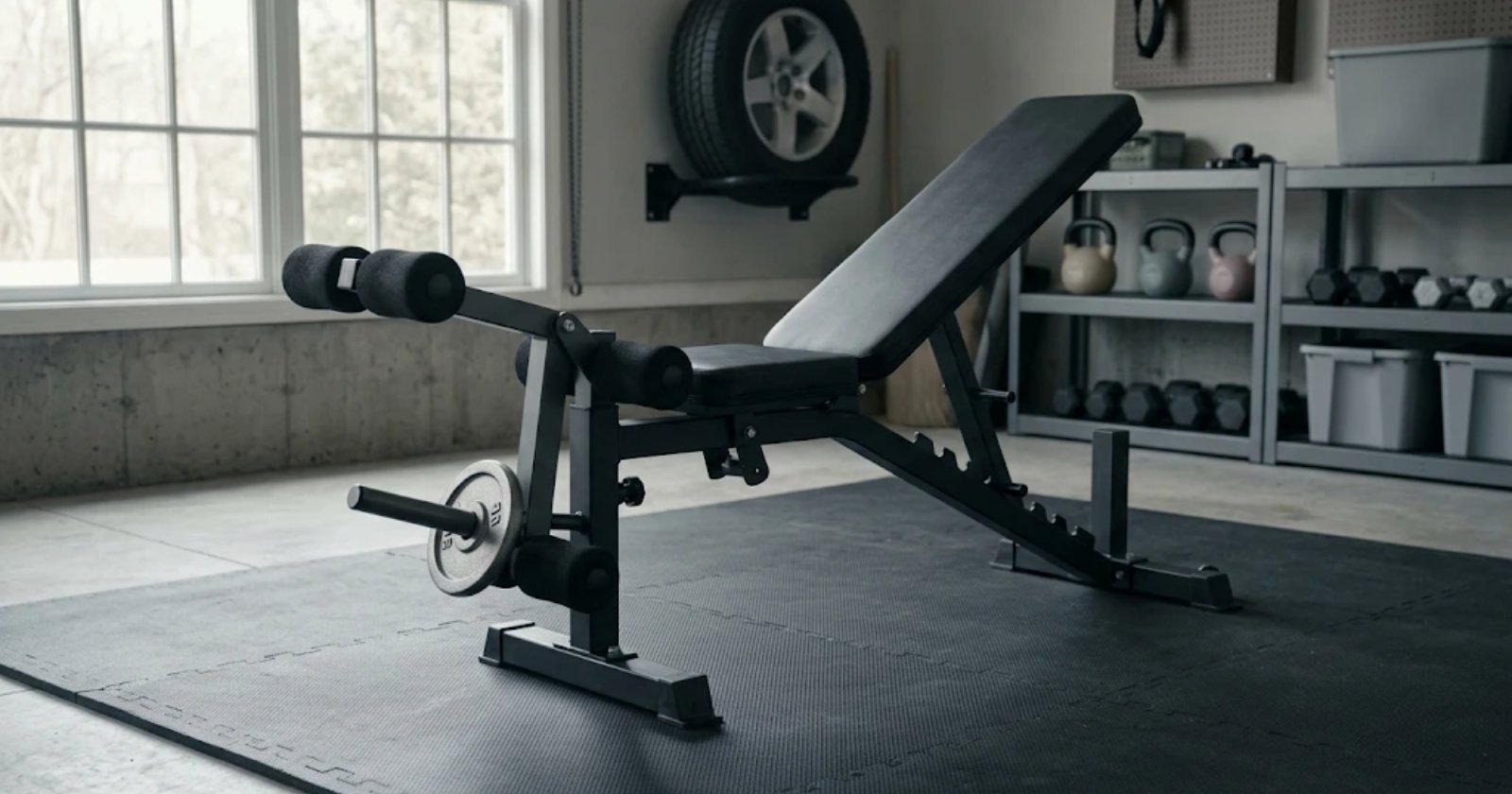
Illustration. On paper, one bench that also does leg extensions and leg curls. In practice, the attachment decides whether you ever use it.
A weight bench with a leg extension attachment looks like an easy way to add machine-style leg work to a home gym. Instead of buying a separate leg extension and leg curl machine, you fit a padded lever to the front of the bench, load it with plates, and train your quads and hamstrings from the station you already press on.
On paper it’s efficient. After trying seven benches with leg developers, I found most of the attachments were less useful than they looked. Some had awkward resistance curves. Others moved the bench across the floor, put the roller pads in the wrong place, or took so long to set up that I stopped bothering.
A few were genuinely productive, and none felt exactly like a commercial selectorized machine. I tried attachments from Ironmaster, Force USA, Body-Solid and Marcy, plus three budget adjustable benches sold with leg developers, for leg extensions, seated leg curls where possible, and lying leg curls where the design allowed.
The leg extension is one of the gym machines the free Machine Swap Playbook replaces at home, so I wanted to know whether an attachment beats the free-weight and band swaps.
The short version: the Ironmaster Leg Attachment PRO on the Super Bench PRO V2 was the only leg extension attachment I kept wanting to use. Body-Solid’s leg developer was the sturdiest alternative and Force USA’s MyBench the best all-in-one value. Most budget attachments weren’t worth choosing a bench for.
A Great Rack and a Great Bench Can Still Be a Bad Pair. Here’s What Actually Fits.
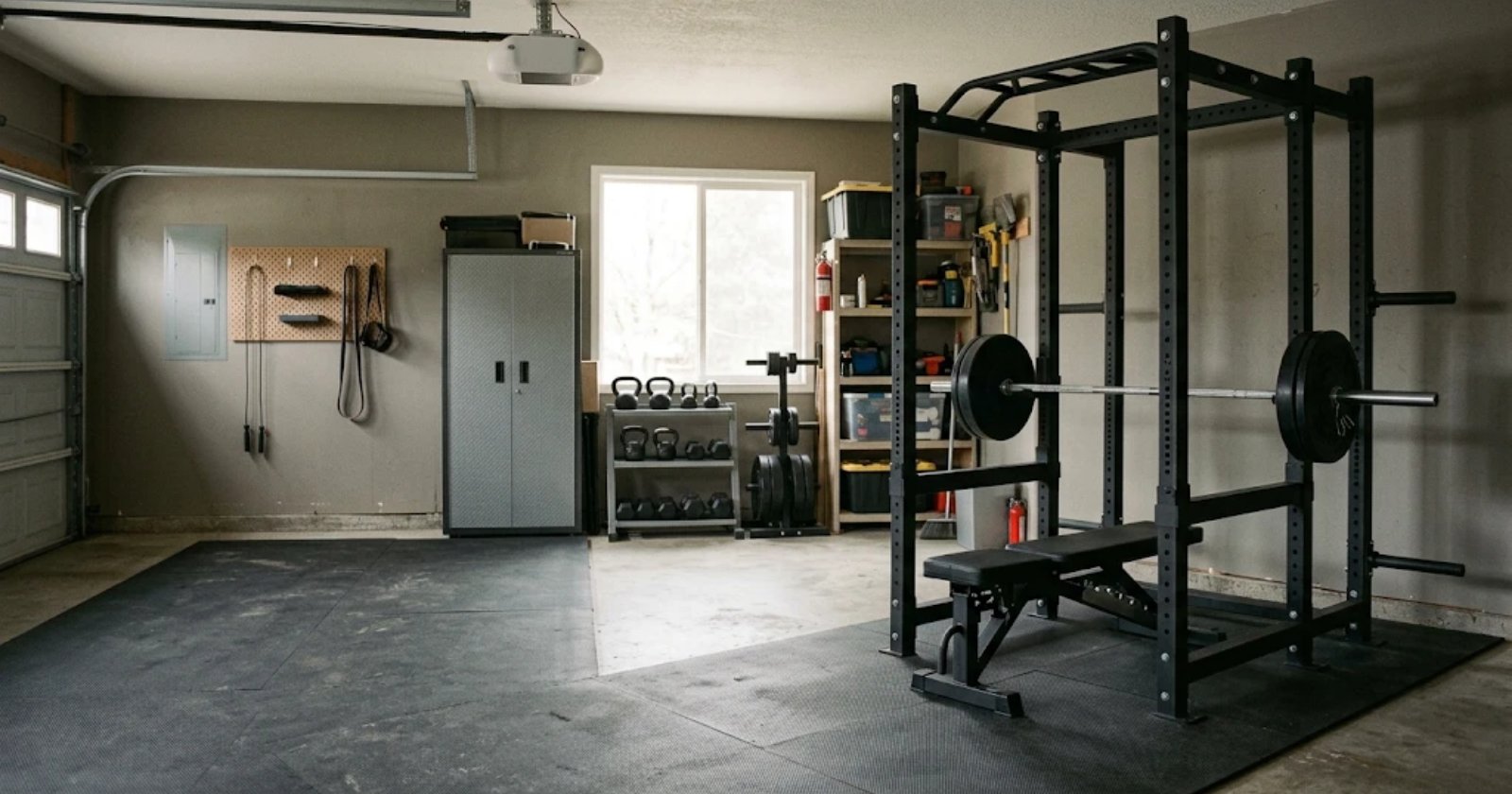
Illustration. The bench has to roll in, clear the rear of the rack and put your eyes under the bar. Plenty of good pairs fail one of the three.
A strong squat rack and a highly rated adjustable bench do not automatically make a good squat rack and bench combination. I found that out by rolling several benches into several racks and pressing in each pairing.
Some benches were too long to position correctly. Others had wide rear stabilizers that hit the rack’s lower crossmember. A few fit perfectly for flat benching and turned awkward the moment the back pad went up. Even when the bench physically fit, its pad height, wheel placement and adjustment ladder could make unracking much harder than the spec sheets suggested.
The problem was rarely the rack or the bench on its own. It was the pairing. A rack and bench are the backbone of most garage gyms, and nearly every pressing swap in the free Machine Swap Playbook assumes you have both working together.
I paired racks from REP Fitness, Rogue Fitness and Titan Fitness, plus a wall-mounted folding rack and an all-in-one cable rack, with adjustable benches from those makers and a couple of cheaper brands. I used each setup for flat bench presses, incline presses, seated shoulder presses, pin presses and dumbbell work. I measured the rack depth, the inside width, the bench length, the pad height, the rear-foot width, the wheel position and the distance from my head to the rear crossmember.
The short version: the REP PR-1100 with a compact REP adjustable bench was the easiest squat rack and bench pairing to live with. Rogue’s Monster Lite felt the most solid but needed more fiddling, and a Titan rack with a compact bench was the budget pick. Folding racks and all-in-one racks each need a particular kind of bench.
I Compared Three 100 lb Adjustable Dumbbells. One Asked for Far Fewer Compromises.
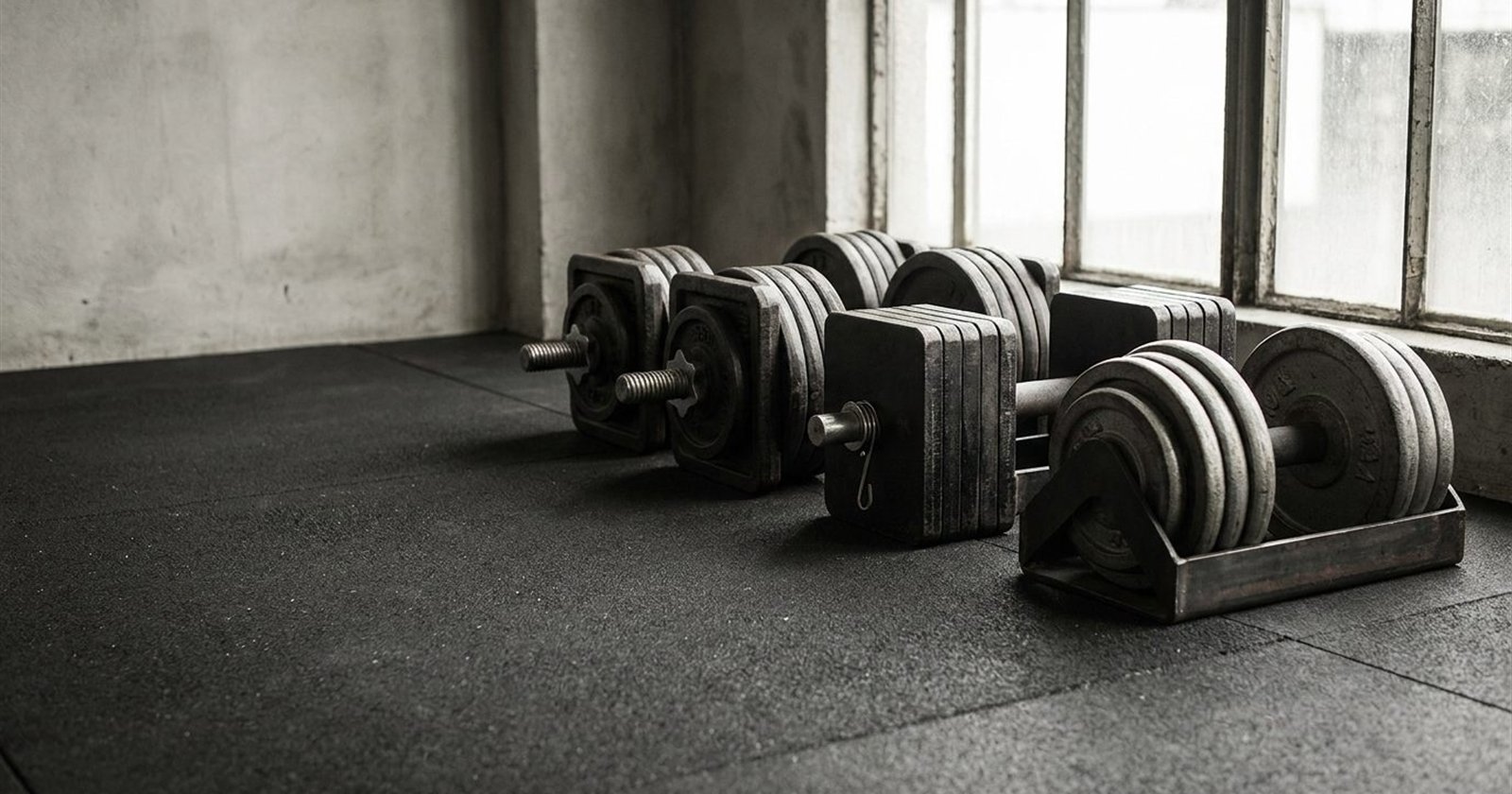
Illustration. Three ways to solve the same problem, and the shape of each one tells you what it gave up.
At 25 pounds, an adjustable dumbbell only has to be convenient. At 100 pounds it has to be trusted, and that changes which design decisions matter. Most 100 lb adjustable dumbbells reach the number on the box. Far fewer stay secure, comfortable and quick to change once you are actually rowing, pressing and deadlifting with them.
A selector with a little play is unremarkable at light weight and unnerving at 100. A thick rubber handle is fine for curls and finishes your rows before your back does. An adjustment that takes 40 seconds is a rounding error between straight sets and ruins a superset. The weight class does not just scale the numbers, it reorders the priorities.
I trained with three heavy systems side by side: the REP x PÉPIN FAST Series, the Ironmaster Quick-Lock with its 120 lb add-on kit, and the PowerBlock Pro 100 EXP. Heavy dumbbells are also what make home training replace a commercial gym, which is the whole idea behind the free Machine Swap Playbook.
The short version: the REP x PÉPIN FAST Series is the one I would buy, Ironmaster is the one I would trust longest, and the PowerBlock Pro 100 EXP is the one to choose if you want to buy in stages and keep the floor clear.
You Can Build Your Glutes Without the Hip Thrust Machine. Here’s What Replaces It.
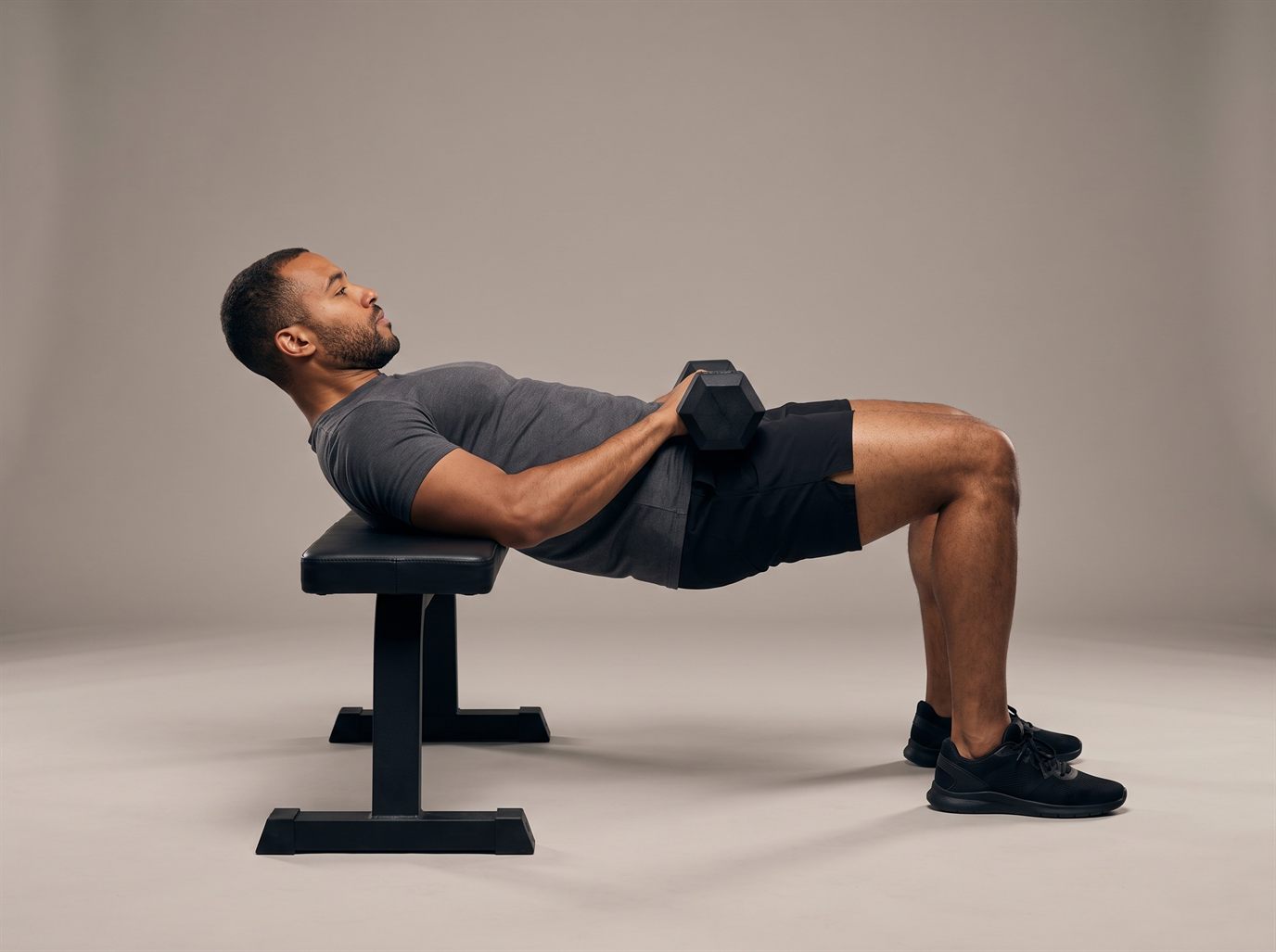
Illustration. The top of a dumbbell hip thrust. Shoulder blades on the bench, hips level with the knees, shins vertical.
The hip thrust machine has become the most-queued glute station in a lot of gyms, and it’s the one people assume they can’t replicate at home. But the machine isn’t doing anything magic. A good hip thrust machine alternative just has to load your hips in the same place the machine does: hardest at the top, when your glutes are fully squeezed.
I have not had a hip thrust machine since I moved my training into a garage in May 2026. Three exercises do that job with a bench, a pair of dumbbells and a band: the hip thrust on a bench, the band pull-through, and the single-leg hip thrust.
This post covers all three, the research on whether a free-weight hip thrust really builds glutes, the mistake that shifts the work into your lower back, and a workout that puts it together. If you want the same approach for every machine you are missing, the free Machine Swap Playbook covers all six patterns.
You Don’t Need a Machine to Train Hamstrings. These Leg Curl Alternatives Work.
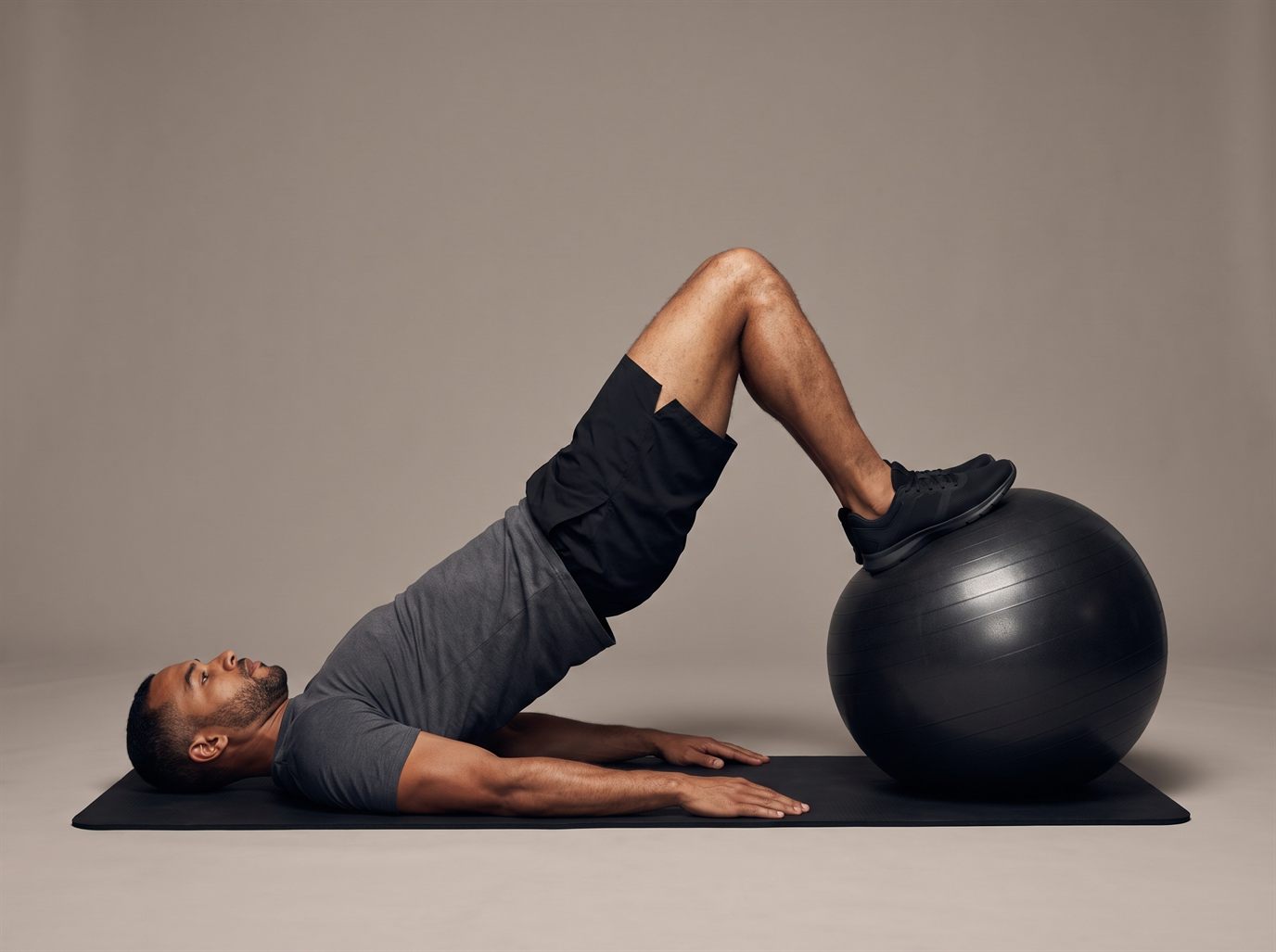
Illustration. The top of a stability ball leg curl. Hips lifted, heels pulling the ball in, upper back and arms on the mat.
The leg curl is one of the easiest machines to replace badly. Most home workouts swap it for Romanian deadlifts and call it done, and that swap misses half of what the machine did. A good leg curl alternative has to bend the knee against resistance, because that is the job the machine was doing.
I have not had a leg curl machine since I moved my training into a garage in May 2026. Three exercises cover what it did and more: the stability ball leg curl, the Nordic ham curl, and the Romanian deadlift. Only the first two are true leg curl substitutes. The third earns its place for a different reason, and understanding why is the most useful thing in this post.
It covers all three, the research on why hamstrings need both kinds of exercise, the mistake that quietly ruins every curl you do without a machine, and a workout that puts them together. If you want the same approach for every other machine you are missing, the free Machine Swap Playbook covers all six patterns.
Strong Legs Don’t Need a Leg Press. Two Dumbbell Exercises Replace It.
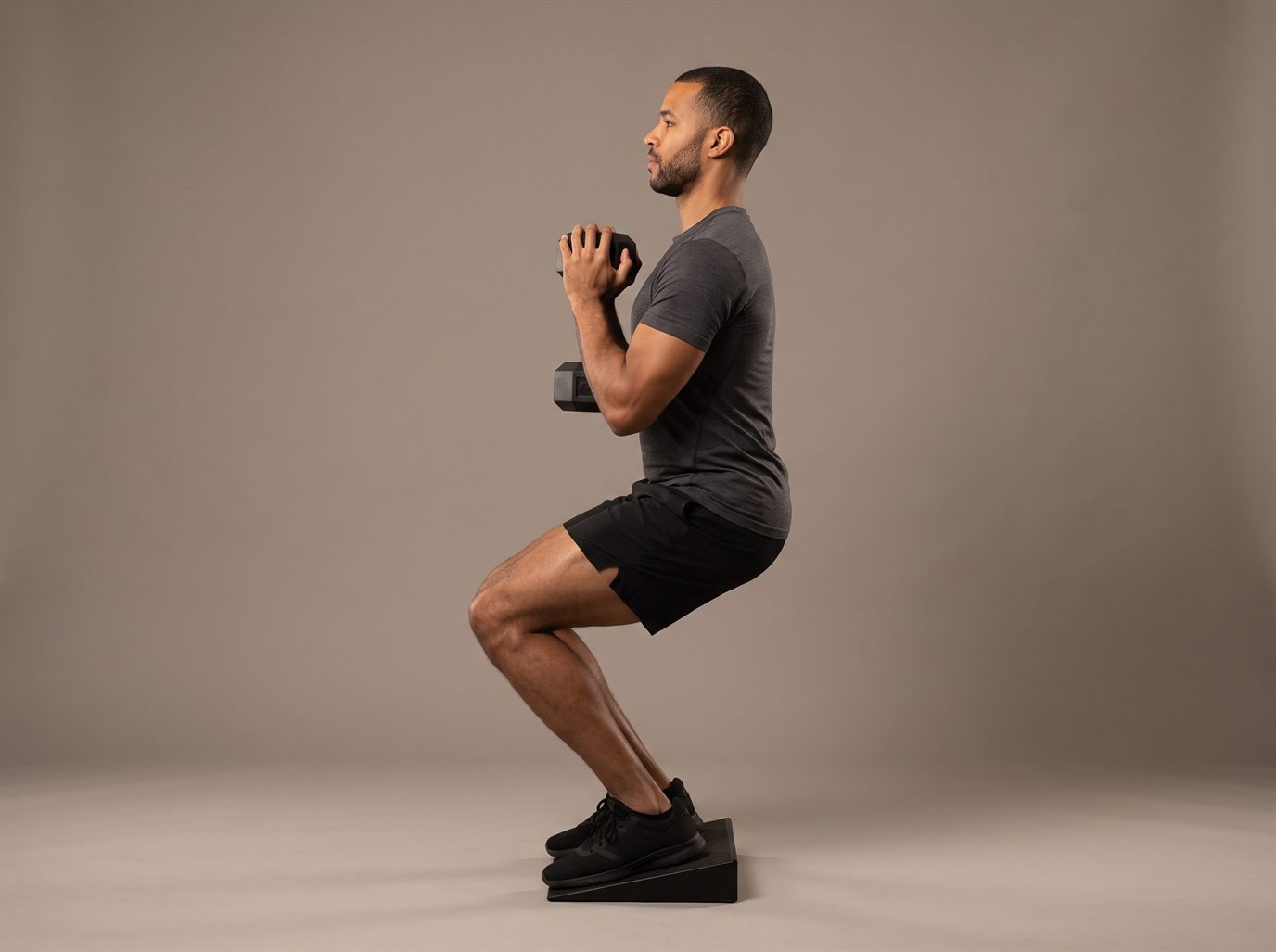
Illustration. The heel-elevated goblet squat. Heels up on a wedge, knees travelling forward, torso upright, one dumbbell held at the chest.
The leg press is the machine people assume they cannot replace at home. It moves big numbers, it holds your back in place, and nothing in a spare room looks remotely like it. But a good leg press alternative does not need to look like the machine. It needs to load the same joints, hard enough, with the equipment you actually own.
I have not had a leg press since I moved my training into a garage in May 2026. Two dumbbell exercises cover the job it did: the Bulgarian split squat and the heel-elevated goblet squat. Add an optional quad finisher that needs no equipment at all, and you have a leg day that covers what the leg press did.
This post covers all three, the research on whether single-leg training really keeps up, the load adjustment that stops the first session from going wrong, and a workout that puts them together. The playbook doesn’t cover the leg press itself, but it does cover the machines next to it, such as the leg extension, hack squat and leg curl. If you want those, the free Machine Swap Playbook has them.
I Replaced the Lat Pulldown With Dumbbells. Where the Elbow Goes Is the Whole Trick.
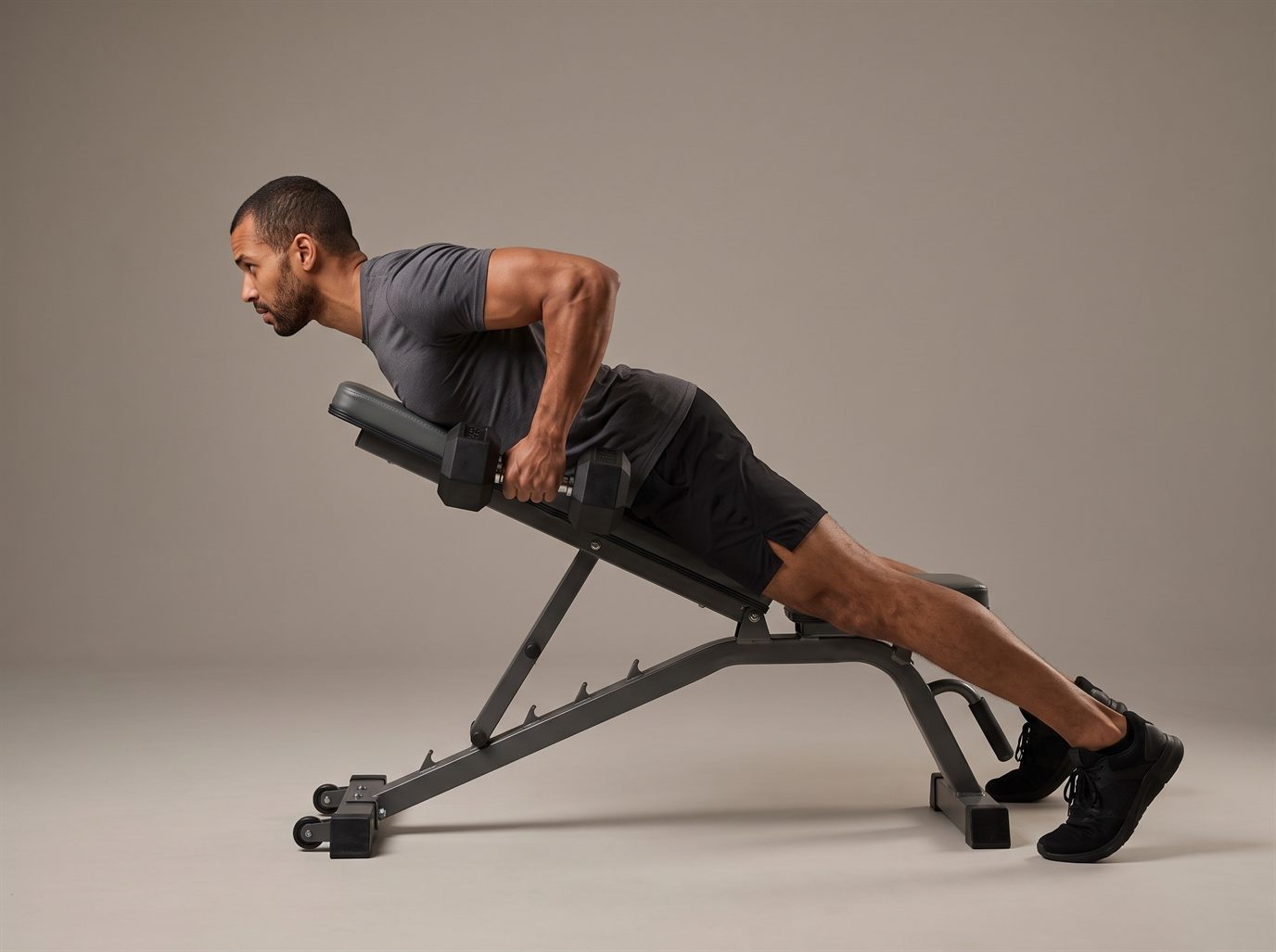
Illustration. The chest-supported dumbbell row on a low incline. Elbows close to the body are what move this row toward the lats.
Most lists of dumbbell lat exercises are really lists of rows. That is not wrong, exactly, but it skips the one detail that decides whether a dumbbell row trains your lats or your upper back — and it is not the exercise. It is where your elbow goes.
I have not had access to a lat pulldown for 24 months. The band version of the pulldown covers a lot of that gap, and I wrote up how the band lat pulldown works as a machine replacement separately. But plenty of home gyms start with dumbbells and a bench, not bands and a high anchor, and “just do rows” was the advice I kept running into.
This post is what I would have wanted instead: three dumbbell lat exercises, the elbow rule that changes what each one trains, an honest look at the pullover, and a single workout that puts them together. If you want the same approach for every machine you are missing, the free Machine Swap Playbook covers all six patterns.
I Trained Without a Lat Pulldown for 24 Months. Three Alternatives Held Up.

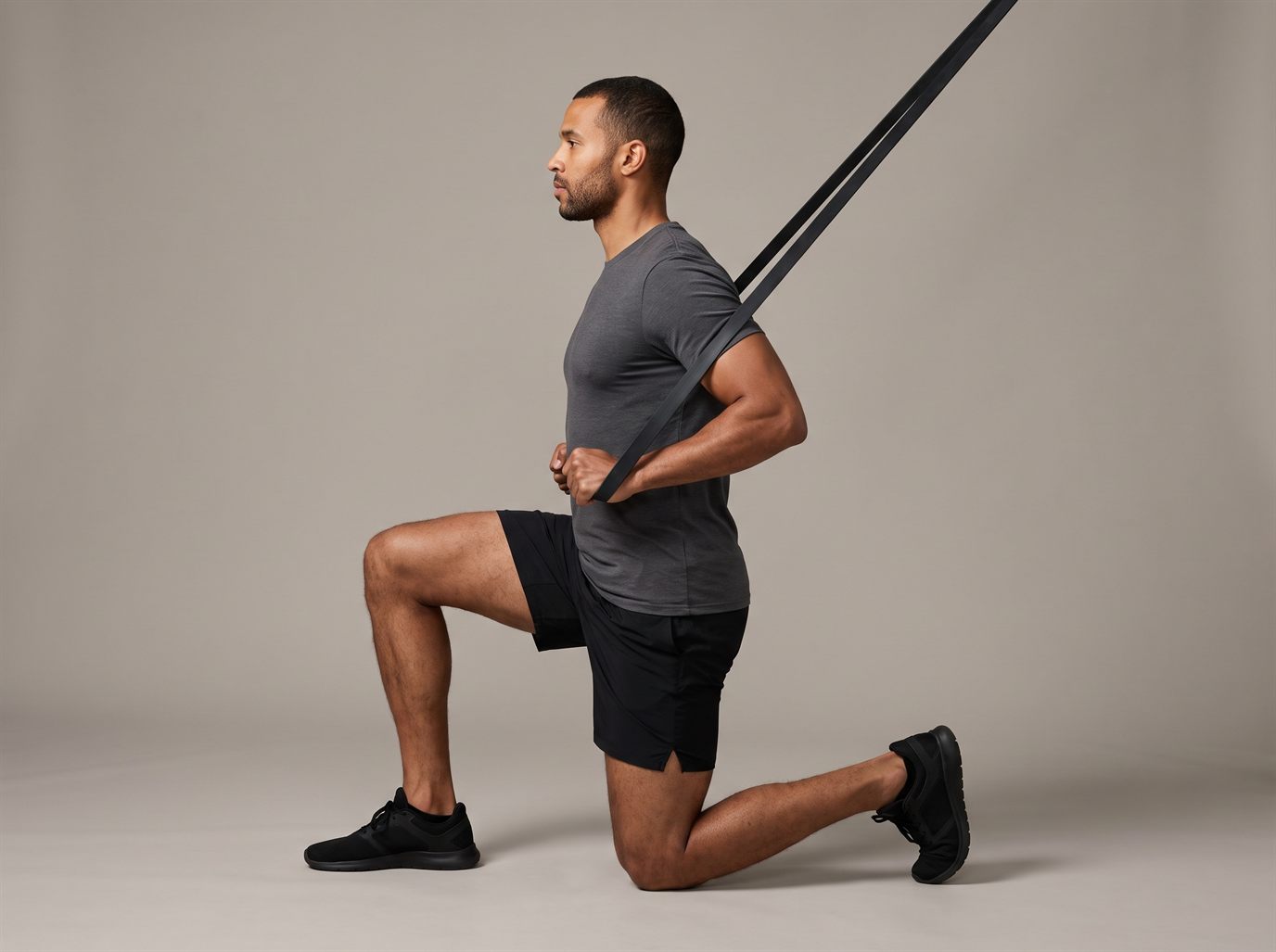
Illustration. The half-kneeling band lat pulldown at the finish — the closest lat pulldown alternative to the machine, and the one that needs the least equipment.
The lat pulldown is the most-queued machine in most commercial gyms, and the most-missed machine in most home setups. I have not had access to one for 24 months, and when I moved my training into a garage in May 2026, it was the one station I genuinely thought I would have to replace with money.
I did not. Back training is the part of my program I have had to compromise on least. The reason is not that I found one magic exercise. It is that I stopped looking for a machine-shaped substitute and started matching two specific things: the movement pattern, and where in the rep the hard part lives.
This post is the practical version of that. Three ranked lat pulldown alternatives, what each one actually needs, the load adjustment that keeps the stimulus intact, and the error that quietly ruins the best of them. If you want the same system applied to all six machine patterns rather than just this one, the free Machine Swap Playbook covers eighteen swaps on the same logic.
Continue reading
Ironmaster Dumbbell Review: 192 Timed Changes, Worth It?

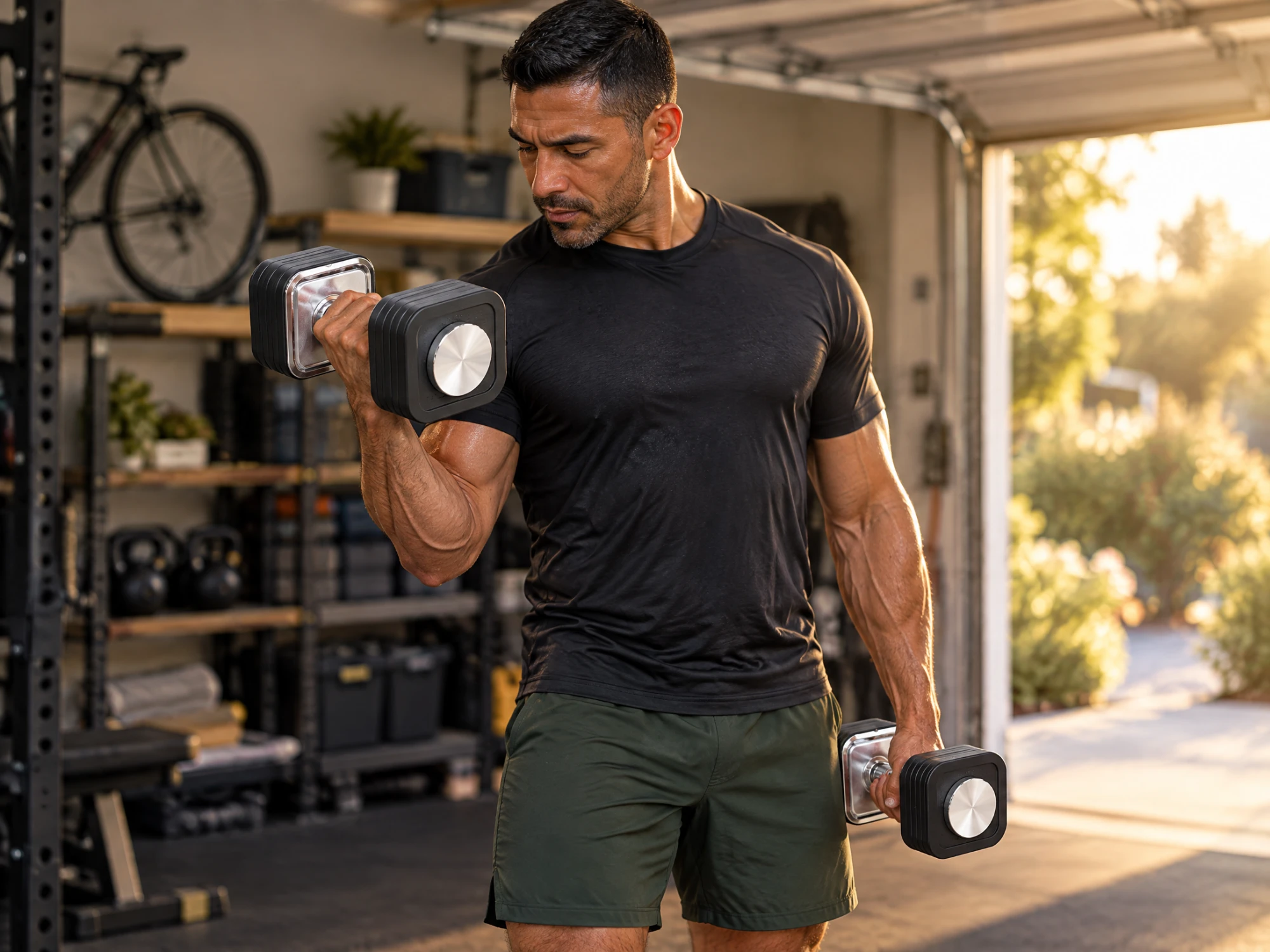
Illustration. Square plates, a metal handle and a screw at each end: the whole mechanism, and the reason every change is a physical job.
This Ironmaster dumbbell review is built on a stopwatch. I bought the Ironmaster 75 lb Quick-Lock set for $699 in March 2024, and over the next 30 days I timed every plate change: 192 adjustments, measured from the moment I touched a locking screw to the moment both dumbbells were ready to lift.
The short version: they are slow, and the slowness costs less than you would think.
A one-plate change on a single dumbbell started at 25 to 35 seconds and settled at 15 to 22. A large change across both dumbbells started near two minutes and settled at 60 to 80 seconds. Straight sets never noticed the difference. Drop sets never recovered from it.
There is no dial here, no selector pin, no cradle. Square plates slide onto a metal handle, and a threaded screw clamps them down. Every weight change is a physical job, and there is almost nothing inside to break.
Continue reading
I Used PowerBlock Dumbbells for 6 Months. Here Is What Wore Out First
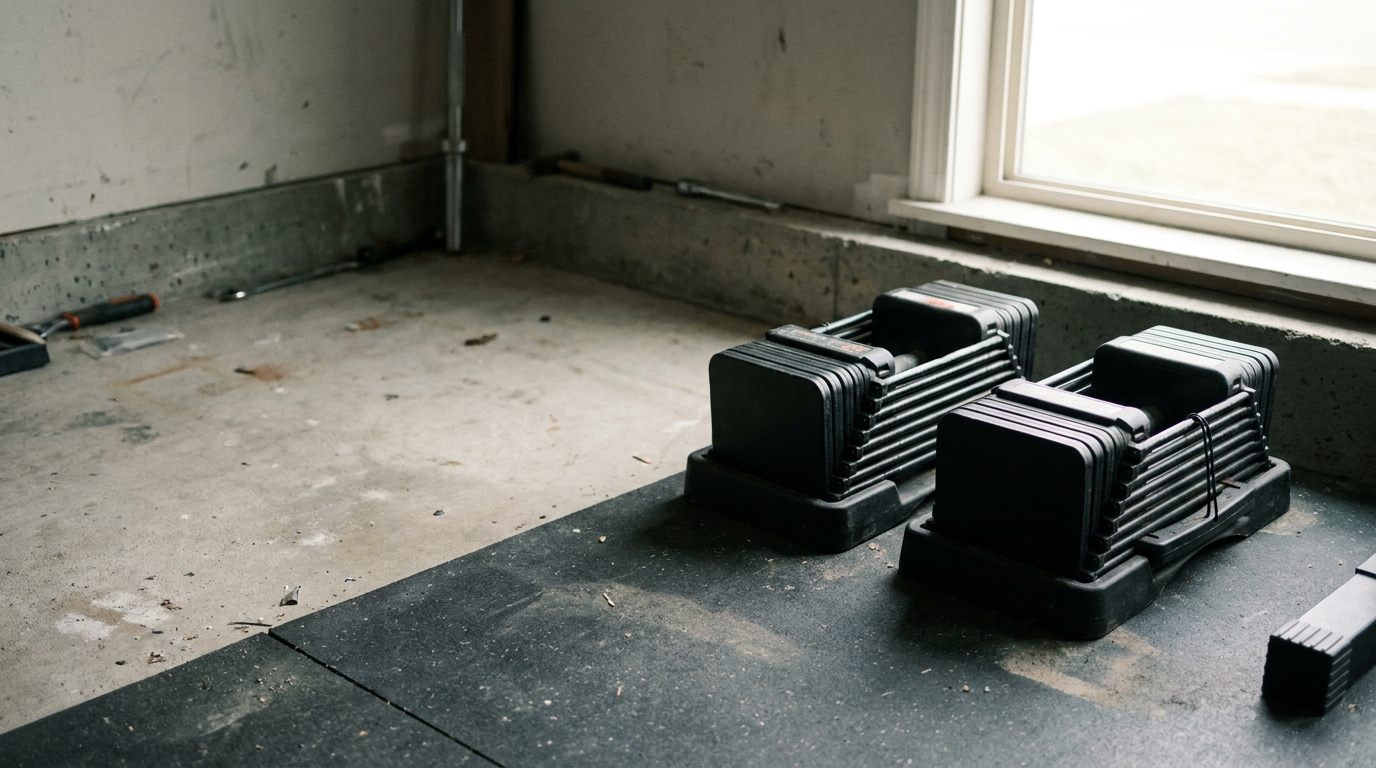
Illustration. Block-style adjustable dumbbells stored the way mine were for six months, on the floor rather than on a stand.
Nothing broke. After six months of daily use, that is the short version, and it is not the answer I expected.
What did happen is smaller, and more useful to know before you spend the money. The selector pin picked up scratches. The block faces polished each other smooth. The printed weight numbers scuffed. And the one thing that genuinely got worse was not a part at all. It was how carefully I put the dumbbells down.